



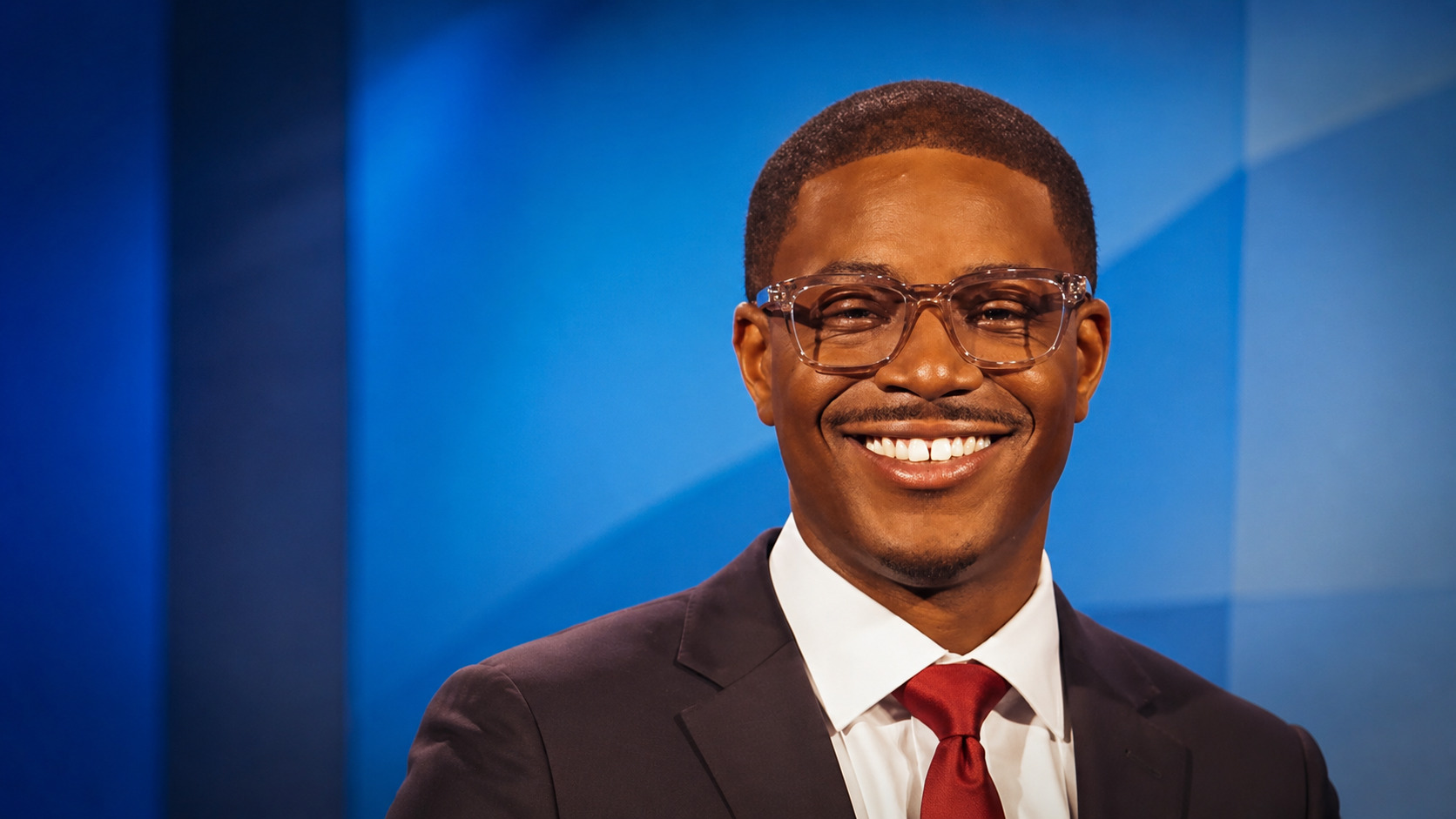
David Crowley emerges from a narrow Democratic primary with a coalition argument that now faces a different test against Republican Tom Tiffany.
David Crowley has emerged from Wisconsin’s Democratic gubernatorial primary carrying an argument larger than the result itself: winning in November will require Democrats to build a coalition broad enough to hold competing constituencies together.
The Milwaukee county executive defeated state Rep. Francesca Hong by less than a percentage point. The Associated Press did not call the race until the morning after the election.
If he wins in November, Crowley would be Wisconsin’s first Black governor.
He won a fractured field rather than a majority. Gov. Tony Evers opened the seat by declining to seek a third term. Crowley suspended his own campaign in early July and endorsed Lt. Gov. Sara Rodriguez, whose candidacy then collapsed in a campaign finance scandal. He reentered ten days later with Evers’ endorsement.
Crowley’s argument is clear enough in the record.
“Wisconsin Democrats came together and won by working hard and building a real coalition.”
— Fundraising appeal sent in David Crowley’s name by the National Democratic Training Committee, August 13, 2026; the appeal states that it was not authorized by any candidate or candidate’s committee.
A fundraising appeal sent in his name by the National Democratic Training Committee says, “Wisconsin Democrats came together and won by working hard and building a real coalition.” The appeal states that it was not authorized by any candidate or candidate’s committee, so it is evidence of the message being circulated in Crowley’s name, not a statement issued by him or his campaign.
The same appeal describes Crowley as the youngest person and the first Black person to hold the office of Milwaukee County Executive, and says his work there brought labor, business and community organizations together.
Coalition is therefore not simply a description of what happened. It is the central argument being advanced for his candidacy.
Hong’s challenge remains part of the result
Francesca Hong’s showing makes that argument more demanding.
Hong is a democratic socialist from Madison, a single mother and former line cook who ran on free child care and health care and a moratorium on artificial intelligence data center construction. Her campaign put structural economic questions before Democratic voters and demonstrated that a substantial constituency inside the party wants more than continuity.
A narrow loss does not make that constituency disappear.
Crowley’s November task therefore begins inside his own party. A coalition capable of defeating Tiffany must make room for voters who supported Hong as well as voters who chose Crowley. The question is not whether those groups can occupy the same ballot line. It is whether they can see their priorities in the same governing project.
That is one reading of the primary, and others will compete with it. Some will see Crowley’s victory as evidence that Democratic voters favored experience and coalition-building. Others will point to Hong’s performance as evidence of demand for a more progressive program.
What the record does not show is that any single constituency, Black voters included, decided that argument by itself, or that one political motive can be assigned to Black voters as a group.
The result carries a more precise conclusion. Competing theories of Democratic power met in Wisconsin, and neither side emerged politically irrelevant.
“I’m no stranger to coalition building.”
— Fundraising appeal sent in David Crowley’s name by the National Democratic Training Committee, August 13, 2026; the appeal states that it was not authorized by any candidate or candidate’s committee.
Tiffany changes the equation
The general election presents another kind of test.
Campaign finance reports covering January through June showed Tiffany raising $8.7 million, bringing his campaign total above $10 million, with more than $6.1 million of it arriving through transfers from the Republican Party of Wisconsin. The state party’s own money included $4 million from Richard and Elizabeth Uihlein and $2.5 million from Diane Hendricks. A later report covering July 1 through July 27 showed Tiffany raising more than $4.6 million, about $4 million of it again from the state party, and leaving him with more than ten times the cash on hand of any Democrat in the race.
Crowley led the Democratic field in July with more than $775,000 raised, nearly half of it from unions. Hong raised more than $338,000.
The NDTC appeal sent in Crowley’s name puts the figure higher, saying Tiffany had “more than $15 million, including a $10 million transfer straight from the state Republican Party.” That is the appeal’s claim, not an independently established total.
The distinction matters, and so does the pattern the verified filings show. Money raised by a candidate, party transfers, cash on hand and outside spending are different measures. What the reporting establishes is that Tiffany enters the general election with a large financial advantage, and that Republican Party transfers are the main source of it.
For Crowley, money is only one part of the November problem.
A Democratic primary coalition and a statewide general-election coalition are not the same thing. Crowley must hold Democrats who wanted a different nominee while competing for voters whose decision will turn on governance, affordability, jobs, housing, schools, public safety and confidence in state leadership.
His coalition argument will be measured against those material questions.
Wisconsin and Minnesota
That argument has resonance across the Upper Midwest.
Minnesota and Wisconsin have different electorates, different institutions and different immediate contests. They should not be collapsed into one political story.
But both states present a continuing question for Democratic politics: how do established institutions, progressive movements and Black and Indigenous political leadership operate inside coalitions broad enough to govern?
The useful comparison is not electoral equivalence. It is coalition construction.
November is the test
Crowley’s primary victory settles who will carry the Democratic argument into the general election. It does not settle what that argument must become.
The primary exposed real differences over political strategy, economic priorities and the kind of coalition Democrats believe can win. Those differences now have to coexist with the practical task of defeating Tiffany.
The appeal sent in Crowley’s name reduces that task to a familiar phrase: coalition building.
November will determine whether that message can become a statewide governing majority.