



Article by media partner Cuisine Noir, the country’s first Black culinary lifestyle outlet since 2009 dedicated to connecting the African diaspora through food, drink and travel.
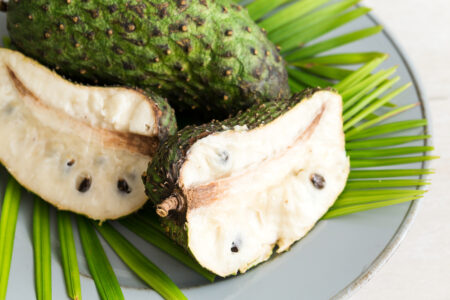
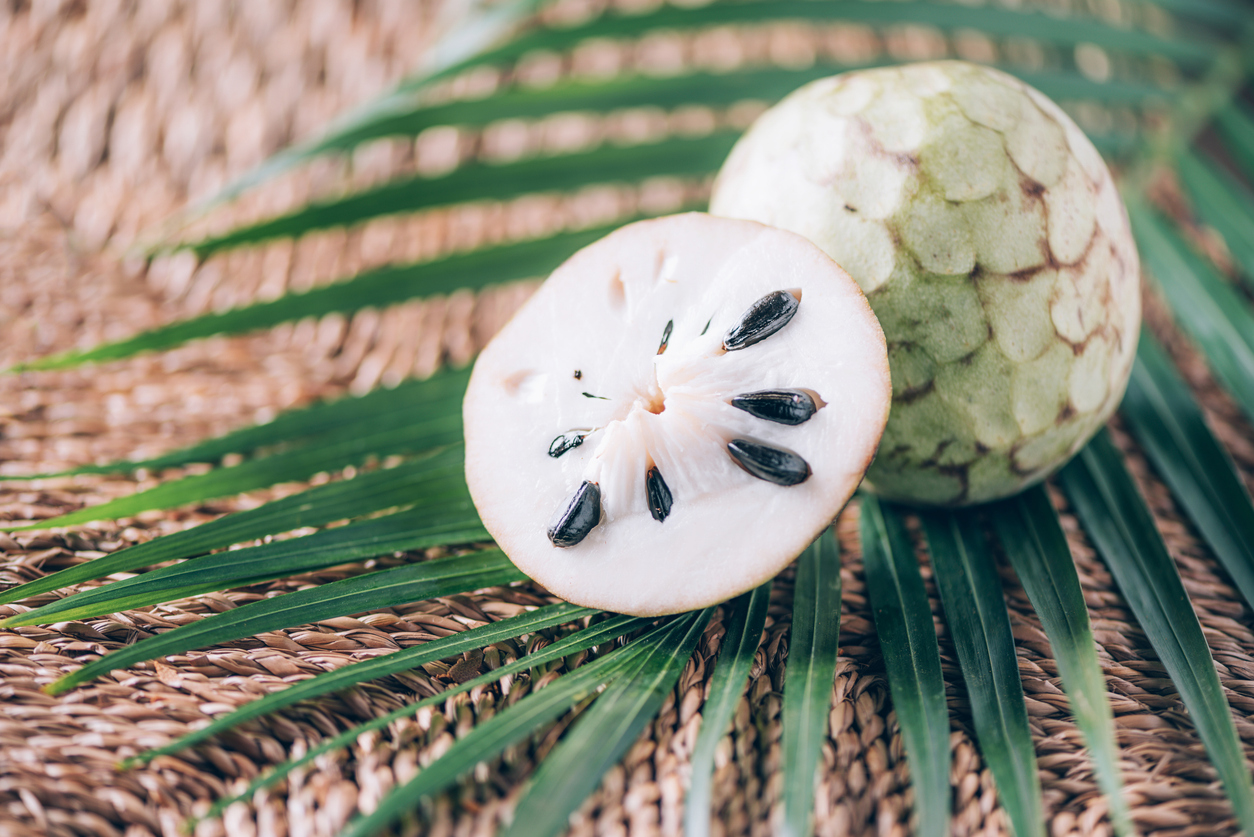
Soursop has no problem attracting attention. From the soft, curved spikes of its green skin and its creamy sweet-tangy taste to the various names it goes by, the oblong-shaped soursop fruit entices us to unravel its culinary mysteries and benefits. But in order to do that, we first have to find out where it came from.
To help guide us on the quest to better understand the origin and complexities of soursop fruit—and its role in our culinary culture—we turn to Ecuadorian food sovereignty researcher Diana Ante Padilla, Haitian wellness brand founder Arielle St. Cloud and culinary herbalist/researcher Rebecca Fils-Aime.
The Origin of Soursop Fruit
“Soursop is native to the tropical regions of the Americas. Research points mainly to the Caribbean, Central America and northern South America as its place of origin,” details Padilla, a researcher in urban food sovereignty in urban and agroecology based in Esmeraldas, Ecuador.
“With colonial maritime routes, the fruit later spread to Africa and Asia, where it adapted easily to tropical climates. Today, soursop is part of the culinary traditions across the Caribbean, Brazil, the Philippines, West Africa and Southeast Asia.”
As its seeds were sown far and wide on the planet, it’s not a surprise to find soursop fruit is known by several names. The Encyclopedia Britannica cites soursop (Annona muricata) as part of the Custard Apple family—a broad term used to refer to soursop fruit in Australia and parts of the Caribbean.
But depending on where it sprouts, the plant’s name shifts. In most Spanish-speaking regions it’s called guanábana/guanabano. The widely used name in Portuguese (Brazil) is graviola while its most common name in the Philippines is guyabano. Corossol is how it’s referred to primarily in French-speaking countries and the Caribbean while paw paw, or Brazilian paw paw, is interchangeably used in parts of the English-speaking world.
With Ecuador ranked as the third top exporting country for fresh soursop in 2024 by global B2B agricultural and food-supply chain intelligence platform Tridge, it’s no wonder the country has seen growth in the export market for soursop.
Padilla observes, “Growing international demand for tropical and functional foods has helped position soursop as one of Ecuador’s promising agricultural exports.” She details that soursop fruit is grown on tropical trees cultivated in orchards and plantations, with farmers using grafted trees to produce larger fruit and accelerate harvests. Within two to three years, the trees have grown enough to produce fruit for commercial production of soursop products or fresh fruit shipments.
“In Ecuador, soursop has deep roots in both the Coast and the Amazon regions,” she notes. According to Padilla, the best-known regional varieties and adaptations of Ecuadorian soursop reflect the country’s agricultural and climatic diversity: the Ecuadorian Giant Creole Soursop (appreciated for its large size and intense flavor), the Brazilian or “Perla” variety (known for being sweeter and brighter green in color) and the Amazonian Soursop (recognized for its thick pulp and extra-sweet flavor).
Ecuadorian Soursop
As for the part soursop plays in Ecuadorian cuisine, Padilla shares, “Long before colonization, Indigenous peoples consumed the fruit fresh and used its leaves for medicinal teas. Over time, especially in coastal provinces such as Manabi, Guayas and Esmeraldas, it became incorporated into beverages and desserts.”
In her hometown of Esmeraldas, Padilla says fresh soursop can be found in local markets and street stalls as well as at family orchards and small farms. Currently she reveals soursop fruit frappés are all the rage with locals.
By Jocelyn Amador