

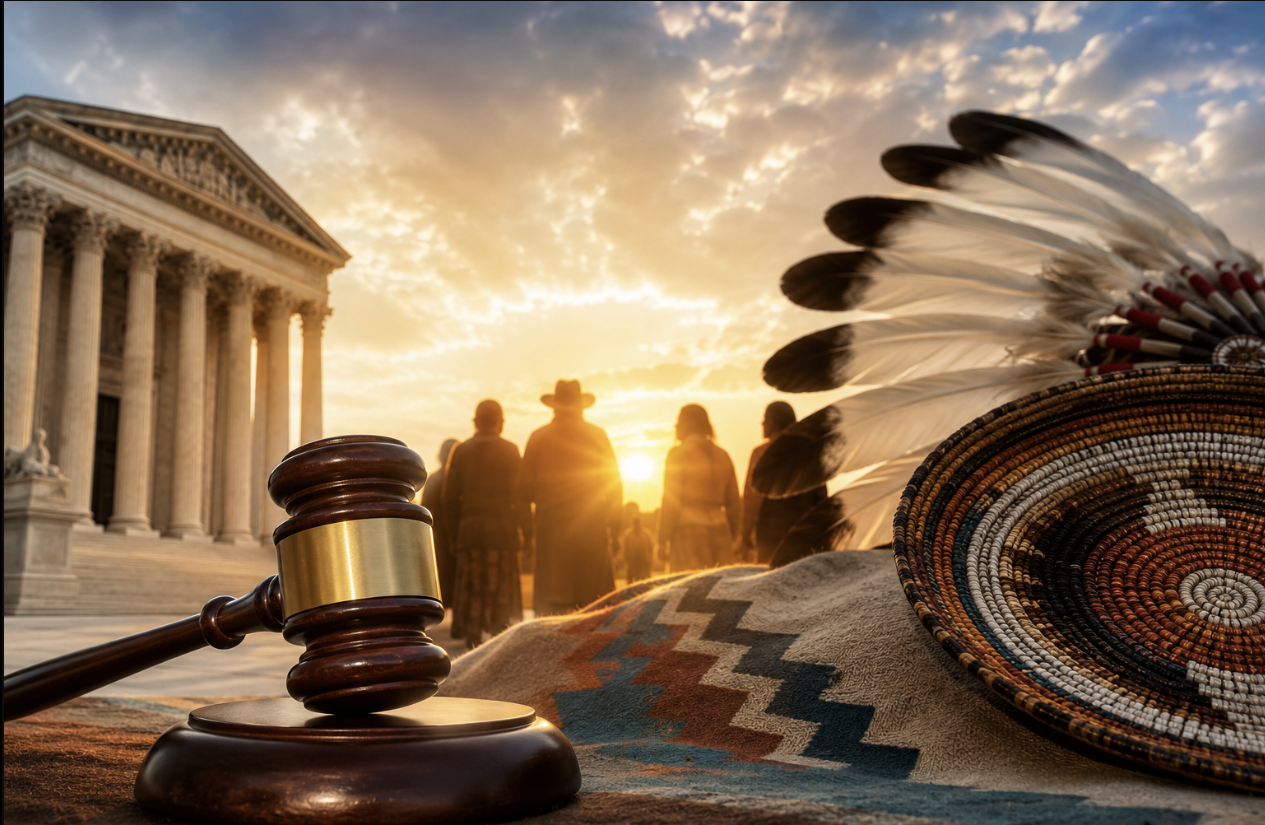
Two members of the Muscogee Nation who are descended from Black people once enslaved by the tribe are taking legal action in federal court in Oklahoma after waiting for their citizenship cards.
Filed Thursday in the U.S. District Court in Oklahoma City, the lawsuit was brought by Rhonda Grayson and Jeffrey Kennedy. The Muscogee Nation Citizenship Board and Principal Chief David Hill are named as defendants.
The lawsuit claims that the chief and the tribe are violating a treaty by refusing to recognize Black Creek Freedmen as citizens. The Muscogee Nation Citizenship Board denied Grayson and Kennedy citizenship in 2019, claiming that they could not trace their heritage within the tribe. The Muscogee Nation Supreme Court rejected the board’s decision, however, ruling last year that Grayson and Kennedy were within their rights to seek tribal citizenship.
Despite the ruling, citizenship cards have still not been issued to Grayson and Kennedy, affecting their ability to participate in the community, including voting. Hill previously asked the citizenship board to cease issuing citizenship cards. Tribal leaders were attempting to determine how to change the constitution.
The Legal Defense Fund and the Lawyers’ Committee for Civil Rights Under Law previously filed a brief urging the Muscogee Creek Nation Supreme Court to follow up with tribal leaders to ensure that its ruling was enacted.
“Every day of non-compliance is another day that Black Creek Freedman are denied our birthright and our very identity as citizens,” said Grayson, president of the Muscogee Creek Indian Freedmen Band, according to The Associated Press. “The fight is bigger than every one of us. It belongs to every Black Creek Freedman descendant who has carried this history, protected these stories and refused to let our identity be dismissed or diminished.”
There are currently 100,000 Black Creek Freedmen in the U.S., according to attorney Damario Solomon-Simmons. Five tribes, including the Muscogee tribe, enslaved approximately 8,000 to 10,000 Black people by 1861.
Two years later, the Cherokee National Council passed legislation freeing all enslaved people. The law, however, was not followed. After the Civil War, enslavement was officially abolished. By 1866, the tribe had entered into a treaty with the U.S. government that fully emancipated enslaved people within the tribe and provided them with full rights, including the right to obtain citizenship.
Tribal leaders, including those from the Cherokee Nation, attempted to exclude Freedmen from obtaining citizenship. In 2007, Cherokee members voted to revoke the citizenship of 2,800 Freedmen in the tribe by including language such as “by blood” in their constitution.
In a 2017 ruling, however, a federal judge ruled that their citizenship rights should be restored. In 2021, their citizenship rights were officially restored.