


I started playing basketball when I was around 12 years old. I was an angry and grieving foster kid who used the game to channel all my rage and to strengthen my body and mind after years of physical abuse. The game came easy to me and I built my skills mostly from playing against boys and grown men on neighborhood courts and in school gyms.
I enjoyed all that shit talking, the tricks, the ankle-breaking, the improvisation, the freedom, and the joy.
The guys who got to know my game would point at me and yell: “Guard her like a n-gga!” “She ain’t no regular girl!” “PLAY HER LIKE A MAN!” “Man, switch. Lemme guard her.” “Stay on her l’il ass!”
And they did.
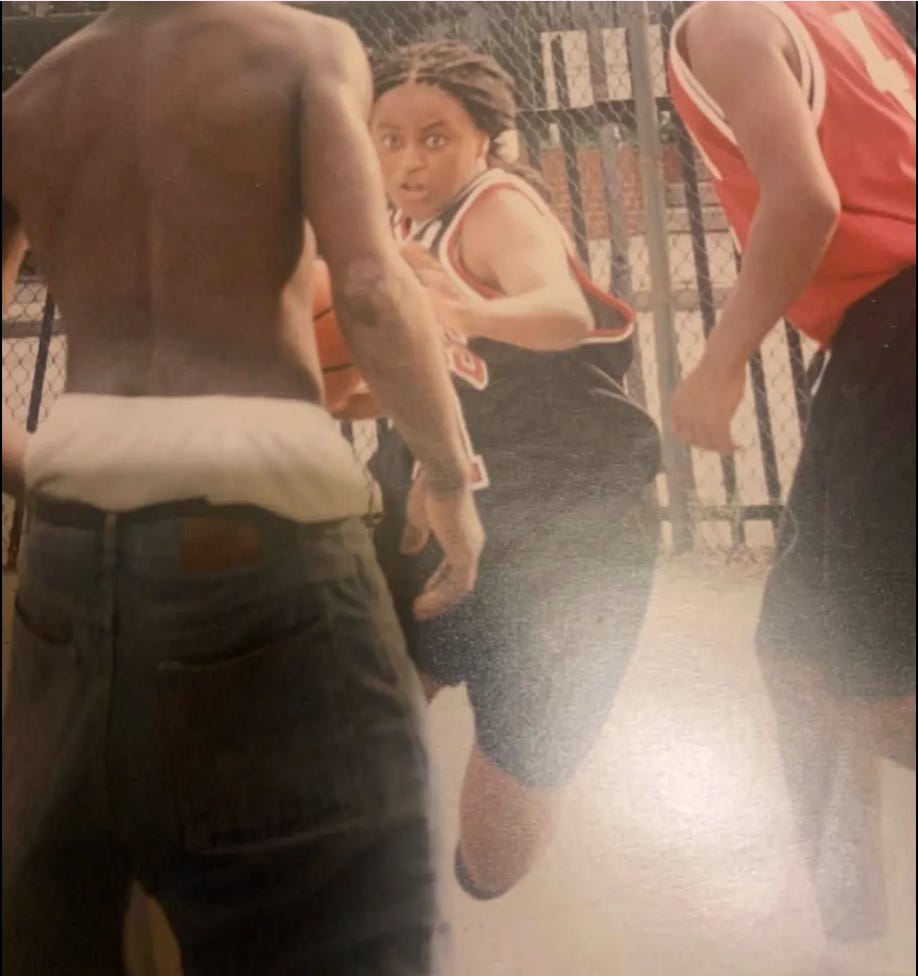
At West 4th Street’s “The Cage” in New York City
I got elbowed, pushed around, cussed out, threatened, protected, respected, and loved on. Ultimately, my gender did not matter during the game. The goal was for us to stay on the court for as many games as we could because the line for “next” was always long and it could be hours before you got back on the court. Whenever I crossed a dude over or hit a long-range 3-pointer, the crowd went wild. Those moments were everything to me.
I loved the street game because nobody tried to “break me” or make me into anything. There were no lectures. There was no white gaze. I learned the game by watching, experimenting, failing, adjusting, creating, losing, and winning.
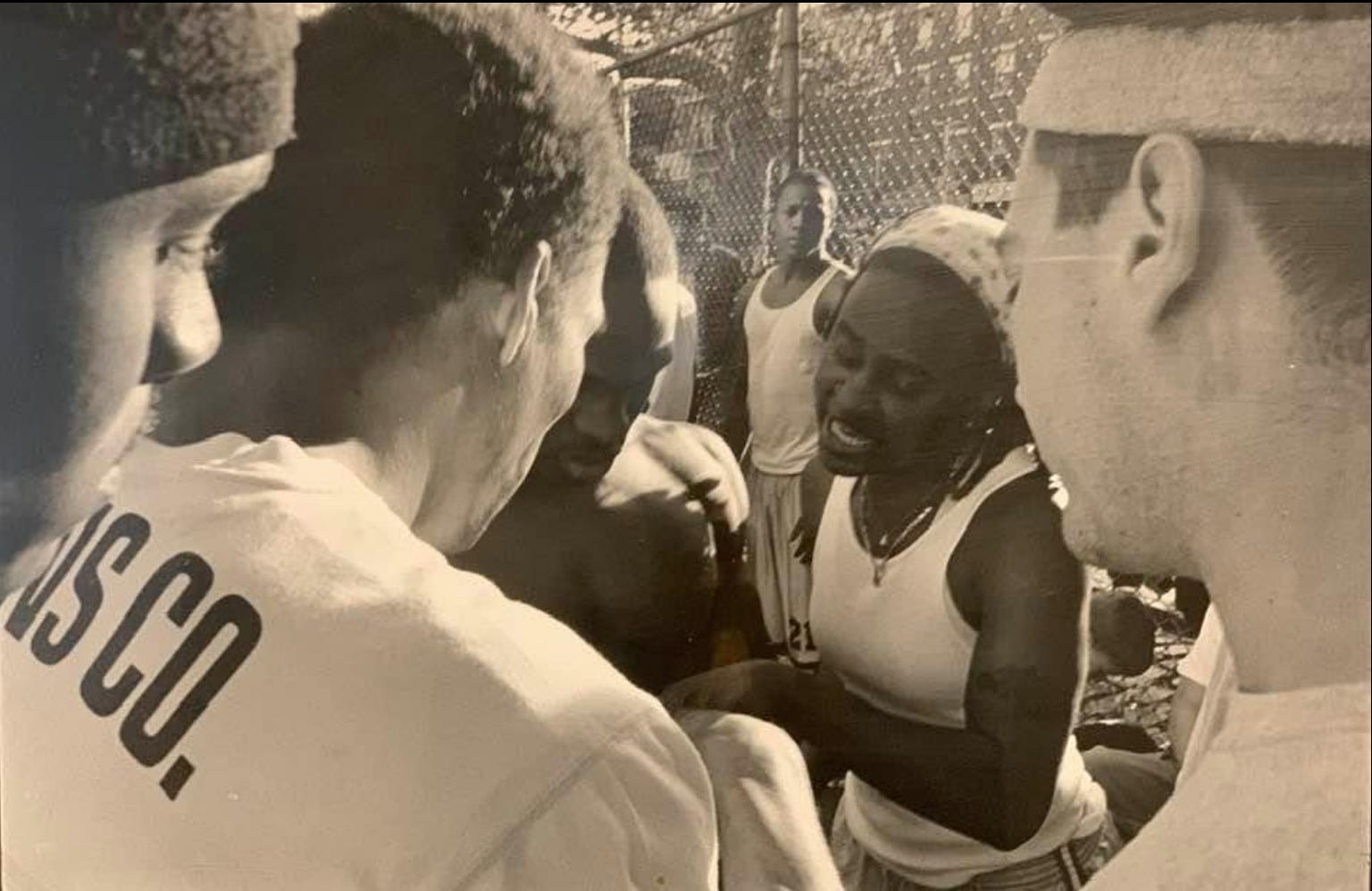
“The Cage” in New York City
And then, I started playing “organized” ball and my game got colonized by coaches that looked down on street ball.
Suddenly there were systems, hierarchies, discipline, and white authority. The coaches wanted to organize my instincts, regulate my body, and rename the very qualities that had made me a good player. I was no longer creative. I was “raw.” I wasn’t reading the floor. I was “athletic.” I wasn’t making smart decisions. I was “playing on instinct.” Just about every white coach I ever had found an animal somewhere inside me.
One called me “a lion in a cage.” Another said I played like “a rabbit on amphetamines.” Another told me that he needed to “tame me.” My college coach admitted that she had recruited me because my “energy,” “raw speed,” and “aggressiveness,” would be “a nightmare” for her players to try to guard. Being on her team meant she could discipline and control me.
On the very first day of practice she briskly walked up to me, got in my face and said, “Stacey Patton, I will break you!”
Now, as a child abuse survivor and a student of African American history, that sounded like a war cry to me. This coach cussed at us and called us names. Mine was “bug eyes.” She kicked balls at us. Yanked us around by our jerseys. Made us run “suicides” until we vomited. And I was the problematic player because I talked back and reminded her that I was a human being who did not like being yelled at or threatened. “Just talk to me. Show me what you want me to do,” I said often.
I never heard a word about my intelligence. About my ability to read the court, anticipate movement, recognize patterns, or make quick decisions under pressure. And anytime I had the audacity to do some smooth move on the court that made the crowd gasp, or if I had the nerve to celebrate myself after I scored a basket, I was yanked back onto the bench and yelled at for being “a hot dog.”
Back then, I didn’t have the education or language of racialization, animalization, or white paternalism, or liberal racism to verbalize what was happening on those courts. But in the marrow of my bones, I knew I was experiencing some racist fuckery. And I knew those white coaches didn’t see me the way they saw the white players. Eventually, those coaches made me hate the game that gave me so much joy, and even saved my life.
Fast forward to 2026.
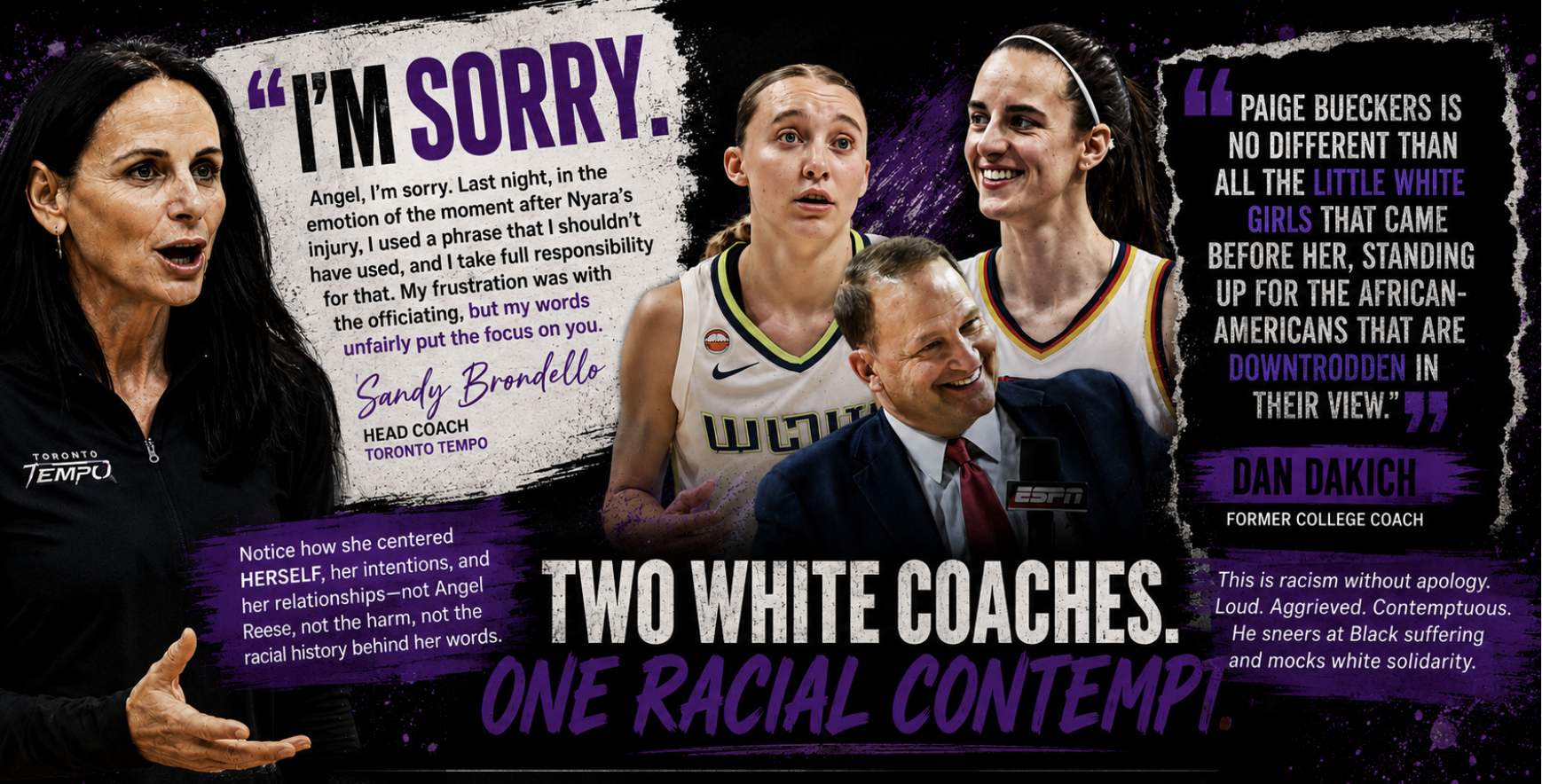
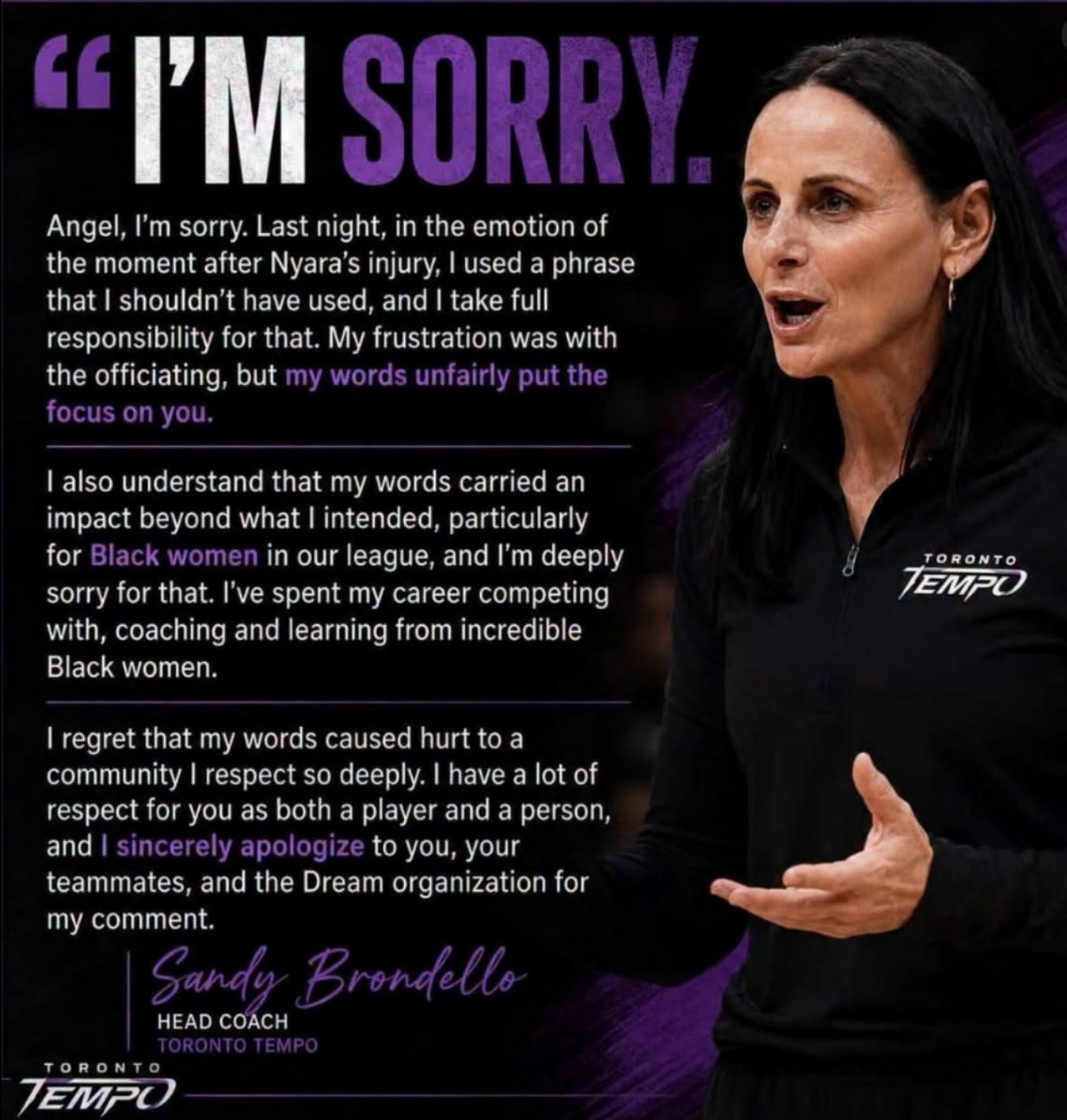
Over the weekend, I read statements by two white coaches, the WNBA’s Sandy Brondello, who wrote an “apology” after calling Angel Reese a “protected species.” And then, former college coach Dan Dakich, who ridiculed Paige Bueckers by calling her one of those “little White girls” who stands up for “downtrodden” Black people.
I sat there shaking my head and mumbling, “Umph, there it is.” All of it sounded so familiar and unsuprising. Read Brondello’s apology:
Umph.
That was not an apology. Never does she acknowledge that her use of the phrase “protected species” was dehumanizing and that it drew from a long and violent racial tradition of describing Black people as animals and creatures outside the boundaries of full humanity. Not to mention, Black women athletes in this century are still being described as aggressive, unruly, physically excessive, and some such. And Angel Reese has experienced all manner of racist and sexist attacks that treat her body as evidence against her humanity.
Doesn’t matter if Coach Brondello consciously intended racial harm or not. Neither her frustration with the officiating nor the emotion of the moment can explain away that “species” trope.
And why the hell is she mentioning her relationships with Black women throughout her career? Is that supposed to be evidence that she is incapable being racist? Notice also how she kept centering intentions, her résumé, and all the Black women she knows. By doing this manipulative boolshit, she placed her innocence at the emotional center and basically made the apology about protecting her character rather than taking responsibility for what she said to Angel Reese. She needs to be asking herself why that language was so readily available to her in a moment of anger.
Now read Dan Dakich’s words.
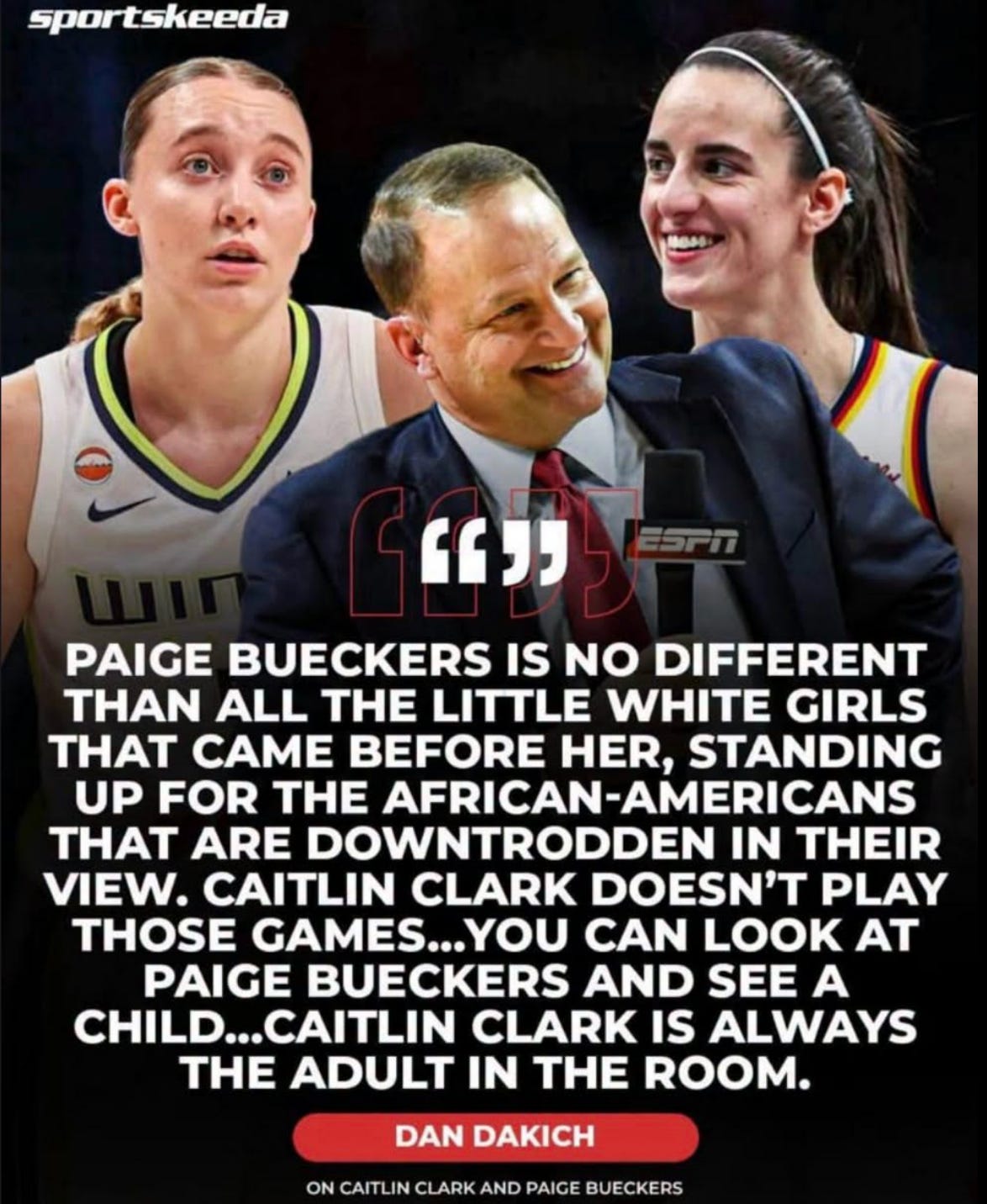
Dan Dakich’s racism wasn’t apologetic at all. His is the loud, aggrieved, and intellectually bankrupt kind of racism that walks up to Black folks, sneers in our faces, grabs his waistband, spits tobacco juice at our feet and says, “What the fuck you’re gonna do about it?” And he might as well had called Paige Buecker a “race traitor” or a “n*gger lover.”
Paige Bueckers spoke facts about the absence of Black women from WNBA head-coaching positions. She also rightly stated that Black women built the league and deserve more opportunities to lead it.
Dakich responded by calling her one of those “little White girls” who stand up for “downtrodden” African Americans. So he essentially puts pigtails on Bueckers’ argument, pats it on the head, and sends it to bed while contrasting her with Caitlin Clark, who is “the adult in the room.” And that little “downtrodden” phrase is his way of calling Black people professional victims who’ve cooked up lies about structural racism, and liberal white allies are naïve children who’ve been duped into believing a fairy tale.
Brondello and Dakich are not opposites. They are fraternal twins of the same white coaching culture and racial contempt. Brondello represents liberal whiteness that’s fluent in centering, remorse, innocence, and self-exoneration. And the other is a more belligerent whiteness that is openly contemptuous of racial solidarity.
After witnessing these two ugly controversies, I can actually tell Y’all that I feel validated. I look back on my younger Black girl self playing on those courts and now I see that I was not confused, oversensitive, angry, or “uncoachable.” Hell, I was reading the room correctly back then. I just didn’t have the language yet.
I knew those coaches were doing more than teaching basketball. They were racists who wanted to tame the animal they imagined inside me, but they did not want the human being who could name WTF they were doing.
That is the same culture speaking through Brondello and Dakich now. “Species” for a Black woman’s body frustrates her. “Little White girls” and “downtrodden” Black people when a white woman dares to recognize Black women as leaders. The garbage coming out of these two coach’s mouths demonstrates exactly why the WNBA needs more Black women coaches. The players deserve to have leaders who do not have to overcome a centuries-old racist imagination before they can see them as thinkers, strategists, and full human beings.
Thanks for reading. If this piece resonated with you, then please consider becoming a paid subscriber. Paid subscriptions help keep my Substack unfiltered and ad free. They also help me raise money for HBCU journalism students who need laptops, DSLR cameras, tripods, mics, lights, software, travel funds for conferences and reporting trips, and food from our pantry. You can also follow me on Facebook!
We appreciate you!