


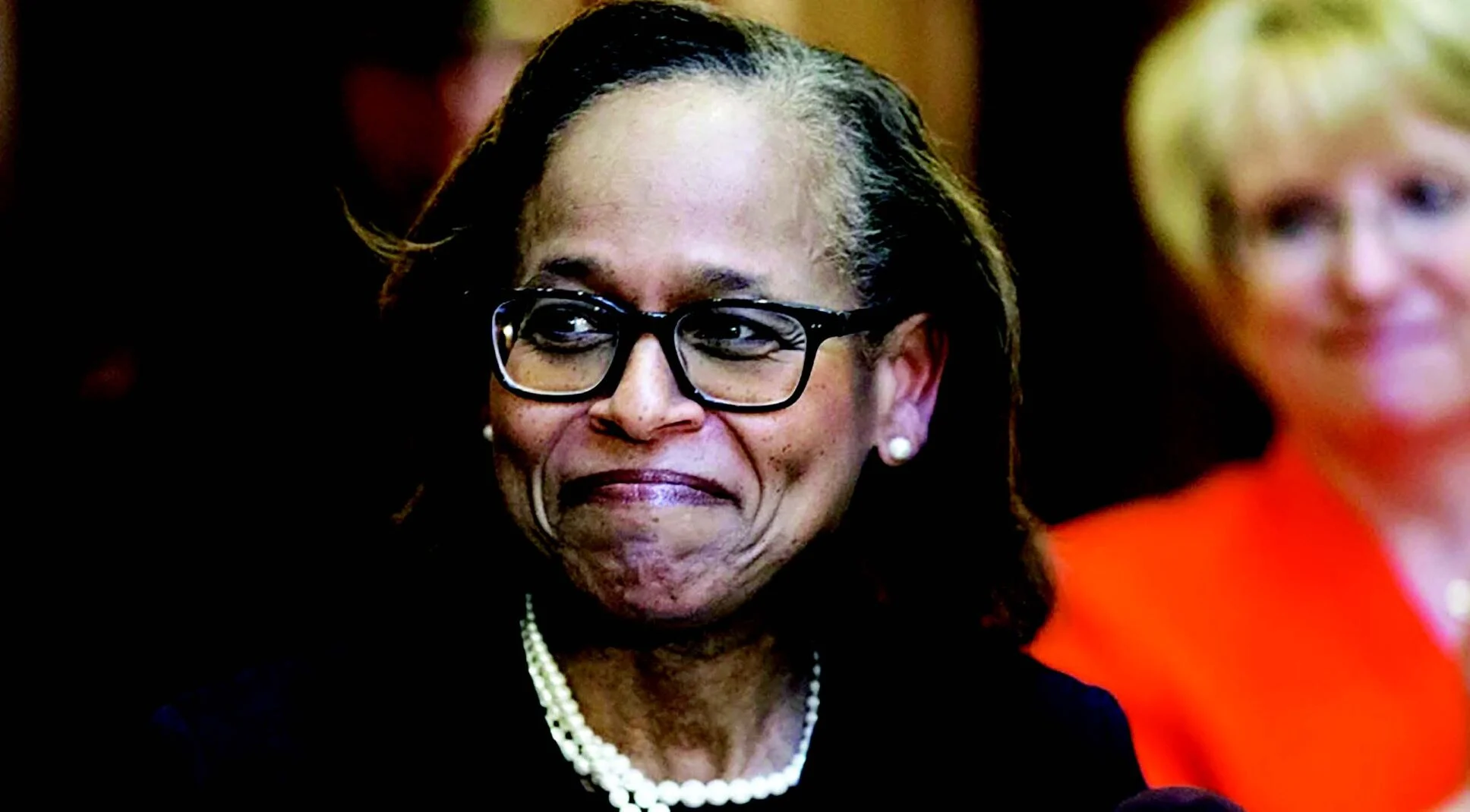
She knew the time would be short. That is what she said, standing in the full authority of the office no person of color had ever held. And she said it not as apology, not as lament, but as a statement of fact — the kind of clarity that comes from a life lived in the law. On Monday, April 6, 2026, Chief Justice Natalie E. Hudson of the Minnesota Supreme Court announced her retirement, effective September 30, 2026.
That’s how close it is. Forty-four years of legal service — staff attorney, city attorney, appellate judge, associate justice, and finally, chief justice — compressed now into a moment of departure. The clock ran. The institution endured. And the woman who led it leaves on her own terms, before the mandatory retirement age of 70 catches her in January of 2027.
A FIRST THAT WAS ALSO A FOUNDATION
The numbers tell part of the story. Thirteen years on the Minnesota Court of Appeals. Eight years as an associate justice on the Supreme Court. Then, appointed by Governor Tim Walz in October of 2023, the elevation to Chief Justice — the third woman and the first person of color ever to hold that seat.
First. That word does a lot of heavy lifting in Minnesota. It announces arrival. It marks the distance that had to be traveled. It carries the names of all those who came before and could not — would not — be allowed through the door. Chief Justice Hudson did not become a symbol by accident. She built a career, brick by brick, case by case, and arrived at the top of the judicial branch as the logical conclusion of a life’s work.
“To serve in this role has been a profound honor, and I am thankful for the trust that was placed in me.” — Chief Justice Natalie E. Hudson
Her legal career began at the University of Minnesota Law School, where she earned her law degree in 1982, having completed her undergraduate work at Arizona State University in 1979. From those origins, she moved through Southern Minnesota Regional Legal Services — the frontline of justice for those who could not otherwise afford it. Then private practice at Robins, Kaplan, Miller and Ciresi. Then the Minnesota Attorney General’s office, where she worked primarily in the Criminal Appellate Division. Then Hamline University School of Law, where she served as assistant dean. Then the St. Paul City Attorney’s office.
Each posting was a different angle of vision on the same truth: the law either serves people or it does not. Hudson’s career was an argument — made through presence, through service, through relentless institutional engagement — that it must serve all people.
THE COURT SHE LED
When Governor Walz elevated her in 2023, taking over the seat vacated by retiring Chief Justice Lorie Gildea, Hudson inherited a court already shaped by progressive appointments — all seven of its justices having been named by Democratic governors. The question was never whether she belonged there. The question was what she would build.
She built access. Her tenure’s defining theme — make the courts reachable — expressed itself in specific, concrete initiatives. The oneCourtMN Hearings Initiative Policy expanded remote hearings statewide, reducing the geographic and economic burden on Minnesotans who could not easily appear in person. The AI Response Committee opened the institution to the questions that technology is now forcing on every sector — including, acutely, journalism. She also launched the Mental Health Justice Initiative, pressing the court system to grapple honestly with the population it sees most: those whose unmet mental health needs have become legal problems.
None of this was accidental. Access was the word she chose from the beginning. When she was appointed, she named it as a central goal: to increase public trust and confidence in the judicial system through better accessibility. She meant it. The record proves it.
ON THE RECORD: A DISSENT WORTH KNOWING
Among the most significant moments in Chief Justice Hudson’s tenure was not a ruling from the majority — it was a dissent. In Cruz-Guzman v. State of Minnesota, the long-running school desegregation case, Hudson parted from the court’s majority with words that deserve to be read carefully.
She argued that requiring parents to prove that racial segregation causes academic disparities amounted to a demand that history be denied. Her words were direct: closing our eyes to what history and modern reality have demonstrated to be true — that where racially segregated neighborhoods exist, racialized disparities in academic outcomes follow — is not judicial neutrality. It is a choice. It is a choice about whose experience counts as evidence.
That dissent belongs in the record of this moment. It is the voice of a jurist who understood that the highest obligation of the court is not procedural tidiness — it is justice.
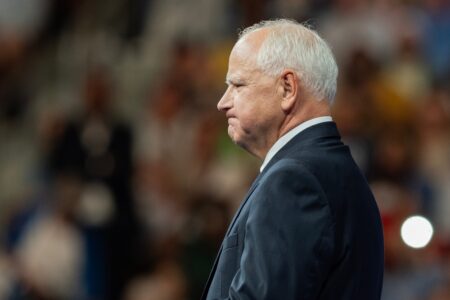
“Chief Justice Hudson stands among the giants of Minnesota history.” — Gov. Tim Walz
WHAT COMES NEXT
Her retirement, announced April 6, sets in motion a significant appointment process. Governor Walz, who himself exits in 2027, will name a successor. His office has indicated that details are forthcoming. Already, the analysis has begun — three of the seven justices on the court are Walz appointees; he elevated Hudson herself. The question of who replaces her is a political and jurisprudential question of the first order.
For the communities that Insight News serves — the communities that have watched this court, watched this state, watched these appointments with the knowledge that representation is never incidental — the question carries particular weight. Who will carry the mantle? Who will hold the door that Hudson opened?
That answer is still ahead. What is settled, as of this April morning, is the size of what Chief Justice Natalie E. Hudson accomplished. She entered a 44-year legal career with no guarantee that it ended here. She made it end here. That is not a small thing. That is the whole thing.
Acknowledge the gift. Redemption is at hand.