


The Genius of Black People
Created by Rev. Dr. Otis Moss III, TheHub.news presents its Black History Month series celebrating the genius of Black people—stories of courage, faith and creativity forged in struggle. Inspired by ancestors like Walter Francis White, this series honors sacred memory and lifts up the divine brilliance shaping justice and resilience today.
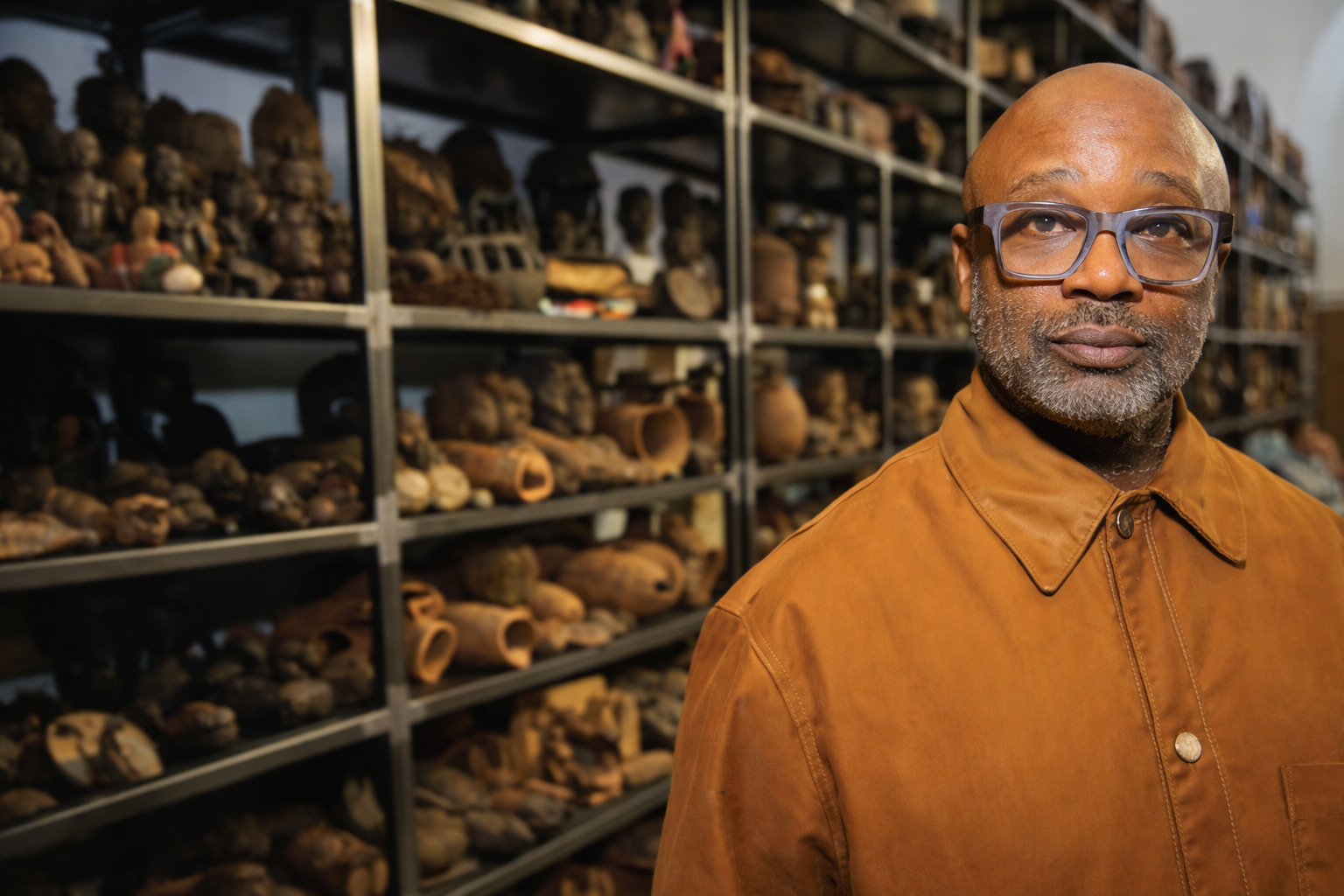
Theaster Gates’s artistic practice is grounded in a philosophy that refuses to separate art from everyday life, justice and community responsibility. Trained in fine art and urban planning, Gates approaches creativity as a social practice, one that treats neighborhoods, buildings and people as both medium and message. For him, art is not merely something to be viewed; it is something to be lived, stewarded and shared.
At the core of Gates’s philosophy is the belief that Black spaces, Black materials, and Black histories carry intrinsic value, even when institutions and markets have deemed them disposable. His work often begins with discarded objects, tarred roofs, salvaged wood, decommissioned buildings and repositions them as sacred vessels of memory and possibility. This act of reclamation is both aesthetic and ethical, asserting that restoration itself is a form of justice.
Nowhere is this vision more evident than in Gates’s work in urban regeneration on Chicago’s South Side. Through projects such as the Dorchester Projects and the Stony Island Arts Bank, Gates transformed abandoned buildings into vibrant cultural institutions. These spaces house archives of Black art, music and history while also serving as gathering places for conversation, learning and community care. Importantly, Gates insists that redevelopment must benefit the people who already live there, resisting displacement and extractive models of “revitalization.”
Gates’s philosophy also emphasizes collective labor. He employs local residents, collaborates with artists and archivists and reinvests cultural capital back into neighborhoods. In this way, his work echoes civil rights traditions of cooperative economics and shared leadership.
Theaster Gates demonstrates that urban regeneration can be led by culture rather than commerce alone. His practice offers a powerful model of how art can rebuild infrastructure, preserve memory and strengthen communities, proving that creativity, when rooted in care and accountability, can function as a lasting tool for social transformation.
Source: www.theastergates.com