



Close Menu
TheHub.news

    5 Things We Learned From Colin Kaepernick’s Interview With Karen Hunter

    By Ayara Pommells

    The BET Archives Are Gone. Who Controls Our History Now?

    By Danielle Bennett

    This Day in History: Mary S. Peake Began Teaching Under the Emancipation Oak

    By Veronika Lleshi

    Subscribe to Updates

    Get the latest creative news from FooBar about art, design and business.

    X (Twitter) Instagram YouTube
    X (Twitter) Instagram YouTube
    TheHub.news
    Support Our Work
    • Home
    • Our Story
      • News & Views
        • Politics
        • Injustice
        • HBCUs
        • Watch
      • Food
        • Cuisine Noir
        • soulPhoodie
      • Passport Heavy
      • Travel
      • Diaspora
      • This Day
      • Entertainment
      • History
      • Art
      • Music
    • Health
    • Money

      Cashflow Coach: I Planted a Money Tree!

      August 4, 2026

      Breaking Down the 2 Different Types of Income

      July 7, 2026

      Black Americans Are Already Living Through a Recession

      July 6, 2026

      You Must Be an Owner to Win 

      June 23, 2026

      Economic Empowerment Has Always Been a Part of Black History

      February 12, 2026
    • Books
    • Business
    • Sports
      1. First and Pen
      2. View All

      ESPN Isn’t Hiding From What It’s Consciously Become

      September 15, 2026

      The US Open Run By Ben Shelton, Frances Tiafoe Is Why Arthur Ashe Endured

      September 14, 2026

      Browns DB Denzel Ward Becomes Minority Owner of Cleveland Guardians

      September 11, 2026

      Ole Miss QB Trinidad Chambliss Uses NIL Deal to Fund Scholarships

      September 10, 2026

      ESPN Isn’t Hiding From What It’s Consciously Become

      September 15, 2026

      The US Open Run By Ben Shelton, Frances Tiafoe Is Why Arthur Ashe Endured

      September 14, 2026

      Browns DB Denzel Ward Becomes Minority Owner of Cleveland Guardians

      September 11, 2026

      Ole Miss QB Trinidad Chambliss Uses NIL Deal to Fund Scholarships

      September 10, 2026
    • Tech
    • Podcasts
      1. Karen Hunter is Awesome
      2. Lurie Breaks it Down
      3. Human(ing) Well with Amber Cabral
      4. Financially Speaking
      5. In Class with Carr
      6. View All

      5 Things We Learned From Colin Kaepernick’s Interview With Karen Hunter

      September 17, 2026

      The BET Archives Are Gone. Who Controls Our History Now?

      September 17, 2026

      This Day in History: Mary S. Peake Began Teaching Under the Emancipation Oak

      September 17, 2026

      This Day in History: September 17th

      September 17, 2026

      5 Things We Learned From Colin Kaepernick’s Interview With Karen Hunter

      September 17, 2026

      The BET Archives Are Gone. Who Controls Our History Now?

      September 17, 2026

      This Day in History: Mary S. Peake Began Teaching Under the Emancipation Oak

      September 17, 2026

      This Day in History: September 17th

      September 17, 2026

      5 Things We Learned From Colin Kaepernick’s Interview With Karen Hunter

      September 17, 2026

      The BET Archives Are Gone. Who Controls Our History Now?

      September 17, 2026

      This Day in History: Mary S. Peake Began Teaching Under the Emancipation Oak

      September 17, 2026

      This Day in History: September 17th

      September 17, 2026

      5 Things We Learned From Colin Kaepernick’s Interview With Karen Hunter

      September 17, 2026

      The BET Archives Are Gone. Who Controls Our History Now?

      September 17, 2026

      This Day in History: Mary S. Peake Began Teaching Under the Emancipation Oak

      September 17, 2026

      This Day in History: September 17th

      September 17, 2026

      5 Things We Learned From Colin Kaepernick’s Interview With Karen Hunter

      September 17, 2026

      The BET Archives Are Gone. Who Controls Our History Now?

      September 17, 2026

      This Day in History: Mary S. Peake Began Teaching Under the Emancipation Oak

      September 17, 2026

      This Day in History: September 17th

      September 17, 2026

      In Class with Carr: Whose Labor? Which Stories?

      September 7, 2026

      In Class with Carr: King Me: Africana Governance and Purpose in a Changing World

      August 31, 2026

      In Class with Carr: Beginning Black August

      August 3, 2026

      In Class with Carr: “Rock the Vote!”

      July 21, 2026
    TheHub.news
    Featured

    5 Products Often Sourced Using Child Labor in Africa

    By Veronika LleshiDecember 18, 20234 Mins Read
    Share Email Copy Link
    Image credit: ShutterStock
    Share
    Facebook Twitter LinkedIn Email Copy Link Threads

    The rate of child labor in Africa has now increased to four times that of any other area, according to recent research.

    Here are five popular products that are being sourced by child workers in Africa.

    1. Cotton: Per the European Union, cotton is one of the most commonly made products using child labor. Often grown in Africa, overall, 37 out of 53 nations on the continent produce cotton, comprising six percent of the global output of the material. In approximately 18 countries, including Burkina Faso, Mali and Zambia, the product is harvested using forced child labor. 

    In Burkina Faso alone, 50% of all boys ranging from 10 to 17 or above work on a cotton farm, according to the Department of Labor. Often trafficked to work on these farms, they work under 12 or 17-month contracts and are sometimes unpaid. Popular brands such as Victoria’s Secret have been found to use cotton that has been obtained through child labor for their products. 

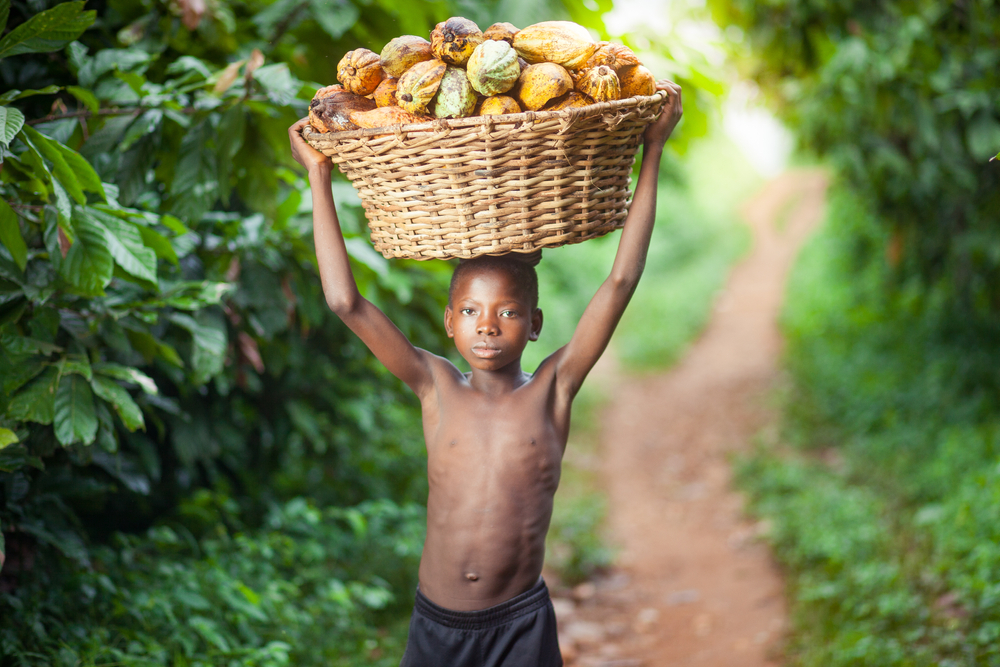
    1. Cocoa: The chocolate industry has been notoriously linked with child labor. Children as young as five have been found to be working in cocoa fields in places such as Cameroon, Côte d’Ivoire, Ghana, Guinea and Nigeria. Per the Department of Labor, in Côte d’Ivoire and Ghana alone, 1.56 million children are required to work in cocoa fields as part of forced child labor, producing 60% of cocoa production yearly. 

    Approximately 43% of these children are put through hazardous work as they’re required to use machetes, burn the fields, lift the product and are exposed to toxic chemicals while working. Companies that have been accused of exploiting child labor in these regions as third-party companies include Nestle, Mars, Hershey and Cargill.

    View this post on Instagram

    A post shared by Food Empowerment Project (@foodempowermentproject)

    src=”https://platform.twitter.com/widgets.js” charset=”utf-8″>
    1. Diamonds: For decades, children in Africa have been part of the diamond mining industry. In 2009, Harvard University researchers released a report on the conditions of mining in Sierra Leone. Out of 120,000 people involved in artisanal mining, 10,000 people were identified as children, ranging from the ages of 10 to 17. Often working 10-hour shifts, the children were forced to travel and shovel material for low or no wages while also undergoing routine injuries. 

    The number of children forced into mining for diamonds continues to increase across the continent a decade after the report was released. In the Central African Republic alone, child labor at diamond mines increased by 50% once the COVID pandemic hit and schools shut down, according to a report by Reuters. 

    1. Tobacco: Arguably considered one of the most popular plants, tobacco is often harvested using child labor, particularly in Zimbabwe. Per AP News, children as young as five work alongside their parents in tobacco fields to help support their families. Through contact with the plant, the children are put in dangerous conditions where they’re susceptible to nicotine poisoning, respiratory symptoms, chest pains and other side effects. Although the law prohibits children below 16 from working, harvesting tobacco is not included in laws that prevent child labor, according to Human Rights Watch.

    Today @USDOL’s ILAB released its latest child labor report and list of goods produced by #ChildLabor or #ForcedLabor. The reports highlight labor abuses abroad: https://t.co/ay0nzxvvjP pic.twitter.com/bd85YJtHd2

    — U.S. Department of Labor (@USDOL) September 30, 2020
    1. Sugarcane: Child labor in the sugarcane industry is most prevalent in Kenya and Uganda, according to the International Labour Organization. In both countries, approximately 30% of boys ages 10 and up are forced into working in sugarcane fields for money for their families or studies. 

    In Uganda alone, 79% of the children forced into child labor were working to harvest sugarcane either to help their families or themselves survive after being orphaned. The work on sugarcane fields is arduous and hazardous as the younger, under 18 children are forced to cut thick stalks of the plant with heavy machinery such as machetes or cane knives. 

    Veronika Lleshi

    Veronika Lleshi is an aspiring journalist. She currently writes for Hunter College's school newspaper, Hunter News Now. In her free time, she enjoys reading, writing and making music. Lleshi is an Athena scholar who enjoys getting involved in her community.

    Related Stories

    Tim Scott Is Willing to Do Anything, Including a Woman, to Be VP

    January 22, 2024

    Pope Francis Calls for Global Ban of the ‘Deplorable Practice of Surrogacy’

    January 10, 2024

    Coach Cass: Tips From Ava

    January 7, 2024

    More Than Money With Jacquette Timmons: Is Now the Time to Redefine Your Money Fears?

    December 29, 2023

    Ja Morant’s Return Is Why We Need Ja to Do Right Off the Court

    December 22, 2023

    10 Best Black-owned Beauty Gifts Under $50

    December 13, 2023
    Recent Posts
    • 5 Things We Learned From Colin Kaepernick’s Interview With Karen Hunter
    • The BET Archives Are Gone. Who Controls Our History Now?
    • This Day in History: Mary S. Peake Began Teaching Under the Emancipation Oak
    • This Day in History: September 17th
    • What Trump’s EPA Isn’t Telling You About the New Data Center Next Door

    5 Things We Learned From Colin Kaepernick’s Interview With Karen Hunter

    By Ayara Pommells

    The BET Archives Are Gone. Who Controls Our History Now?

    By Danielle Bennett

    This Day in History: Mary S. Peake Began Teaching Under the Emancipation Oak

    By Veronika Lleshi

    This Day in History: September 17th

    By TheHub.news Staff

    Subscribe to Updates

    A free newsletter delivering stories that matter straight to your inbox.

    About
    About

    TheHub.news is a storytelling and news platform committed to telling our stories through our lens. With facts at the center, we document the lived reality of our experience globally—our progress, our challenges, and our impact—without distortion, dilution, or apology.

    X (Twitter) Instagram YouTube

    5 Things We Learned From Colin Kaepernick’s Interview With Karen Hunter

    By Ayara Pommells

    The BET Archives Are Gone. Who Controls Our History Now?

    By Danielle Bennett

    This Day in History: Mary S. Peake Began Teaching Under the Emancipation Oak

    By Veronika Lleshi

    This Day in History: September 17th

    By TheHub.news Staff

    Subscribe to Updates

    A free newsletter delivering stories that matter straight to your inbox.

    © 2026 TheHub.news A 501(c)(3) tax-exempt organization.

    Type above and press Enter to search. Press Esc to cancel.