





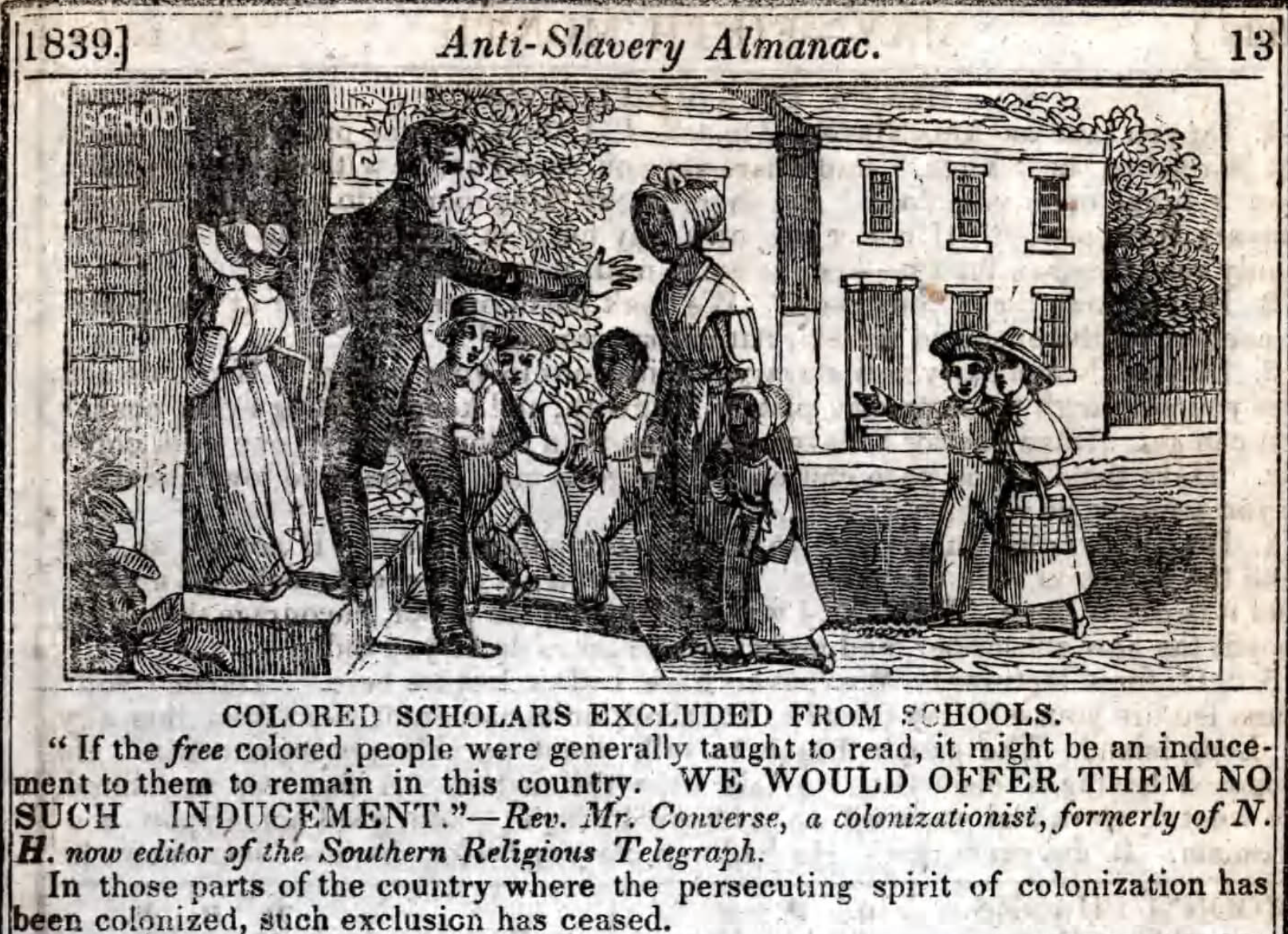
On February 15, 1848, Benjamin Roberts filed the first school desegregation lawsuit in U.S. history after his young daughter, Sarah Roberts, was barred from attending a public school in Boston because she was Black.
Sarah was just five years old when she was forced to walk past several nearby white-only schools to attend the Abiel Smith School, an underfunded, segregated school for Black children located far from her home. After she was denied admission to a closer school and physically removed from the building, her father challenged the policy in court.
The case, Roberts v. Boston, was argued by attorney Robert Morris, one of the nation’s first African American lawyers, and Charles Sumner, who later became a U.S. senator. Sumner argued that segregation harmed Black children both physically and psychologically, citing the long distance Sarah was forced to travel and the inferior conditions of segregated schools.
In 1850, the Massachusetts Supreme Judicial Court ruled against the Roberts family, finding no constitutional violation in the practice of segregated schooling.
The decision later became a key precedent cited in the U.S. Supreme Court’s 1896 ruling in Plessy v. Ferguson, which established the “separate but equal” doctrine.
Although the Roberts family lost in court, the case helped spark legislative change. In 1855, Massachusetts became the first state to ban segregated public schools. More than a century later, Sumner’s arguments resurfaced in the landmark 1954 Supreme Court decision Brown v. Board of Education, which overturned Plessy and outlawed school segregation nationwide.
Sarah Roberts’ exclusion from a Boston classroom helped pave the way for modern civil rights law in the country.