




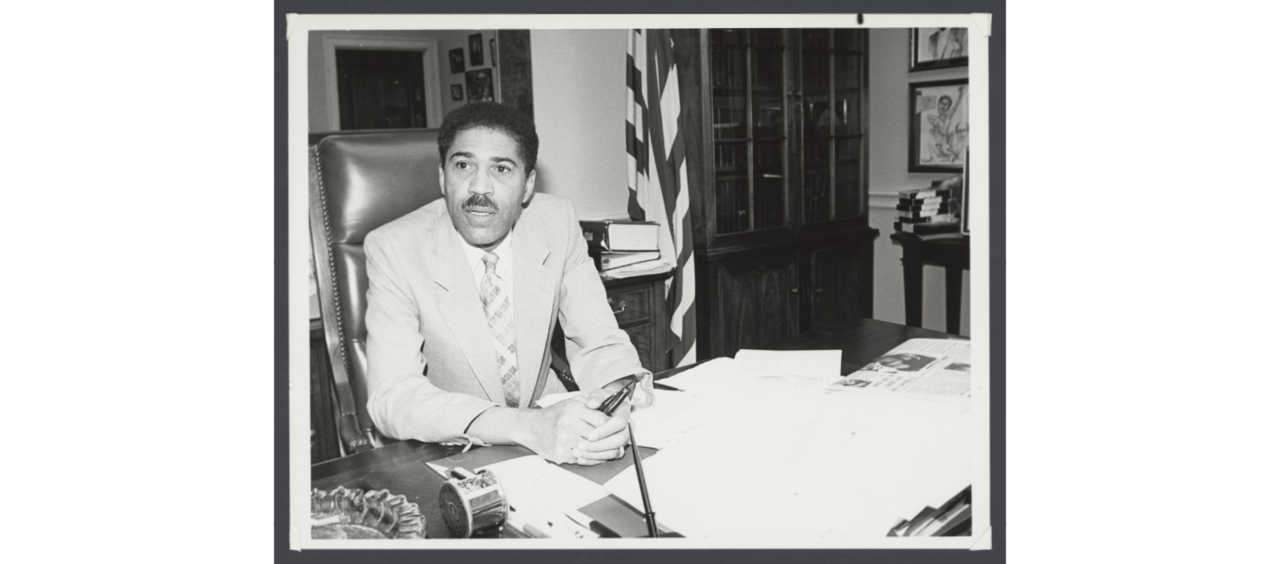
April 30 is the birthday of William Lacy Clay Sr., a lawmaker whose career traced the arc of civil rights activism into institutional political power.
Born in St. Louis in 1931, Clay came of age in a segregated city that would shape his political identity. After graduating from Saint Louis University and serving in the Army, he entered public life through local politics, winning a seat as a St. Louis alderman in 1959. His early years in office coincided with the rise of the civil rights movement, and he took part not only as a legislator but also as an organizer.
In 1963, Clay helped lead protests against discriminatory hiring at Jefferson Bank and Trust and the demonstrations resulted in his arrest and a 105-day jail sentence. However, Clay’s activism, combined with his work in organized labor, positioned him as a prominent figure in St. Louis politics.
Clay was elected to the House of Representatives in 1968, becoming the first African American to represent Missouri in Congress. He would remain there for more than three decades, representing a district anchored in St. Louis. His legislative priorities centered on labor rights, economic opportunity and environmental concerns.
Early in his tenure, Clay joined other newly elected Black lawmakers, including Shirley Chisholm and Louis Stokes, to form a coordinated bloc in Congress. In 1971, he was instrumental in formalizing that effort into what became the Congressional Black Caucus, helping establish a lasting institutional voice for African American legislators.

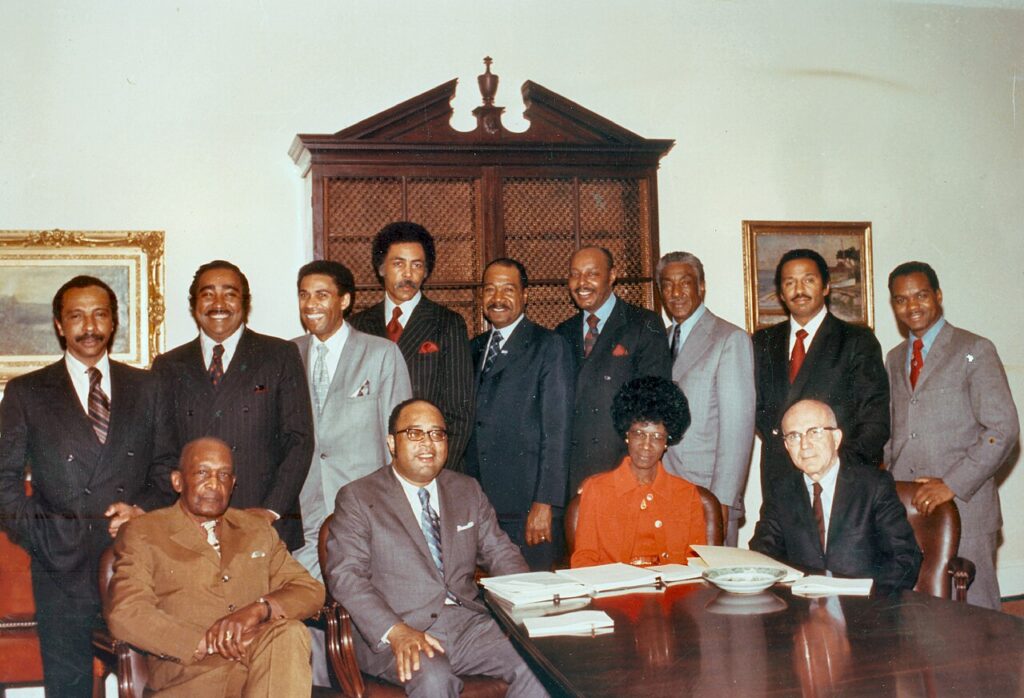
Source: Black Americans in Congress. Office of the Clerk, U.S. House of Representatives
Clay later served as chair of the House Committee on the Post Office and Civil Service from 1991 to 1995. He supported measures such as the Family and Medical Leave Act, aligning with his long-standing emphasis on worker protections.
He retired in 2001, and his congressional seat passed to his son, Lacy Clay Jr., continuing a rare political lineage. Clay died in 2025 at age 94.