





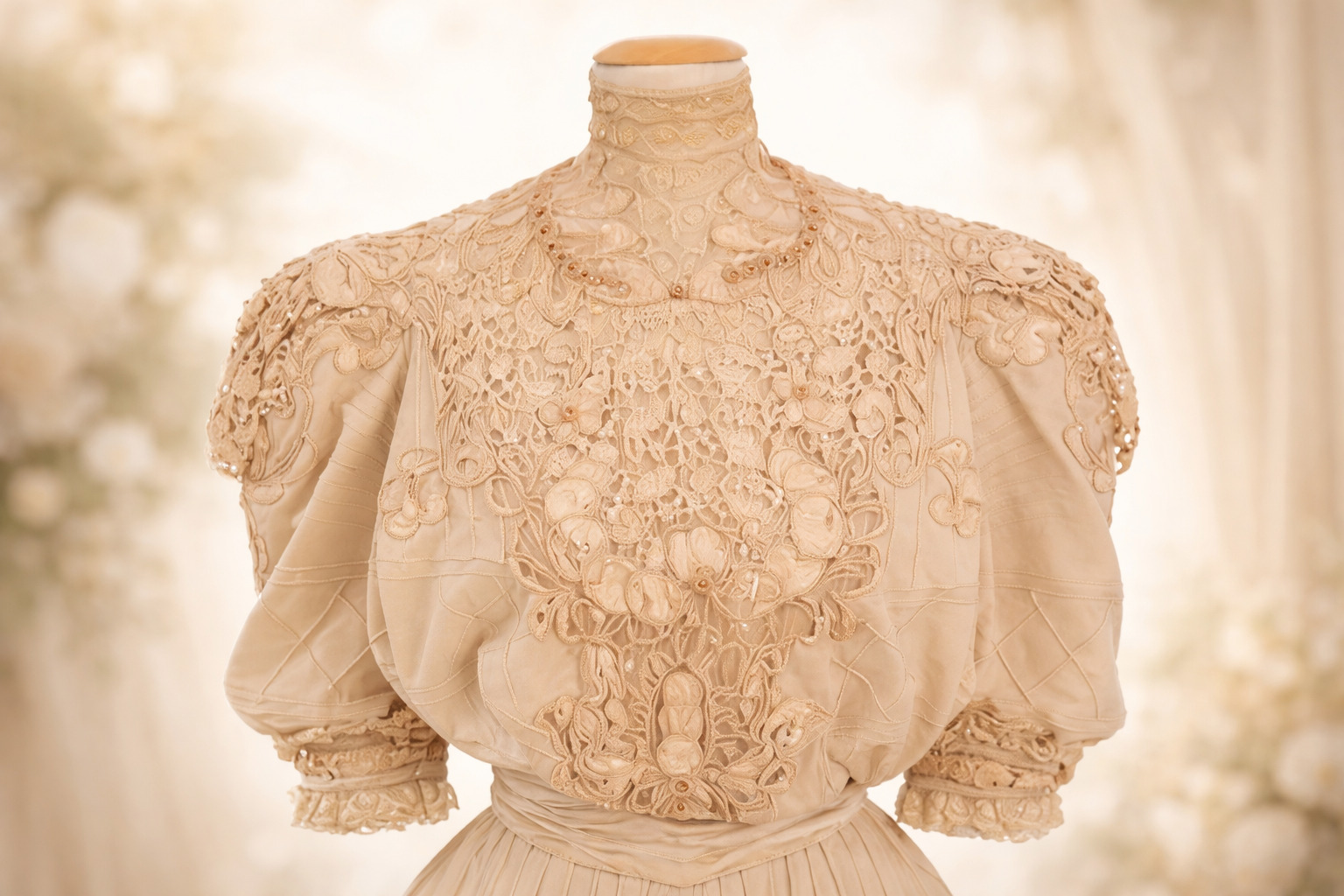
Regina King shouted her out. The Metropolitan Museum of Art has her gowns on display. And it all started with a needle, some thread and unmatched talent in the “Harlem of the South.”
Meet Fannie Criss Payne, a 20th-century trailblazing dressmaker who broke every rule of segregated business by creating breathtaking fashion that captivated even the very people who were trying to hold her back. In the early 1900s, before Black fashion designers were mainstream household names, this legend had white socialites lining up for her designs, turning talent into a fierce form of defiance.
To celebrate Women’s History Month, here is the unspoken story of a powerhouse who stitched her way to the top.
Payne was born in 1866 in Madison, Cumberland County, Virginia, to Samuel and Adeline Criss, who had both been enslaved. Her father worked as a farmer while her mother managed the household; neither of them could read. She was the family’s seventh child, but she was the first to be born free.
Fannie would learn to sew, a skill that would serve her well later in life. By the time she moved to Jackson Ward in Richmond, just an hour from her family’s farm, she was seeking new opportunities in a vibrant community that was flourishing despite the oppressive segregation of the era. Between 1890 and 1920, Jackson Ward earned the nicknames ‘Harlem of the South’ and ‘Birthplace of Black Capitalism,’ thriving as a center for Black culture and entrepreneurship. Once there, she took a job as a day cook, earning $1.50 a day – a modest income that nevertheless represented a significant step toward independence and self-sufficiency in a city brimming with possibility and resilience.
She married William Thornton Payne on February 17, 1895, and according to the 1900 census, she had established as the head of her household, carving out a successful career as a dressmaker while her husband worked as a waiter at a hotel. Her talent and hard work paid off, enabling her to purchase two properties, one of which was situated on Quality Row on Leigh Street – a neighborhood known for its burgeoning Black professionals in Richmond. Her clientele boasted wealthy white women as well as prominent figures in the Black community, including her neighbor Maggie L. Walker, who made history as the first African American woman in the U.S. to own and operate a bank. Payne’s influence didn’t stop there; she later collaborated with notable personalities such as actress Gloria Swanson and her neighbor in Harlem, Sarah Breedlove Walker (better known as Madam C.J. Walker), along with her daughter A’Lelia Bundles, all while navigating the complexities of her time.
Payne continued to achieve success when she was featured in the first issue of the Voice of the Negro in 1904. This magazine, based in Atlanta, aimed to keep readers informed about various topics like current events, education, art, science, race issues, social movements and religion. It was an important and highly sought after resource for educated Black families and to consume and share.
Her designs were also highlighted in the social sections of Richmond’s newspapers, which meant she didn’t need to spend money on advertising for her work. In one of her dresses from 1904, she even used her own labels, showing that she had truly made a name for herself in the dressmaking industry.

Between April 25, 1910, when Fannie was still married to William Payne who was working as a pool room manager at that time and April 1911, she divorced him. Some historical resources note that she may have felt trapped in the marriage.
During this time, strict barriers were being established between Black and white people in Richmond and the rest of the South. From 1896, with the Plessy vs. Ferguson case that upheld separate facilities for whites and Blacks to 1910, the growing Jim Crow laws continued to enforce segregation in many aspects of daily life.
While managing her business, Payne frequently traveled to New York to purchase fabric and after several visits, she decided it would be easier to reside closer to the very resources that were vital to her livelihood. She also longed to escape the harsh racial divides of the South and live in a place where African American culture was embraced and flourished. By April 22, 1911, she moved to Harlem and married William T. White, a head waiter. They bought a brownstone on 137th Street, near Striver’s Row, which also served as her workshop.
Sadly, when Payne passed away in February 1942, her death certificate listed her as a hairdresser, completely overlooking her phenomenal contributions as a clothing designer and dressmaker who was well known and respected. This intentional misclassification is a slap in the face to her legacy, considering the incredible impact she had on the fashion world.
Fannie Criss Payne was a visionary who pushed the boundaries of style and creativity; and she influenced countless designers who came after her. It’s frustrating to think that such an important figure was reduced to a mere footnote on a legal document, rather than being remembered for the revolutionary spirit she embodied.
May we never forget her.