





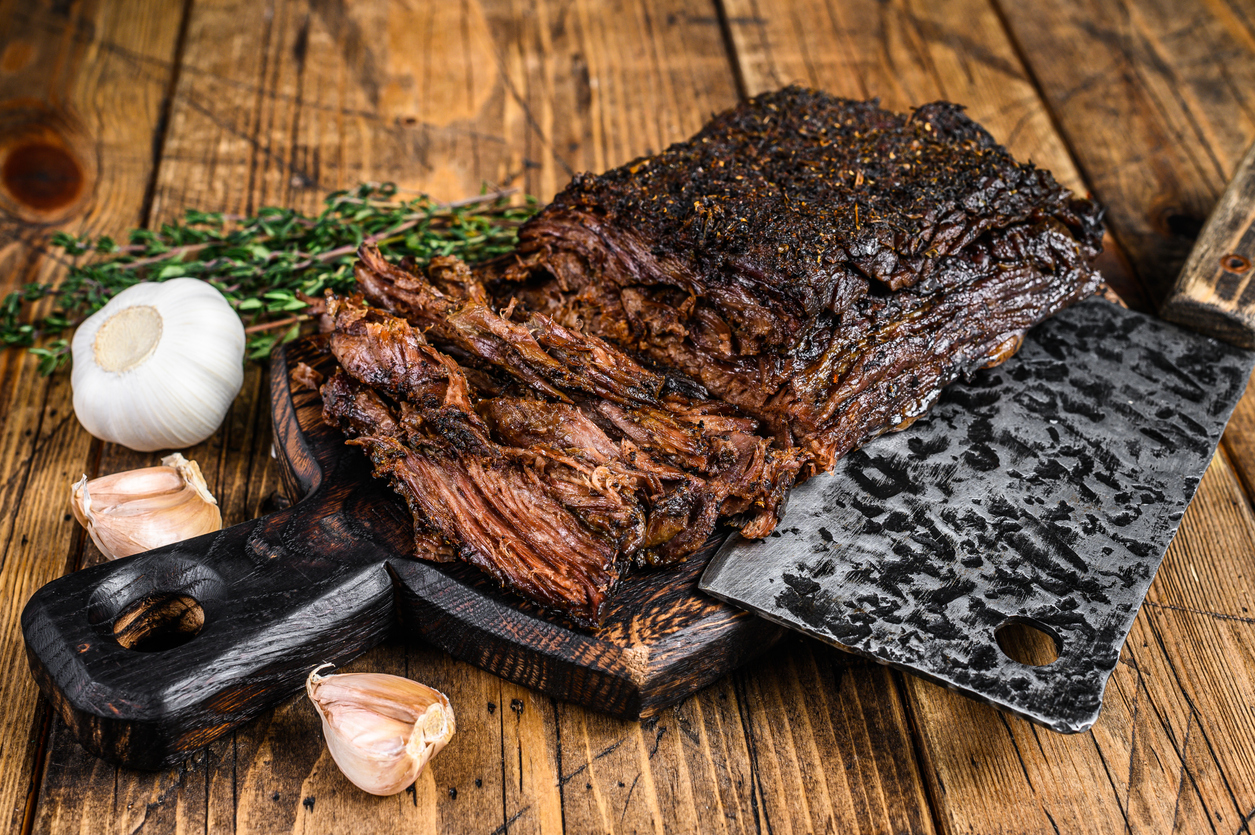
With its rich flavor and crispy outside, smoked brisket is known, and rightly crowned, as the “King of BBQ.”
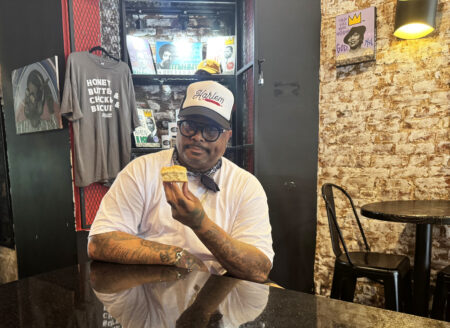
“It should have a nice, black ‘bark’ on the outside and a smoke ring on the inside of the brisket. When you slice [the meat] you should be able to place that slice on your finger and it’ll just kind of fold over,” describes Darryl Bell about smoked brisket done right.
Whether you’re an aspiring pit master or a home cook who enjoys serving up this delicious, flavorful cut of meat, we have some expert tips to help break down the basics of how to smoke brisket.
What Is Brisket?
“Brisket is a cut of meat from the breast of the cow. It’s a cut of meat where it has to be cooked low and slow, otherwise it’s just tough,” relates Chef Bell. He explains that the meat can be purchased in what is called a “whole packer cut,” which includes the “point” and the “flat.”
“On the brisket, you have the meaty, thicker, fatty section of the brisket, the ‘point,’ and that attaches to the part of the brisket called the ‘flat’—a flat muscle that sits right below the point of the brisket. These are two different muscle groups.” At his restaurant he smokes the brisket whole, serving up both the point and the flat.
Since brisket is naturally tough to begin with, the pitmaster pro says to start off with the best quality meat available. When shopping for brisket, check the plastic encasing the meat is tightly sealed. He further points out that the brisket should be firm to the touch, not feel “mushy.” It should also look bright red and vibrant, not “grayed out.”
Prepping Smoked Brisket
When it comes to prepping the brisket for smoking, this award-winning chef likes to keep it simple. “You’ll need some form of a binder to bind the spices onto the brisket.” He adds, “I use yellow mustard as a binder. It’s not going to add any flavor to it because it’s applied in the thinnest layer.”
He says you can also use olive oil as a spice binder. “Anything that will bind the spices to the brisket [will work], otherwise it [the spices] won’t stick to the brisket,” he shares.
The next step is to season the brisket. “I personally think, with brisket, a really good amount of pepper is great,” says the Kansas City native. “We use just salt and pepper at the restaurant so it’s very simple. I just sprinkle cracked black pepper and Kosher salt. It doesn’t need to be too crazy on it, but you do want to coat that brisket [with the spices].”
By Jocelyn Amador