





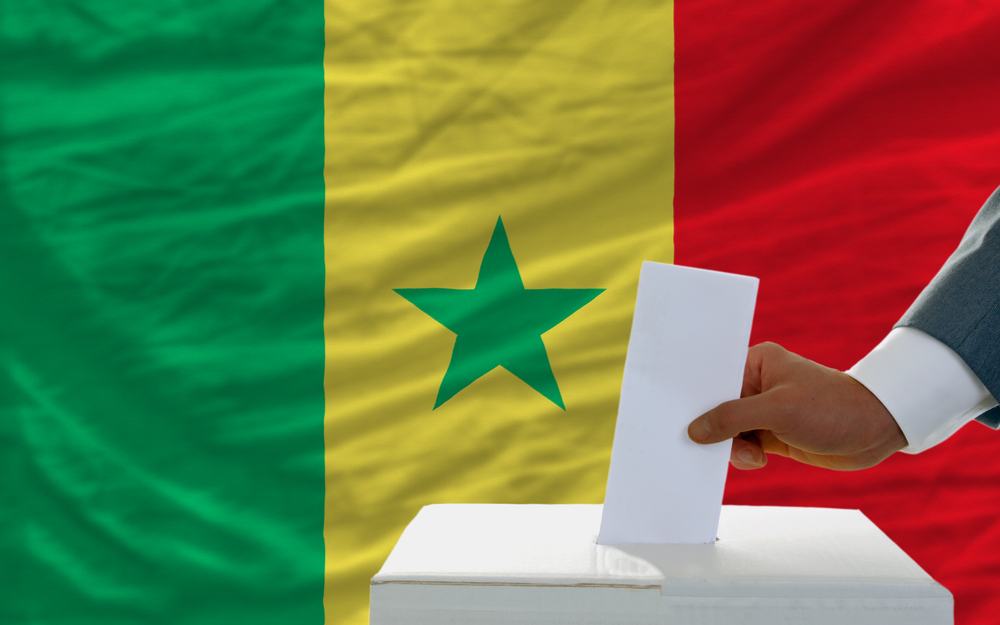
The Senegal government moved to pass a constitutional reform aimed at stripping powers from the president while expanding its own powers.
Passed by an overwhelming majority, the reforms will be put to a national referendum as the power struggle between President Bassirou Diomaye Faye and Speaker Ousmane Sonko continues. Adopted on Monday by the members of Senegal’s National Assembly, they will strengthen parliament’s powers. Changes include the requirement for information on the legislature of agreements pertaining to the exploitation of natural resources, as well as the establishment of a new Constitutional Court. The latest Constitutional Court will expand the court from seven to nine members.
Along with stricter rules placed on the president to protect against changes to the National Assembly, stricter provisions will be placed on the executive branch to prevent decisions regarding the presidential elections. A sitting president also cannot serve as a leader of his own political party.
The initiative was proposed by Pastef, the party led by Sonko. A political coalition in support of President Faye actively called for the amendment’s withdrawal, describing it as a form of political revenge. With the reform, it would be more difficult for Faye to found his own political party for the next election. Although he is a member of the Pastef party, Faye himself holds no official title.
In response to the proposed constitutional reforms, approximately 50 protesters, a majority of whom were from the Alliance for the Republic, set out for Senegal’s capital, Dakar. A clash between the protesters and the police promptly ensued, with police resorting to using tear gas. The protesters allegedly attempted to storm the building, per France 24.
Prior to the passage of the bill, the Presidential coalition leader, Aminata Touré, singled out the amendment as a way to “parliament to be used to weaken the president.”
“(The proposals) appear aimed at limiting the influence of the president of the republic by increasing the powers of the head of the National Assembly,” she said at a press briefing.
The beginnings of the fracture in the relationship between Faye and former ally Sonko stemmed from their differing approaches to Senegal’s debt. In 2024, the two came to power together following an election replacing former president Macky Sall. Sonko himself could not be placed on the ballot due to a previous criminal conviction, so he publicly supported Faye. Once elected, Faye appointed Sonko as prime minister.
As Senegal’s debt is expected to rise by 12% this year alone, Faye moved to become directly involved with the International Monetary Fund, while Sonko publicly opposed debt restructuring. In December, he also publicly questioned Faye’s leadership decisions following his decision to bring back the Diomaye President coalition and to elect Toure as the coalition’s coordinator.

Sonko was promptly removed from his position and replaced with former minister secretary-general of the government, Ahmadou Al Aminou Lo.
He was elected president of the National Assembly, winning 132 votes after the former speaker stepped down to make way for Sonko.
The political odds come as Senegal’s debt continues to soar. According to a Reuters article published last month, as of July last year, the hidden debts amounted to around $13 billion. Since April, the ministry has reported that the country’s growth is expected to slow further, dropping from 6.7% in July to 2.5% this year due to a lack of hydrocarbon production.
By 2027, Senegal’s economy is predicted to grow by approximately 2.3%. The International Monetary Fund also predicted that the current account deficit, which is based on imports and exports, will narrow down to 5.8% by 2027.