



Hey Y’all,
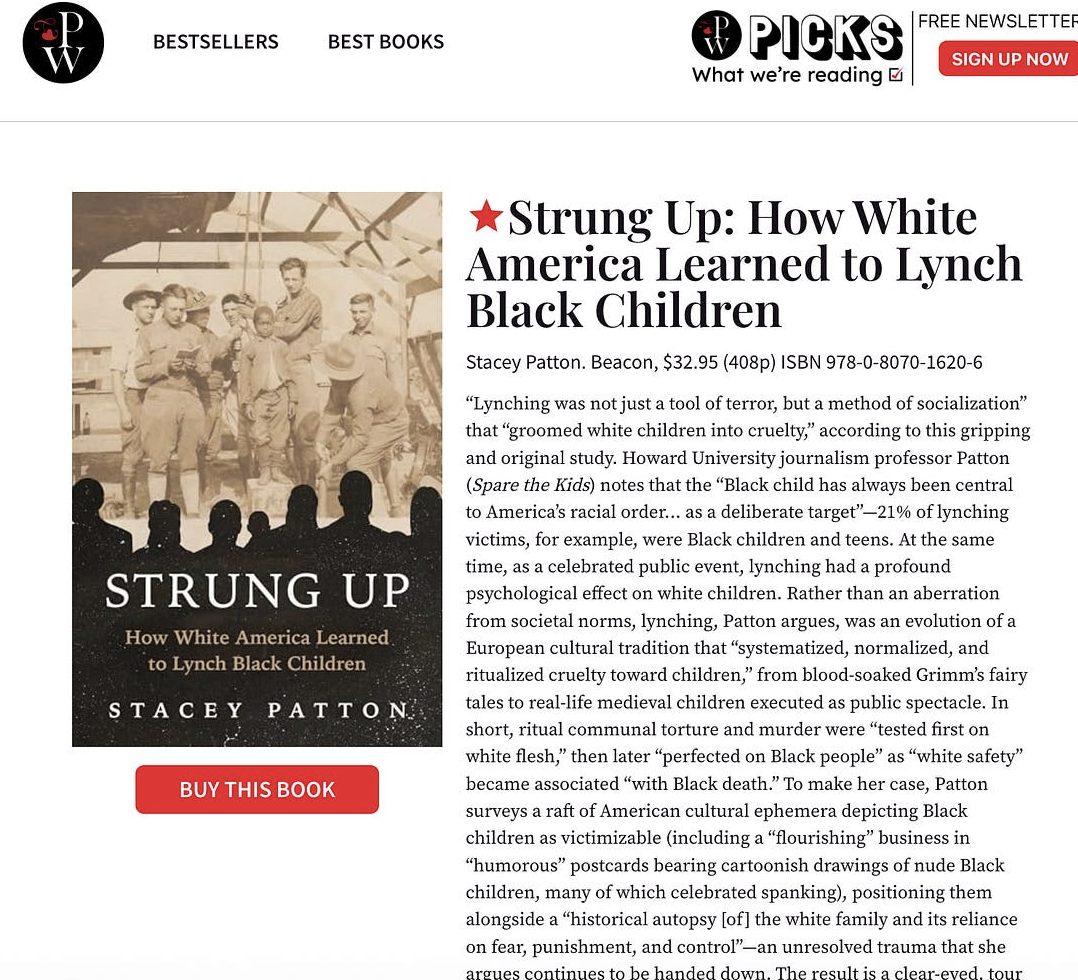
Look at that thing up there!
It was published on Tuesday but I didn’t find out until late last night. I opened the link and was like, “Oh snap! Publishers Weekly reviewed Strung Up.”
That’s a pretty big freakin’ deal because it is one of the strongest prepublication endorsements a book can get.
But then I was like, “Oh snap,” again because it was at the very top of the featured non-fiction books page and they gave it a starred review!
My editor at Beacon sent a text saying: “Congrats, Stacey!! A starred review is an auspicious way to start!!”
And she’s right, Y’all.
If you don’t already know, in the publishing world getting a Publishers Weekly starred review is a major distinction and it’s pretty damn rare. That coveted star means you wrote an exceptional book and librarians, booksellers, publishers, reviewers, and institutional buyers should pay special attention to it before it even hits the shelves. I read historical estimates that PW reviews somewhere around 9,000 forthcoming books each year, and roughly 500 books get starred reviews. If my math is right, that’s like around 5%, or 1 in 20 titles.
Look at what they said, Y’all. Strung Up is a “gripping and original study.” and concludes that it is a “clear-eyed, tour de force deconstruction of America’s damaged psyche.” Listen, those words really hit and feels consequential, especially in this political moment where there’s a coordinated national campaign to make writers, journalists, and academics scared to tell the truth about race. We’ve been watching books get banned, history being whitewashed or outright erased, museums and cultural institutions being pressured, teachers and professors surveilled, threatened, and fired, and professors being targeted by right-wing media rags.
We’ve also been witnessing writers second-guessing themselves, softening their language and playing linguistic origami before they submit articles and manuscripts. In the publishing industry we’re seeing editors calculating whether truth is worth the backlash and they won’t touch books they worry are too controversial to acquire. Authoritarianism depends on that kind of fear and on folks agreeing to make the truth smaller.
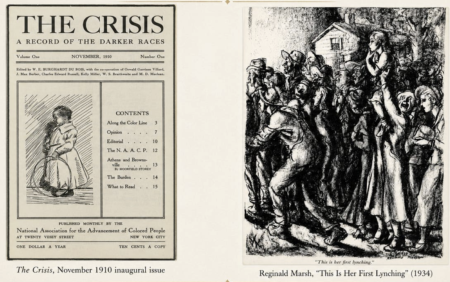
Strung Up refuses to do that and it unflinchingly asks how white America produced generations of people who were capable of normalizing the hunting, targeting, torturing, mutilating and killing of Black children and remaining indifferent to this violence? My book requires that we cross the Atlantic Ocean to find the answer. We start with 2,000 years of Europe’s sadistic violence against white children and toxic religious and philosophical ideas that justified their abuse. And then we see how these cultural traditions and inherited traumas crossed the Atlantic and morphed into racialized lynching that “groomed white children into cruelty.”
Many people like to believe this national fantasy that thousands of lynchings were carried out only by a handful of exceptionally evil degenerates. But the more uncomfortable truth is that white supremacist cruelty isn’t just reproduced through fringe actors or only through laws and institutions, but also through families, childhood conditioning, and even through bonds of safety and love.
So it’s pretty audacious that the publishing industry’s most influential trade publication put a big red star next to this argument at a time when America is trying to suppress honest discussions about race, and even though this book will certainly draw backlash once its drops in October. I’m hoping this will be a sign to other writers and academics to be fearless and know that truth-telling can still break through in this atmosphere of fear and cowardice.
I’ve written four books now, and this is a major milestone for me as a writer. I’m also deeply grateful to Beacon Press for publishing this work, and Publisher’s Weekly for reviewing an unapologetic book that refuses euphemism and historical anesthesia.
You can pre-order your copy of Strung Up here. Oh, and last week I wrapped up narrating the audio version of the book which can be pre-ordered here. I appreciate Y’all for supporting my work.
Yay!
Thanks for reading. If this piece resonated with you, then please consider becoming a paid subscriber. Paid subscriptions help keep my Substack unfiltered and ad free. They also help me raise money for HBCU journalism students who need laptops, DSLR cameras, tripods, mics, lights, software, travel funds for conferences and reporting trips, and food from our pantry. You can also follow me on Facebook!
We appreciate you!