


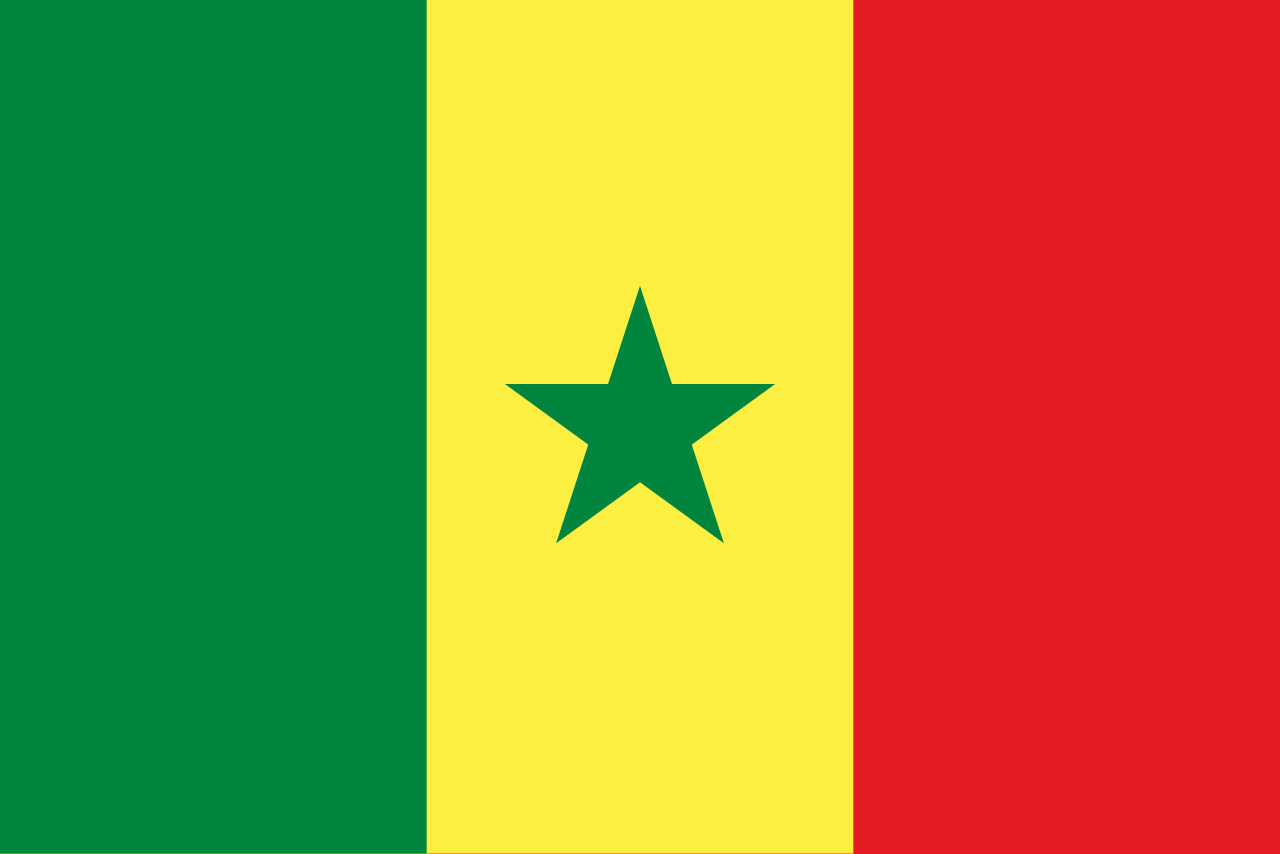
On March 4, 1960, Senegal celebrated its first-ever Independence Day. The date honors Senegal’s emergence from French colonial rule and the immediate series of constitutional and diplomatic moves that carried the country from a French West African colony to a sovereign state later that year.
Senegal sits on the Atlantic coast at the western edge of mainland Africa, bordered by Mauritania to the north, Mali to the east, Guinea to the southeast and Guinea-Bissau to the southwest. Its geography also nearly encloses The Gambia, leaving the southern Casamance region separated from the rest of the country by a narrow corridor along the Gambia River. Dakar, on the Cap-Vert Peninsula, serves as the capital and remains one of West Africa’s major ports and urban centers.

Independence did not arrive as a single event but as a sequence. In the late 1950s, Senegal moved toward self-government within France’s evolving postwar framework. On November 25, 1958, it became an autonomous republic within the French Union. The next step was regional: In January 1959, Senegal joined with the French Sudan to form the Mali Federation. The federation became fully independent on June 20, 1960, following a transfer-of-power agreement signed with France on April 4, 1960. Political disputes soon fractured the new union, and on August 20, 1960, Senegal and the newly named Republic of Mali each proclaimed independence.
Senegal’s early independence leadership established patterns that still stand out in the region. Léopold Sédar Senghor became the country’s first president in August 1960. Over time, Senegal built a reputation for relative political stability and peaceful transfers of power compared with many postcolonial states.
It is a presidential republic, and its civic life includes a mix of secular institutions and major influence from religious leadership, particularly among Muslim brotherhoods, and is shaped by dozens of languages, with Wolof widely used as a national lingua franca alongside French.