





Article by media partner Cuisine Noir, the country’s first Black culinary lifestyle outlet since 2009 dedicated to connecting the African diaspora through food, drink and travel.
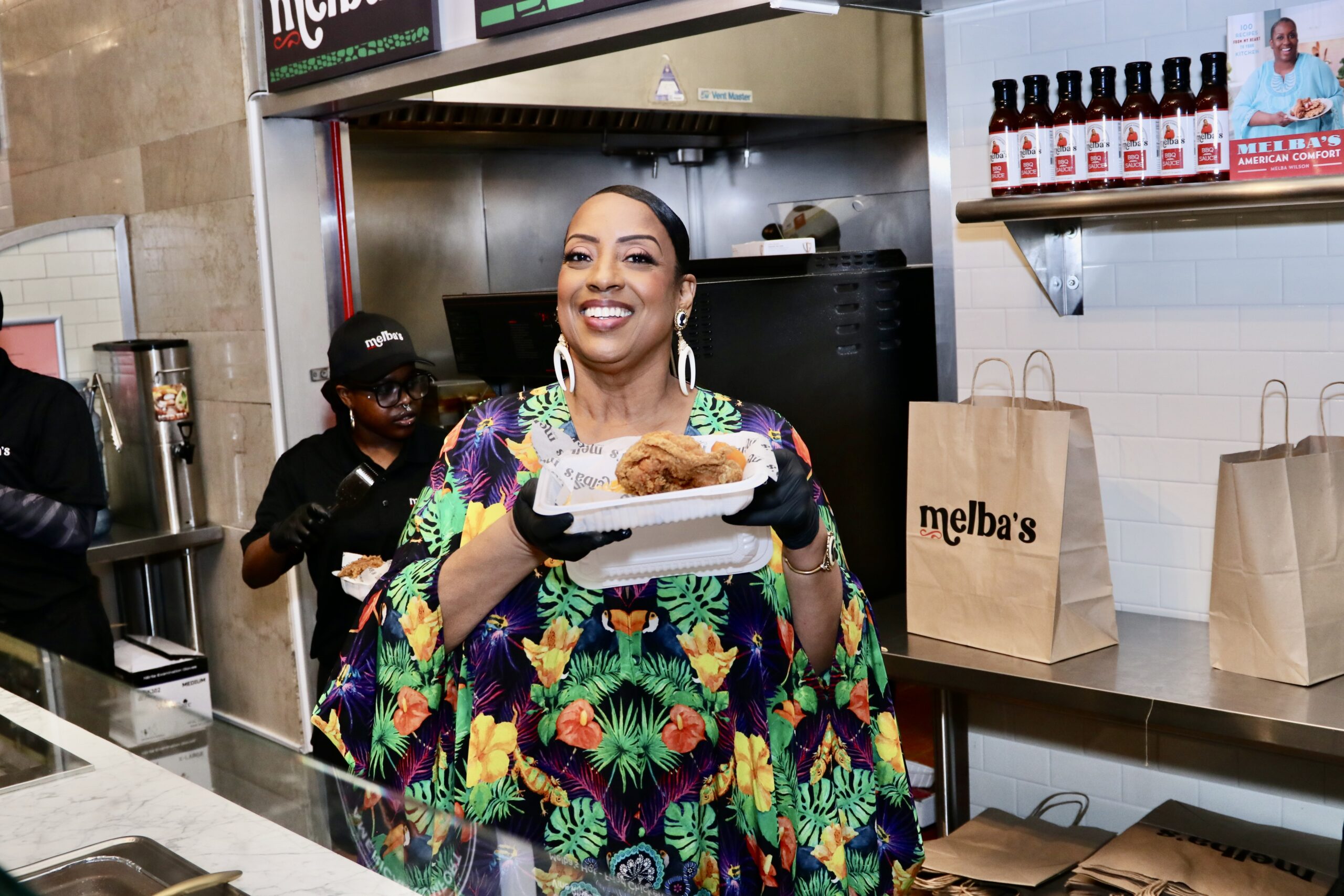
“The Queen of Soul Food,” Melba Wilson, is bringing a taste of Harlem hospitality to the bustling halls of New York City’s iconic train station with her latest addition, Melba’s Grand Central. The quick service concept marks the fourth culinary outpost in a line of restaurants staying true to the fabric and flavors of Melba’s restaurant in Harlem, which started it all.
“Melba’s opened in 2005, and it’s been around for 20 years now,” says the chef and restaurateur. “It started with 40 seats and now it has 109 seats and four locations, with a fifth one opening soon.”
Through her incredible journey, Wilson emphasizes the importance of community and demonstrates that anything is possible with hard work and a dream. “It always seems impossible until it’s done.”
Southern Hospitality Meets Harlem Hospitality
Wilson recounts a tale of two towns: Hemingway in South Carolina, where her roots are, and Harlem in New York City, where she was born and raised—both of which greatly influenced her philosophies around food, hospitality and identity.
“My family is from a very, very small town called Hemingway, South Carolina,” she begins. “It’s a town where people all know each other, but it’s also a town in the South where, as you know, food is king—or queen in our family.”
The Melba’s restaurant in Harlem owner attributes her connection to food to the women in her family, specifically her grandmother, who passed down her passion for cooking and generous spirit of hospitality.
“My grandmother was always the kind of person who, if there were ten people in the house, she would cook for 20,” she recalls. “We didn’t have much, but what we always had was food on the table, so that’s where my passion for using food as a conduit to bring people together came from.”
Harlem also played a pivotal role in her story and in forging her culinary identity. “You can’t say Melba and not say Harlem,” she states resolutely. “I feel that Harlem has an energy, it has a swag, it has a rhythm, and it has a heartbeat unlike any other place in the world.”
By Nicholas Carr