




Close Menu
TheHub.news

    This Day in History: January 25th

    By Shayla Farrow

    The Rise of the “Righteous Whites” and the Collapse of Plausible Deniability

    By TheHub.news Staff

    Did You Know Historian and Curator, Arturo Alfonso Schomburg, Was Born on This Day?

    By Shayla Farrow

    Subscribe to Updates

    Get the latest creative news from FooBar about art, design and business.

    X (Twitter) Instagram YouTube
    X (Twitter) Instagram YouTube
    TheHub.news
    Support Our Work
    • Home
    • Our Story
      • News & Views
        • Politics
        • Injustice
        • HBCUs
        • Watch
      • Food
        • Cuisine Noir
        • soulPhoodie
      • Passport Heavy
      • Travel
      • Diaspora
      • This Day
      • Entertainment
      • History
      • Art
      • Music
    • Health
    • Money
      1. Copper2Cotton
      2. View All

      August 2018 Net Worth Update

      December 9, 2025

      Dividend Update: August 2018

      December 9, 2025

      How to Fight Inflation and Win

      December 9, 2025
      Passive Income

      Be Passive About Your $

      November 17, 2025

      How to Fight Inflation and Win

      December 9, 2025

      August 2018 Net Worth Update

      December 9, 2025

      More Blacks Needed On Corporate Boards

      December 9, 2025
      Passive Income

      Be Passive About Your $

      November 17, 2025
    • Books
    • Business
    • Sports
      1. First and Pen
      2. View All

      Vince Carter, Tracy McGrady Partner to Host “Cousins” Podcast

      January 23, 2026

      So Where Do Black NFL Head Coaches Stand in 2026?

      January 20, 2026

      Thank You Mike Tomlin, You Deserved Better Than Some Gave You

      January 19, 2026

      If You’re Mad at Lynn Jones-Turpin’s Kindness, That’s Your Issue

      January 14, 2026

      Vince Carter, Tracy McGrady Partner to Host “Cousins” Podcast

      January 23, 2026

      So Where Do Black NFL Head Coaches Stand in 2026?

      January 20, 2026

      Thank You Mike Tomlin, You Deserved Better Than Some Gave You

      January 19, 2026

      If You’re Mad at Lynn Jones-Turpin’s Kindness, That’s Your Issue

      January 14, 2026
    • Tech
    • Podcasts
      1. Karen Hunter is Awesome
      2. Lurie Breaks it Down
      3. Human(ing) Well with Amber Cabral
      4. Financially Speaking
      5. In Class with Carr
      6. View All

      This Day in History: January 25th

      January 25, 2026

      The Rise of the “Righteous Whites” and the Collapse of Plausible Deniability

      January 24, 2026

      Did You Know Historian and Curator, Arturo Alfonso Schomburg, Was Born on This Day?

      January 24, 2026

      Can White People Join the New Black Panther Party?

      January 23, 2026

      This Day in History: January 25th

      January 25, 2026

      The Rise of the “Righteous Whites” and the Collapse of Plausible Deniability

      January 24, 2026

      Did You Know Historian and Curator, Arturo Alfonso Schomburg, Was Born on This Day?

      January 24, 2026

      Can White People Join the New Black Panther Party?

      January 23, 2026

      This Day in History: January 25th

      January 25, 2026

      The Rise of the “Righteous Whites” and the Collapse of Plausible Deniability

      January 24, 2026

      Did You Know Historian and Curator, Arturo Alfonso Schomburg, Was Born on This Day?

      January 24, 2026

      Can White People Join the New Black Panther Party?

      January 23, 2026

      This Day in History: January 25th

      January 25, 2026

      The Rise of the “Righteous Whites” and the Collapse of Plausible Deniability

      January 24, 2026

      Did You Know Historian and Curator, Arturo Alfonso Schomburg, Was Born on This Day?

      January 24, 2026

      Can White People Join the New Black Panther Party?

      January 23, 2026

      This Day in History: January 25th

      January 25, 2026

      The Rise of the “Righteous Whites” and the Collapse of Plausible Deniability

      January 24, 2026

      Did You Know Historian and Curator, Arturo Alfonso Schomburg, Was Born on This Day?

      January 24, 2026

      Can White People Join the New Black Panther Party?

      January 23, 2026

      The Rise of the “Righteous Whites” and the Collapse of Plausible Deniability

      January 24, 2026

      How Insurers Use Your ZIP Code and Credit Score Against You

      January 21, 2026

      In Class With Carr: New World Order

      January 19, 2026

      Will Democrats Vote to Fund Slave Catchers?

      January 17, 2026
    TheHub.news
    Opinion

    Make Me Lose My Breath; Make Me Coloured

    By Kyla Jenée LaceyNovember 27, 202306 Mins Read
    Facebook Twitter LinkedIn Email Copy Link
    Screenshot from Tyla's Official Instagram Page
    Share
    Facebook Twitter LinkedIn Email Copy Link

    Has the R&B world crowned a new Supreme? Not quite, but someone who is in the running for the top spot is South African phenom Tyla, whose one international hit has catapulted her into fame, and has made her the 138th most listened to artist on Spotify, which again, considering she only has one song that has charted globally, is a big deal. While she already had some success in her home country, it was still a relatively meteoric rise for the 21-year-old. Though it seems that she has been accepted with open arms by Black American audiences, how to classify her has been the topic of much debate, causing yet another diaspora war between Black Americans and South Africans on twitter.

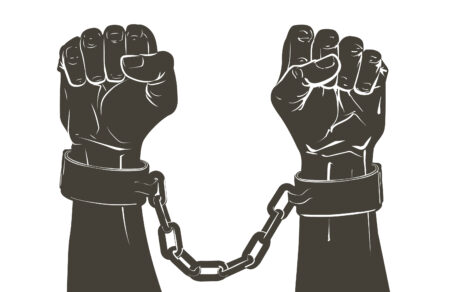
    In South Africa, Tyla is considered ‘coloured,’ (a term describing people of mostly African heritage but mixed with European and Asian ancestry), but many Black Americans take offense to the term, and understandably so. The term ‘coloured/colored’ invokes a lot of painful memories from a not very distant past for many Black Americans. While I did not grow up in the Jim Crow South when the term was ubiquitous and used to codify racism, one of my parents did, and both are old enough to have survived the term and the trauma that was dedicated with its utterance.

    At one point the term was generally accepted as the go-to reference for Black people, it was also a term that was designated with the express intent to segregate. Even now, it is hard to see the word and not have the residue of “whites only,” lingering in the back of one’s mind. However, in South Africa it is viewed as a neutral term of classification for a group of people who have mixed ancestry. The racial breakdown of coloured people is quite similar to the genetic breakdown of most African Americans-save about 10 percent of their genetic makeup being Asian. Many pictures of South African coloureds can easily be the pictures of any light skinned Black family, with differences even slighter than the complexions.

    The term coloured became a distinct racial classification under the apartheid regime-just as it had in the Jim Crow South, before the term was abandoned in the U.S. Like any other country with colonialism being law, miscegenation is prevalent, and South Africa, with its racism being the directive, was no exception, creating a distinct group of multi-racial and multi-ethnic people, and Tyla is firm about this being her classification. While the term may be universal, its connotation is clearly not. 

    None of us have the right to invalidate what a term means for another group in a language that is neither of ours, but to say that there is not trauma involved in the word, on both sides of the ocean, is intellectually dishonest. Without experiencing the culture firsthand, it is unfair to say that South African usage of it is unjustified, but having enough knowledge of how racial classifications and white supremacy usually engage with each other-especially under a regime that literally means separation-it is hard to not take offense. Additionally, does it create a safe space for mixed/coloured people who want to disassociate from their African ancestry-even if subconsciously-due to the marginalization of Blackness, and the privilege associated with white adjacency? As a Black American, it is easy to understand why many other Black Americans are reluctant to accept the term, a term that is not only derogatory here, but in other places as well.

    While some South Africans have compared the usage of the term to Blacks celebrating Thanksgiving or the usage of the term “nigga,” those are both false equivalencies. The historical myth and elementary celebration of Thanksgiving is absolutely offensive, but fortunately having children dress up as Pilgrims or “Indians,” with headdresses made of thumb outlines is a becoming a thing of the past. The root of the holiday stems from the celebration of the harvest, which many indigenous continue to celebrate, while others understandably reject the holiday fully. For African American slaves, Thanksgiving was particularly important.  It was one of the few days that slaves saw some reprieve from the fields and were permitted to commune with relatives on different plantations. Because of the relaxed holiday schedules of many slave catchers, it was also the day many chose to escape. The use of coloured as a racial classification from a government that was built on discrimination, is no better a myth of racial harmony than Thanksgiving.

    In South Africa, the term ‘kaffir,’ is about as derogatory as ‘nigger,’ but has much more innocuous beginnings, originally meaning a non-believer (of Islam), as it is used in the Qu’ran. It is a racial slur directed towards Black and coloured people in South Africa. However, it is so detestable in South Africa that is illegal to use in a derogatory manner, but this does not stop it from being used often in popular music just as the word, “nigga,” is here. What it does mean though, is that Black American culture is so pervasive that it is an easy argument to make with little pushback, due to the lack of knowledge that many Black Americans have about music outside of the states. Does that also mean that Muslims should disregard the painful meaning the word has to South Africans?

    Time will only tell if Tyla becomes an international superstar, with a fame cemented as firmly as the likes of Rihanna or Beyonce, but her stardom won’t change the harmful history associated with the word coloured. While the global musical culture does not revolve completely around the American musical zeitgeist, to say that Black American culture and acceptance musically is not a giant part of the market and marketing is a lie. While I do not feel comfortable calling her coloured, I do not feel comfortable calling her Black either. While Black Americans become increasingly mixed, Black Americans with less of a mixed ancestry are facing an erasure, and while they set the trends, they are decreasingly becoming the ones who model or profit from them. At the end of the day, Black is not a catchall or a consolation prize for mixed people who are not accepted by their ‘other,’ parts or themselves.

    apartheid R&B Slavery South Africa Thehub.news Tyla
    Kyla Jenée Lacey

    Kyla Jenée Lacey is an accomplished third-person bio composer. Her spoken word has garnered tens of millions of views, and has been showcased on Pop Sugar, Write About Now, Buzzfeed, Harper’s Bizarre, Diet Prada, featured on the Tamron Hall show, and Laura Ingraham from Fox News called her work, “Anti-racist propaganda.”. She has performed spoken word at over 300 colleges in over 40 states. Kyla has been a finalist in the largest regional poetry slam in the country, no less than five times, and was nominated as Campus Activities Magazine Female Performer of the Year. Her work has been acknowledged by several Grammy-winning artists. Her poetry has been viewed over 50 million times and even used on protest billboards in multiple countries. She has written for large publications such as The Huffington Post, BET.com, and the Root Magazine and is the author of "Hickory Dickory Dock, I Do Not Want Your C*ck!!!," a book of tongue-in-cheek poems, about patriarchy....for manchildren.

    Related Posts

    ICE Is Arming People Before Fully Checking Who They Are

    January 23, 2026

    This Is How Jasmine Crockett Is Rewriting the Rules on Winning Texas

    January 21, 2026

    Will Democrats Vote to Fund Slave Catchers?

    January 17, 2026
    Add A Comment

    Comments are closed.

    Recent Posts
    • This Day in History: January 25th
    • The Rise of the “Righteous Whites” and the Collapse of Plausible Deniability
    • Did You Know Historian and Curator, Arturo Alfonso Schomburg, Was Born on This Day?
    • Can White People Join the New Black Panther Party?
    • Dominique Charles Helps Newbies Start Their Gardens Through Plots & Pans

    The Health System Is Failing Black Americans: Here Are 5 Ways It’s Showing Up in Their Bodies

    By Veronika Lleshi

    Lurie Daniel Favors on Community Preparedness

    By Donika Lleshi

    How the Met Gala is Becoming a Runway for Black Excellence

    By Danielle Bennett

    NBA Awards Scholarships to African Female Athletes to Attend SEED Academy

    By TheHub.news Staff

    Subscribe to Updates

    A free newsletter delivering stories that matter straight to your inbox.

    About
    About

    Celebrating US from one end of the land to the other. We record our acts, our accomplishments, our sufferings, and our temporary defeats throughout the diaspora. We bring content that is both unique and focused on showing the world our best unapologetically.

    X (Twitter) Instagram YouTube

    This Day in History: January 25th

    By Shayla Farrow

    The Rise of the “Righteous Whites” and the Collapse of Plausible Deniability

    By TheHub.news Staff

    Did You Know Historian and Curator, Arturo Alfonso Schomburg, Was Born on This Day?

    By Shayla Farrow

    Can White People Join the New Black Panther Party?

    By Dr. Stacey Patton

    Subscribe to Updates

    A free newsletter delivering stories that matter straight to your inbox.

    © 2026 TheHub.news A 501(c)(3) tax-exempt organization.

    Type above and press Enter to search. Press Esc to cancel.