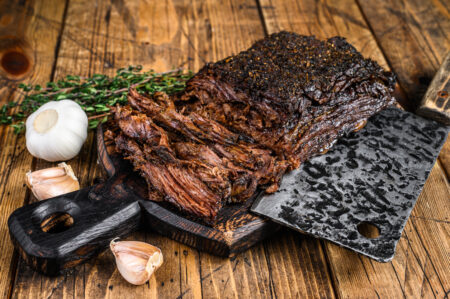







Oxtails are a popular dish in both African American and Caribbean soul food, and even though it’s called an oxtail, the tail can be from any type of cattle. Just as pig’s feet and chitlins were considered “throwaway” foods, which enslavers gave those they enslaved, so is the origin of oxtails as being considered a less desirable cut of meat.
But our African, African American, Caribbean and South American ancestors learned to cook oxtails in a way that made them a delicious delicacy. The meat’s many bones are full of gelatin, which makes it perfect for slow-cooked dishes like stews. After a few hours of boiling or braising, the meat becomes a very tender dish, which has been loved for centuries.
Living High on the Ox
There was a time when oxtails were only sold in soul food restaurants like This Is It Soul Food in Houston, Texas, which sells about 620 pounds of oxtails every week. “We’re known for our oxtails, and our customers say our oxtails are the best on this side of heaven,” exclaims owner Craig Joseph.
“During slavery, our ancestors learned how to braise it and stew it up and made oxtail soup, smothered oxtails with gravy, and they made it so tender it would fall off the bone,” Joseph states with pride. “We had to be creative and innovative in order to survive.”
But today, oxtails can be found on the menu of white tablecloth restaurants. As a result, the price of what was once considered a “low-brow” meat has increased. “When my grandfather [the founder of This Is It Soul Food] started cooking oxtails, they were 29 cents a pound. That was back in the 1960s and 70s,” Joseph remembers.
“Then they went up to about 50 cents a pound, and now they’re about 14 to 15 dollars a pound!” He adds, “Today, it’s across the board for what race and culture of people are eating oxtail.”
Global social media has helped to increase the trend of celebrating food from diverse cultures and that has increased the interest in cooking with oxtails, especially among foodies and celebrity chefs who brought even more attention to the versatile meat.
An increase in demand causes an increase in price, which decreases the number of people who can afford to enjoy it. In fact, the song “Oxtail Blues” by Jerron Paxton laments the increased cost of a meat that was once only eaten by African Americans. The song starts with, “Can you believe they done made these oxtails so high…and now they sellin’ neck bones that the rich folks buy.”
By Kalin Thomas