



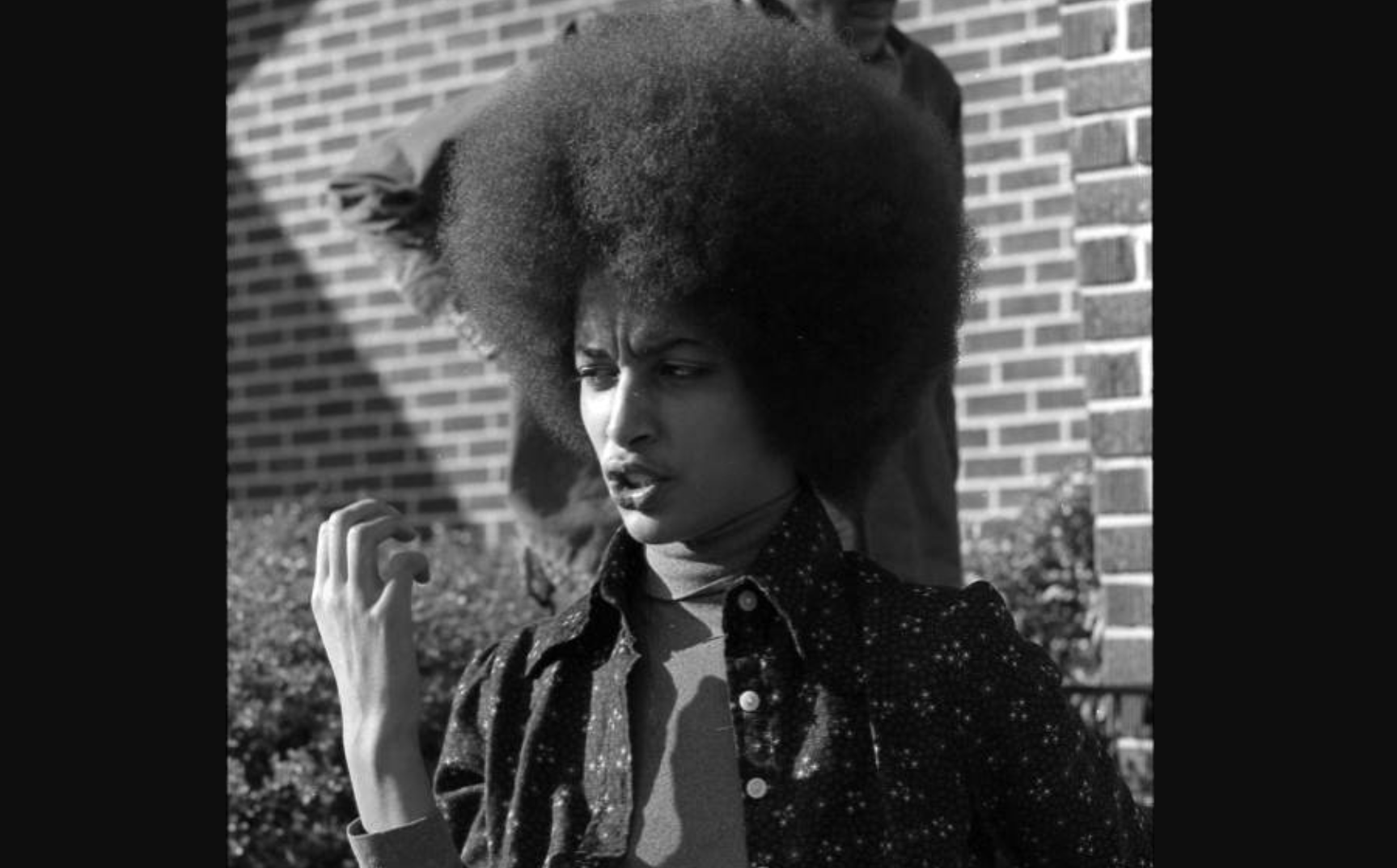
The world is a fairer, louder and bolder place because Denise Oliver-Velez was in it.
With her recent passing at age 78, we lose one of the most brilliant movement strategists of the civil rights era.
But thankfully, her achievements will endure forever.
Ms. Oliver-Velez shattered stained-glass ceilings as the first woman elected to the Young Lords Central Committee, combating systemic machismo to elevate women’s liberation to the core of the party’s platform. She refused to be boxed in, seamlessly transitioning her revolutionary energy into academia, independent film, the Black Panther Party and the airwaves as a pioneering Black female program director in public radio.
Here’s a glimpse into her incredible journey.
Ms. Oliver-Velez was a pivotal figure in founding the New York branch of the Young Lords, a group with roots as a Puerto Rican gang in Chicago before transforming into a powerful activist organization. They dedicated themselves to combating capitalism and addressing the pressing issues faced by Puerto Ricans and Black Americans.
The organization would become famous in New York for its unflinching actions, particularly when it took over public spaces to draw attention to social injustices. A defining moment was their occupation of Lincoln Hospital in the Bronx on July 14, 1970. The move was not just a protest against the hospital’s deplorable conditions but also a passionate demand for affordable, quality health care for marginalized communities.
As reported by The New York Times, Ms. Oliver-Velez described in the short documentary Takeover that the facility, “Was one of the dirtiest hospitals I had ever set foot in. You know the cart that they bring around that has the little cups with the pills? There’d be roaches in the cups.”
After a grueling 12-hour sit-in, the Young Lords scored a major victory by reaching an agreement that allowed them to take charge of health programs at the hospital, including a much-needed drug detox program, in exchange for vacating the building. Fast forward six years, and the original Lincoln Hospital was replaced by a brand new facility just a stone’s throw away from the original site.
Ms. Oliver-Velez went on to climb the ranks of the Young Lords to become the minister of economic development, carving out a unique space for herself as one of the few women in leadership roles in a predominantly male organization. She was candid about the hurdles she faced, often navigating a landscape filled with traditional gender dynamics and resistance from some of the male leaders. But her strong will and resilience would challenge the status quo, support economic growth and improve the community, while also making sure that women’s voices were heard in the movement.
“When the Young Lords started a year and a half ago, there were very few sisters,” she told The Times in an interview in 1970. “We had a hard time being heard at meetings, and most of the work we did was secretarial work.”
One of her many key contributions to the group came from a disagreement over the wording of their 13-point manifesto, particularly the controversial statement that “machismo must be revolutionary” and “not oppressive.” In an interview with Black Women Radicals, she pointedly remarked, “It was clearly written by a man. We thought, ‘That doesn’t make sense.’”
Her perspective was rooted in the belief that machismo, by its very nature, could never embody revolutionary ideals because it often perpetuated systems of oppression rather than dismantling them. Alongside fellow activists like Iris Morales, she championed a necessary change to the manifesto that read, “We want equality for women. Down with machismo and male chauvinism.” The shift not only clarified the group’s commitment to gender equality but also the importance of inclusive language that truly reflects the values of all its members.
Denise Roberts Oliver was born in Brooklyn on August 1, 1947. Her mother, Marjorie (Roberts) Oliver, was a teacher and her father, George B. Oliver, was a distinguished former Tuskegee Airman and actor who later became a professor of dramatic literature at Nassau Community College in Long Island. She grew up in a world where education and activism were intertwined, surrounded by figures of Black excellence, social justice and friendships her parents maintained with global civil rights pioneers like Paul Robeson. This backdrop of Black activism significantly shaped her worldview.
“I don’t even understand what it’s like to come from a family that isn’t political,”she shared with Black Women Radicals.
She first attended Hunter College in the Bronx, which mostly had white students at the time. But after meeting civil rights giant Fannie Lou Hamer, she decided to transfer to Howard University in Washington, D.C. She also studied at what is now the State University of New York at Old Westbury before joining the Young Lords.
While working with the Young Lords, she contributed to their bilingual newspaper called Pa’lante (which means “forward” in Spanish) and wrote the Young Lords’ Party Position Paper on Women, a document she helped create that called for women’s rights to control their own bodies and to be free from traditional domestic roles. She was also involved in the group’s focus on reproductive justice, which covered the rights to have an abortion and a woman’s right to decide how many children she wants to have.
In 1971, when the Young Lords moved to Puerto Rico, Ms. Oliver-Velez left the group and joined the Black Panthers. She worked on their newspaper and traveled to the People’s Republic of the Congo, a newly formed Marxist-Leninist country in Africa, alongside Kathleen Neal Cleaver, the wife of the party leader, Eldridge Cleaver. There, she engaged in anti-imperialist networking to support Black and Brown Americans with newly formed socialist and revolutionary governments in Africa. After her time with the Panthers, she returned to Washington, D.C., to become co-founder and the first Black female program director in the industry at WPFW, the first radio station run by minorities under Pacifica Radio, where her tenure marked a transformative chapter in American broadcasting history.
Emerging from her background in activism with the Young Lords and Black Panthers, she took her passion for community empowerment to the media, a field largely dominated by white men. Under her tutelage, WPFW earned a unique identity as the “Jazz and Justice” station, where the fusion of music and activism was celebrated. Oliver-Velez understood that serious political discourse could coexist with rich cultural expressions, as she programmed the station with a vivid blend of progressive public affairs and an eclectic mix of jazz and blues. Moreover, she recognized the importance of creating an independent media platform, especially after witnessing the FBI’s COINTELPRO program dismantle radical movements. WPFW became a listener-supported refuge that fostered grassroots organizing and provided a voice to underserved communities, free from corporate and governmental interference. Her launching a minority-run station in the heart of Washington, D.C., allowed her to amplify the voices of Black and Brown communities, ensuring they had a platform for unfiltered political dialogue in a city often characterized by segregation. By curating the station’s content, she wielded media as a powerful tool for human rights and liberation, fundamentally reshaping the framework of public radio and leaving an ingrained mark on American media history.
Ms. Oliver-Velez later worked for the Corporation for Public Broadcasting, where she managed the Minority and Women’s Training Program and served as the executive director of the Black Filmmaker Foundation, a nonprofit organization. She also wrote a short film called Color (1983) that focused on the discrimination faced by dark-skinned Black women in the African American community. The film was shown on public television and directed by her then-husband, Warrington Hudlin.
Her marriage to Mr. Hudlin ended in divorce; she found love again and married Philip Velez, who survives her. From 2002 to 2018, she shared her passion for women’s, gender and sexuality studies as an adjunct professor at SUNY New Paltz. Beyond academia, she became a prominent voice in the progressive community, contributing to the left-wing publication The Daily Kos and cultivating a dedicated following on X. Her influence extended to the film industry again, where she appeared in several renowned projects, including Questlove’s Oscar-winning documentary Summer of Soul in 2021.
Denise Oliver-Velez didn’t just participate in the fight for justice—she practically built the modern sound system for it. Every time a young activist takes to the streets, creates a podcast or produces footage that advocates for equality and demands accountability, they channel her spirit, reminding us all to keep on blasting the frequencies of resistance.
Because although her physical voice may have joined the ancestors, it has officially multiplied into every single one of us…and we should honor her by keeping the volume turned all the way up.
May she rest in power.