





Article by media partner Cuisine Noir, the country’s first Black culinary lifestyle outlet since 2009 dedicated to connecting the African diaspora through food, drink and travel.
What’s the best way to provide a population with healthy foods? In Chicago’s Greater Grand Crossing neighborhood, igniting a passion with its young people for urban agriculture is key.
The Gary Comer Youth Center (GCYC), a community mainstay for the past 20 years, has been providing sustainable and nutritious fruits and vegetables via its successful Urban Agriculture Department, while deepening youth’s connection to the earth and honing their skills to build healthier communities.
Designed For Urban Agriculture
The building housing GCYC was designed with urban farming in Chicago in mind, thanks to the 8,000 square foot rooftop garden that grows seasonal harvests. Likewise, the center’s 1.75 acre farm, added in 2010, gives young people the opportunity to study and hone their urban agriculture skills. It’s knowledge that middle schoolers and teens to young adults participating in the GCYC Urban Agriculture Department programs can apply throughout their lives.
“The programs help to grow over 16,000 pounds of food that goes home with youth participants, is donated in neighborhood food pantries, used in the daily meal service at the center and even sold to local restaurants,” shares Amanda Anderson, associate director of Urban Agriculture about the impact urban farming in Chicago has on the community.
Likewise, the skills participants acquire through the Urban Agriculture Department programs can be useful for future careers. “One of the things that makes the Comer Crops programs [under the Urban Agriculture Department] unique is that both the Urban Farmer and Culinary Arts apprentices are able to gain hands-on experience with the full life cycle of food production on our 1.75 acre farm and in our commercial kitchen,” details Bill Ladd-Cawthorne, GCYC director of Youth Employment.
Homegrown Talent
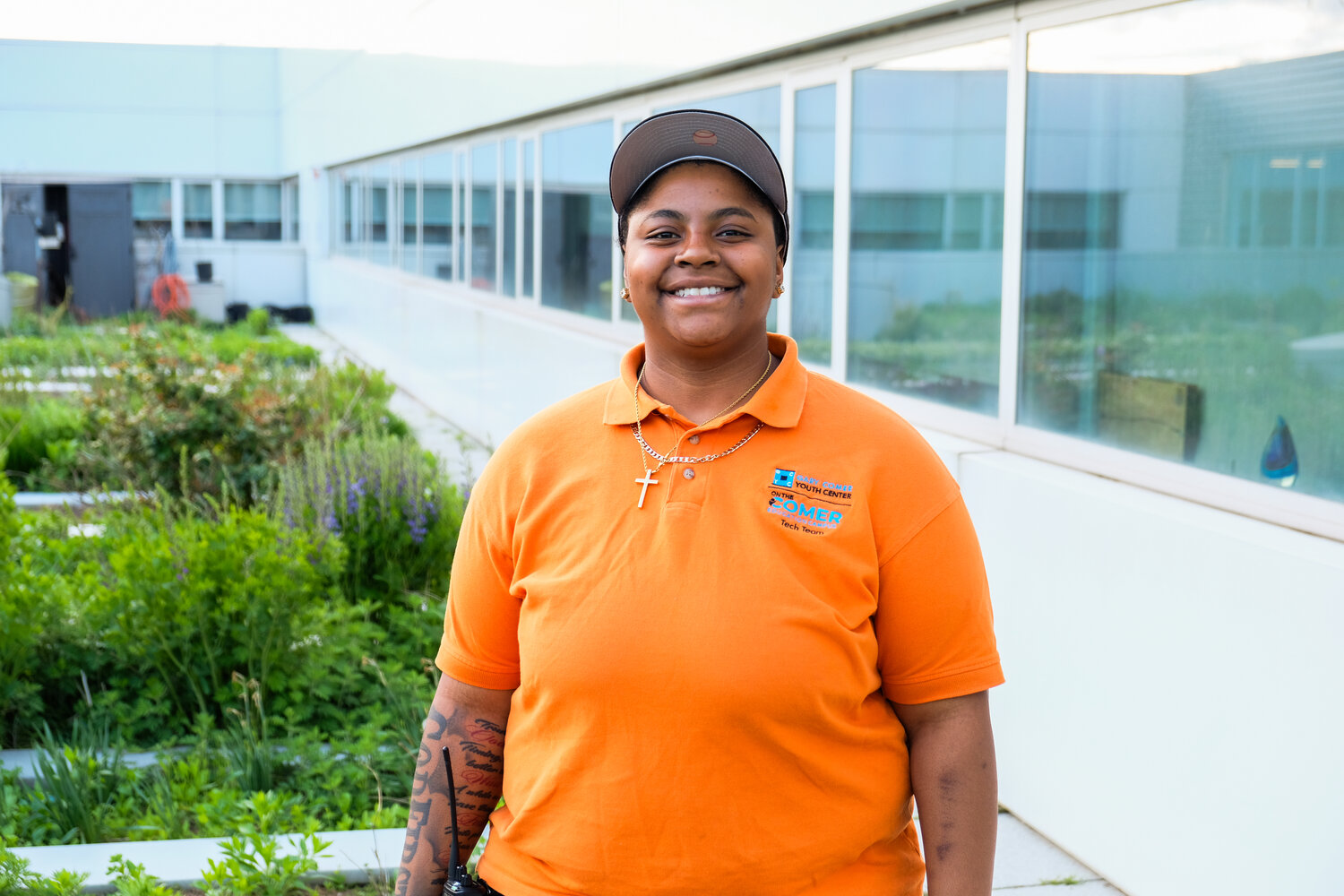
So what is it like for youth participating in the GCYC Urban Agriculture Department programs? Urban Agriculture Program instructor Sanaa Ragsdale knows the experience first hand. “Really, I’ve been around the youth center since I’ve been in high school,” says Ragsdale.
The Chicago native went through the whole Urban Agriculture Department programs and internships, took time to attend college, then returned to GCYC as an instructor for the Urban Agriculture Department’s Green Teens Program. “My Green Teens are ages 14 through 18. So I deal with high school-based students and we do a lot of the grunt work and really take care of our rooftop and our food education garden,” details Ragsdale.
Tomatoes, collard greens, okra and herbs are just some of the many plants grown by the students. “We have a hydroponic lab, so we have our lettuce that we consistently grow. And we have different herbs upstairs on the rooftop: lavender, rosemary, lemon verbena. I teach my students how to make tea and lemonade from scratch,” details the 22-year-old instructor about just one of the fun, and educational, projects she curated.
By Jocelyn Amador