
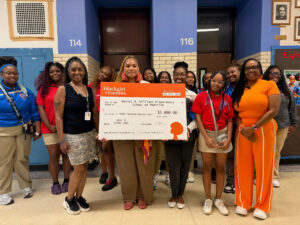




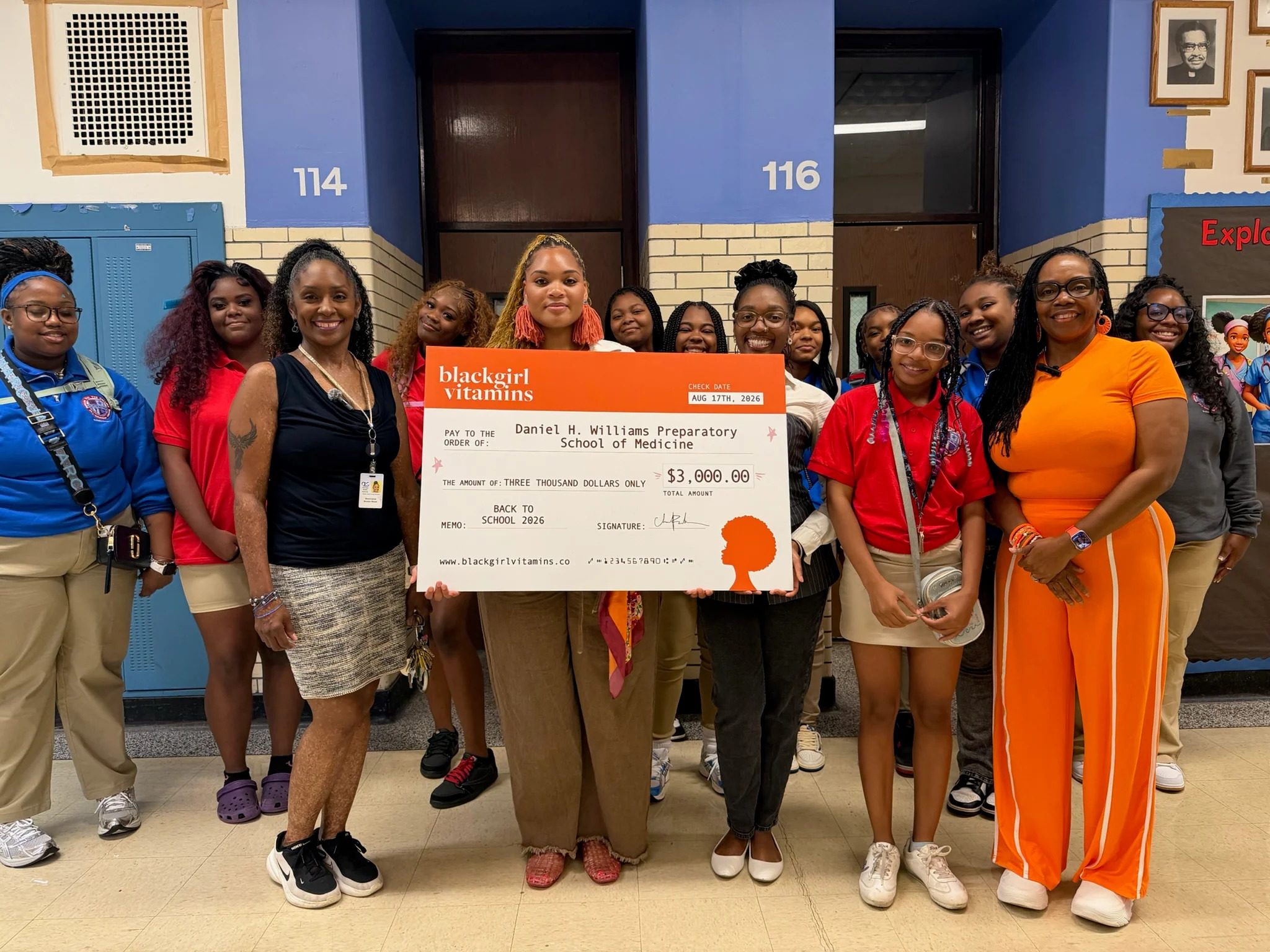
Wellness company Black Girl Vitamins announced it will fund underserved STEM-focused classes this school year.
Announced late last week, the company will be donating $10,000 to middle and high school science classrooms. The selected schools are Daniel H. Williams Preparatory School of Medicine, Corliss Early College STEM High School, and Howard University Middle School of Mathematics and Science.
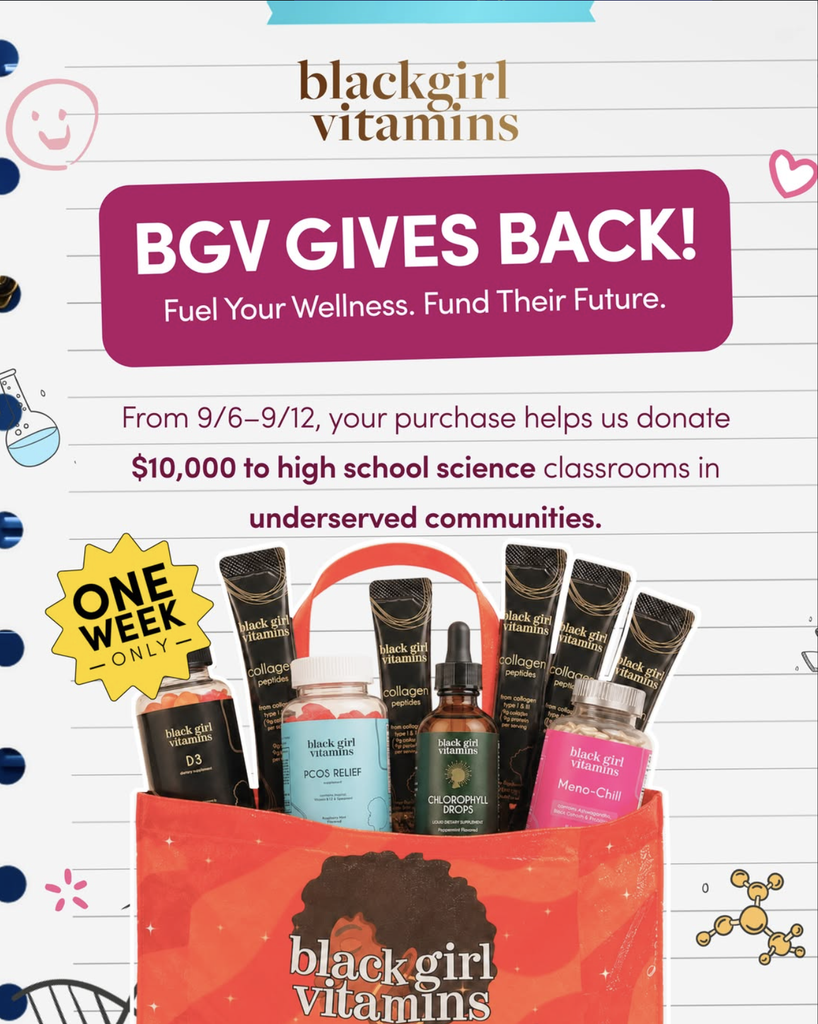
A part of their sales from September 6 to September 12 will provide the students with hands-on learning tools and other school supplies.
“At Black Girl Vitamins, we believe every student deserves the opportunity to explore STEM and imagine what is possible for their future,” said Jennifer Juma, Chief Strategy Officer, in a press release. “By supporting projects that bring science to life, including those that examine real-world health issues, BGV is helping students build the curiosity and confidence to pursue new possibilities.”
One of the projects the school will support focuses on diabetes. According to Black Girl Vitamins, the project will give students the chance to study the health issue, which disproportionately impacts Black Americans.
The U.S. Department of Health and Human Services Office of Minority Health reports that as of 2024, Black Americans were 24% more likely to have diabetes than any other demographic. Overall, they have a diagnosis rate of 1.24 per 10 people.

Once diagnosed, they are more likely to have fatal cases and pass away from diabetes. They are about 78% more likely to die.
The newest funds by Black Girl Vitamins will help give students background information on health issues, such as diabetes, that affect Black communities nationwide.
The latest commitment by Black Girl Vitamins builds on previous commitments. Two years ago, the wellness brand announced it would award $100,000 in scholarships to Black women studying medicine at an HBCU.
Each student was given anywhere from $1,000 to $5,000 for their studies. The donations aimed to increase representation in the health sector. As of the latest research, Black women make up approximately 13.7% of the healthcare workforce.
“We know that better care happens when healthcare providers and patients share similar life experiences,” said Chief Marketing Officer Anna Palomino. “Supporting Black women in their pursuit of medical careers is crucial to fostering more equitable healthcare for underrepresented communities.”