

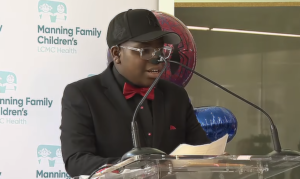




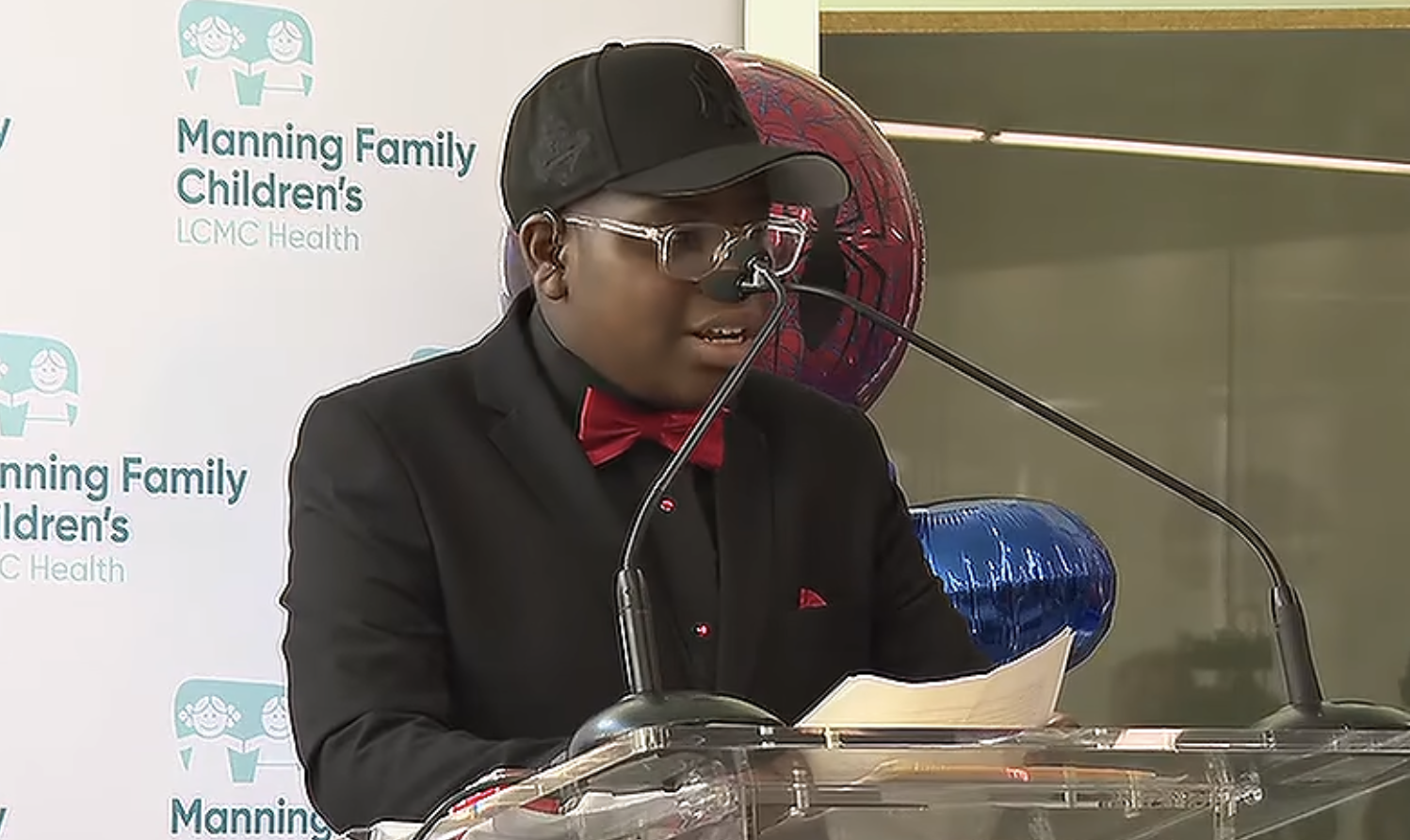
A 15-year-old patient in Louisiana made history late last week as the first pediatric patient in the state to be cured of sickle cell disease using gene therapy.
On Oct. 23, Manning Family Children’s Hospital in New Orleans held a ceremony for Phillip Mullin. Mullin, who has previously been admitted to the hospital over 100 times throughout his life, is now officially free of sickle cell disease.
The teenager became the first Louisiana child to receive Lyfgenia gene therapy, successfully curing him of the blood disorder. Lyfgenia, a one-time gene therapy, collects blood stem cells and modifies them with a viral vector to add the beta-globin gene. Once returned to the body, the cells engraft and produce new, functional red blood cells.
The gene therapy is approved for patients 12 and older. The first patient to receive Lyfgenia was a 12-year-old from Children’s National Hospital in Washington, D.C. The treatment has been used on up to 124 patients across the U.S.
“Sacrifices are necessary,” said Mullin at the ceremony, per Fox 8 Live. “You can’t gain anything without first giving something in return, although if you can endure that pain and walk away from it, you find that you now have a heart strong enough to overcome any obstacle.”
Sickle cell disease is increasingly common in the U.S. The Centers for Disease Control and Prevention estimates that approximately 100,000 people are diagnosed with the blood disorder.
Black people are disproportionately affected by sickle cell disease. There is a diagnosis in 1 out of every 365 Black babies born, comprising nearly 90% of those diagnosed according to the CDC. Approximately 1 in 13 Black newborns carry the sickle cell trait despite not having symptoms.
Despite carrying a higher risk of being diagnosed with sickle cell disease, Black Americans do not often have the proper healthcare or treatment for sickle cell disease. Treatment costs are often high and inaccessible. Stigma can also lead to concerns being dismissed.
To address the increasing rates of sickle cell disease, the CDC is recommending that doctors perform annual screening for adolescents who are more susceptible to developing the disorder.
They also recommend that doctors treat patients aged 9 months or older with sickle cell anemia with hydroxyurea.
The medication, which is administered to less than half of children ages two to nine, can help address the complications of the disorder. In general, sickle cell disease can reduce lifespan by over 20 years.