

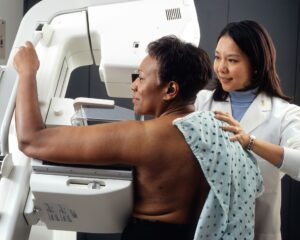




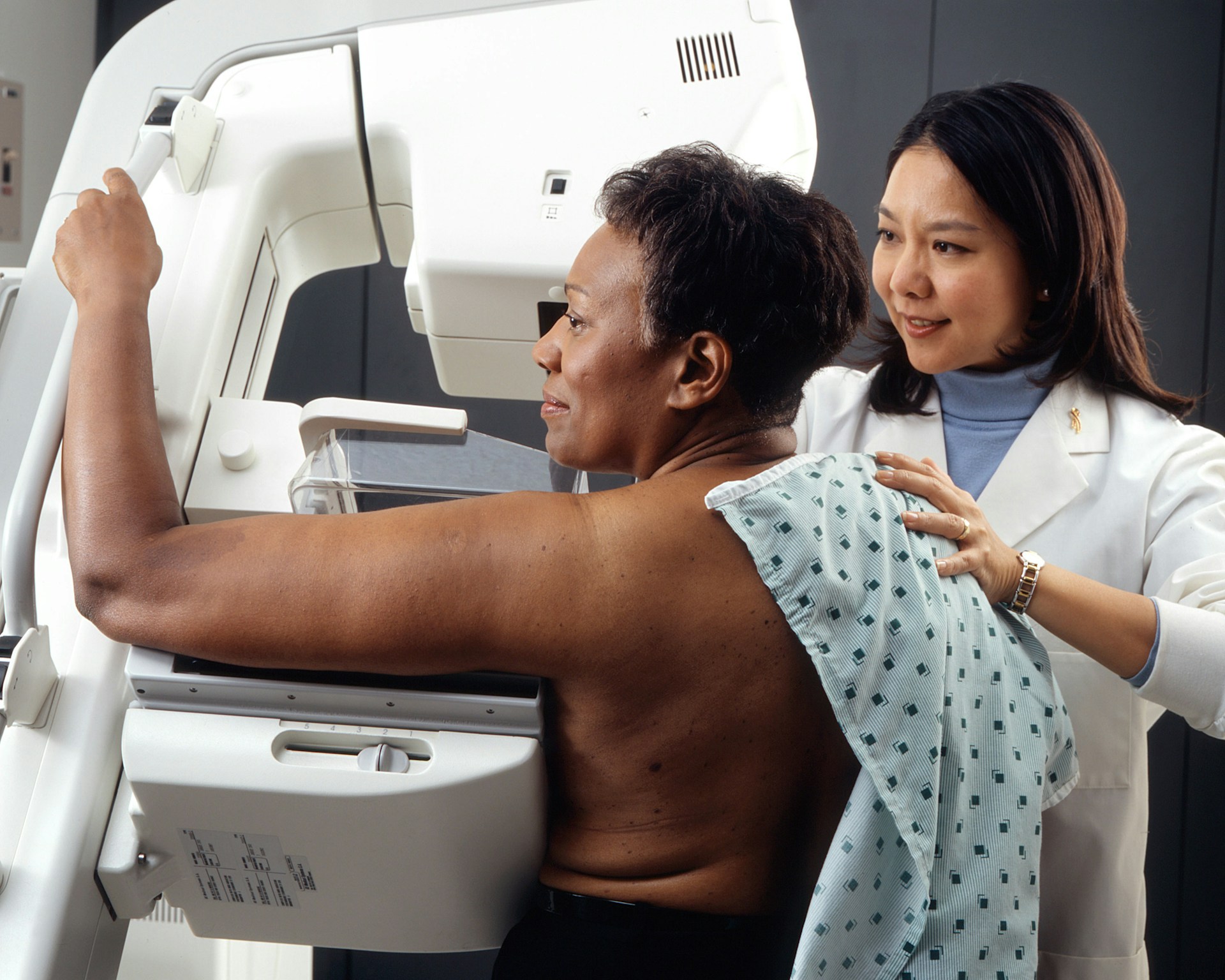
UC Davis is offering free mammogram screenings for women this month.
Because October is Breast Cancer Awareness Month, the university will help women detect breast cancer early by providing free screenings regardless of insurance or patient status. The screenings will be administered at the Lawrence J. Ellison Ambulatory Care Center on October 17 and 18. The Department of Radiology and UC Davis Comprehensive Cancer Center will support it.
Women ages 40 to 74 can sign up for an appointment if they haven’t had a mammogram in the past year, even if they have no symptoms. Anyone with symptoms, including breast pain, discharge or lumps, will most likely be referred to a diagnostic mammogram.
“Regular screening mammography can help find breast cancer at an early stage when treatment is more likely to be successful,” said Marissa Bashore, health education supervisor for the Office of Community Outreach and Engagement, in a statement. “We encourage those aged 40 and older to talk with their healthcare provider about breast cancer screening and stay up to date with their mammograms.”
Breast cancer has been on the rise in recent years. The American Cancer Society identifies breast cancer as the second most common cancer amongst women, estimating that nearly 1 in 3 women are diagnosed with the illness each year.

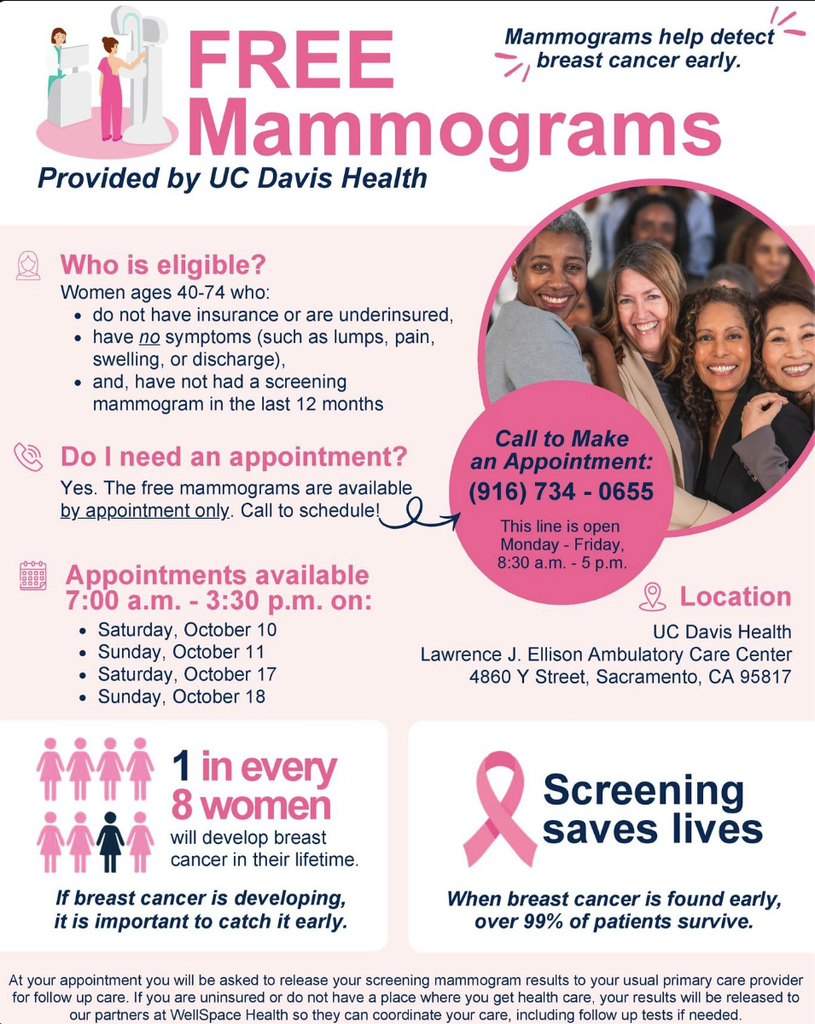
This year, nearly 322,000 new cases have been recorded. An estimated 42,140 women will pass away once diagnosed.
Younger women have also been diagnosed more frequently with breast cancer in recent years. Approximately 1 in 10 women under 45 years old are diagnosed with breast cancer. Despite the increased rates of diagnosis, fewer women are passing away from this type of cancer. Approximately 1 in 43, or 2.3%, of women will pass away from cancer.
Black women, however, are more likely to pass away than anyone else, despite having less of a chance of developing it.
This is because breast cancer is often diagnosed in Black women in later stages due to a lack of opportunities to catch it early on in the illness. They are also more likely to be exposed to breast carcinogens such as bisphenol A and perfluoroalkyl substances in certain creams.
As a result, overall, Black women are 38% more likely to die of breast cancer.
The latest program aims to address the mortality rates.
“When we can detect early, when we catch cancer early, survival rate is 99%,” said Dr. Anne Darrow, a UC Davis radiologist, in conversation with CBS News.