


The Conversation with Al McFarlane examines party accountability, economic power and the organizing required to turn Black votes into lasting political influence.
As Minnesota moves toward the 2026 midterm election, Bill English and Anika Robbins say the question facing Black voters extends beyond whether they will cast ballots. The conversation, on the Oct. 6 broadcast of The Conversation with Al McFarlane, turned on how Black communities convert voting strength into political accountability, economic opportunity and durable power.
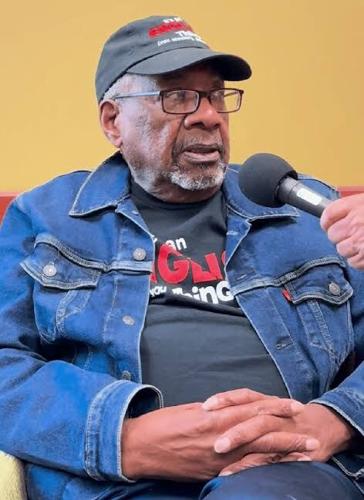
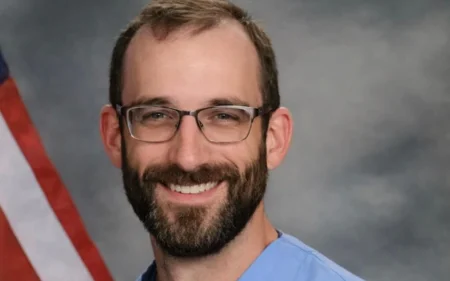
English, a longtime community organizer and former corporate executive, told listeners that democracy itself is at stake in the election. Now in his 92nd year, by his own count, he recalled Benjamin Franklin’s closing remark at the Constitutional Convention, which he rendered as: “Now you have a democracy if you can keep it.”
For English, protecting democracy requires participation — but participation alone does not excuse political parties from accountability. He recalled working with Bill Davis to establish the DFL African American Political Caucus and nominating Josie Johnson for lieutenant governor at a state convention. Johnson read a statement on the lack of racial balance in the party and then withdrew her name, he said, in a protest meant to expose what he called the party’s hypocrisy toward Black members. Party rules require gender balance, he noted, but the request for racial balance drew laughter.
English said Black voters have consistently supported Democrats — about 95 percent of them, he said — while receiving too little political and economic return.
That argument extended to economics. English said African Americans in Minnesota “spend six billion dollars in this economy and pay over six hundred million dollars a year in taxes,” while continuing to experience deep disparities. He said he was referring to African Americans who identify as ADOS, not Black people across the diaspora. Insight News has not independently verified the figures.
English also connected present disparities to history. He said that while Minnesota was not directly engaged in the slave trade, many of its wealthy founders helped finance it through New York banks, and that “some of the most famous names in this town” were associated with it. He argued that Minnesotans also live on “stolen labor” because cotton built the American economy. Insight News has not independently verified English’s claims.
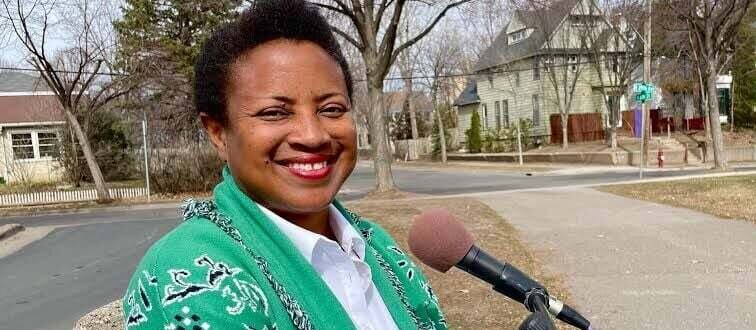
Robbins, founder and chair of Black Votes Matter Minnesota, approached political power from the standpoint of organizing and capacity. She said the organization is “celebrating eleven years of service to Twin Cities and the greater Minnesota communities around the state.”
Its work, Robbins said, is designed to increase turnout among African Americans and the broader Black diaspora while helping voters understand not only who appears on their ballots but what those offices control.
Robbins said that while many candidates “fixate on fraud,” the organization is trying to center the conversation on issues people encounter in daily life: affordable housing, employment, access to capital, health care and economic policy. She said voters should weigh the consequences of decisions involving Medicaid, Medicare, SNAP and WIC.
The conversation also took up the argument, raised by a viewer in the chat and acknowledged by Robbins as a recurring one, that Black voters should withhold their votes to force political parties to respond more directly to Black interests.
Robbins did not dismiss the frustration behind that strategy. Instead, she questioned whether withholding votes without sufficient organization, financing and a long-term plan would produce the desired result.
“If you withhold the vote, to what end?” — Anika Robbins, Black Votes Matter Minnesota
“If you withhold the vote, to what end?” she asked.
English, for his part, urged Black voters to use their leverage. “Let’s threaten them with the one thing that they can’t stand,” he said, and suggested that if candidates will not come before Black voters to make their case, “maybe we should consider writing our own name then for governor.”
Political leverage, Robbins argued, depends on demonstrating organized power and building the capacity to sustain it. She pointed to changes in local representation as evidence that participation can matter, citing a more diverse Minneapolis City Council and a first woman of color serving as chair of the Hennepin County Board.
But she also emphasized that political development takes time. Building power requires relationships, voter education, leadership development and continued work between elections, she said.
The discussion turned to the Hennepin County Attorney race. Robbins said during the broadcast that a candidate forum for the office had been announced, and she urged residents to pay attention to the contest because decisions by the county attorney can affect criminal prosecution, violence prevention, victims and restorative justice. English also urged listeners to take part in the race, saying he wants a county attorney who is “culturally competent” and attentive to public safety.
“We don’t own a single gun factory in the world.” — Bill English
Public safety produced another sharp exchange. Responding to narratives that place responsibility for violence primarily on Black youth, English argued that the availability of firearms, youth unemployment and what he described as failing schools must be part of the analysis. “We don’t own a single gun factory in the world,” he said.
Robbins broadened the response, pointing to youth programs, regular meals, mental-health services, violence prevention, community-police partnerships and support for families. “The youth need programs,” she said.
Together, English and Robbins offered different emphases on Black political power, and the two did not fully agree on tactics. English pressed institutions and political parties to answer for historical exclusion, economic disparities and what he described as insufficient returns on decades of Black political loyalty. Robbins emphasized turnout, organization, coalition building and the patient construction of community capacity.
Their common ground was participation with purpose.
Voting, as the two guests described it, is neither the beginning nor the end of political power. It is one instrument in a larger strategy: know what is on the ballot, understand what public offices control, demand answers from candidates, organize between elections and build enough collective capacity to hold institutions accountable.
For Black Minnesotans, the conversation suggested, the challenge of 2026 is not simply to vote. It is to make the vote carry power.