



Black men will gather in Minneapolis Oct. 31 for the fifth annual Black Men’s Legacy Summit, a day organizers are framing around a central question: What legacy are families and communities building for the generations that follow?
Presented by 9000 Equities, the summit will run from 10 a.m. to 3 p.m., with doors opening at 9:30 a.m., at the Regional Access Center, 1256 Penn Ave. N., fifth floor, in Minneapolis. Admission is free and open to the public, with space limited and available on a first-come, first-served basis.
“Legacy Under Fire—Stand Your Ground”
This year’s theme, “Legacy Under Fire—Stand Your Ground,” places the focus on preserving what earlier generations built while creating new opportunities for those coming behind them. Organizers list six topics for the day: Black fathers and their sons; youth; the Collective Kitchen; economic opportunity; health and wellness; and politics and legacy.
“The State of the Nation”
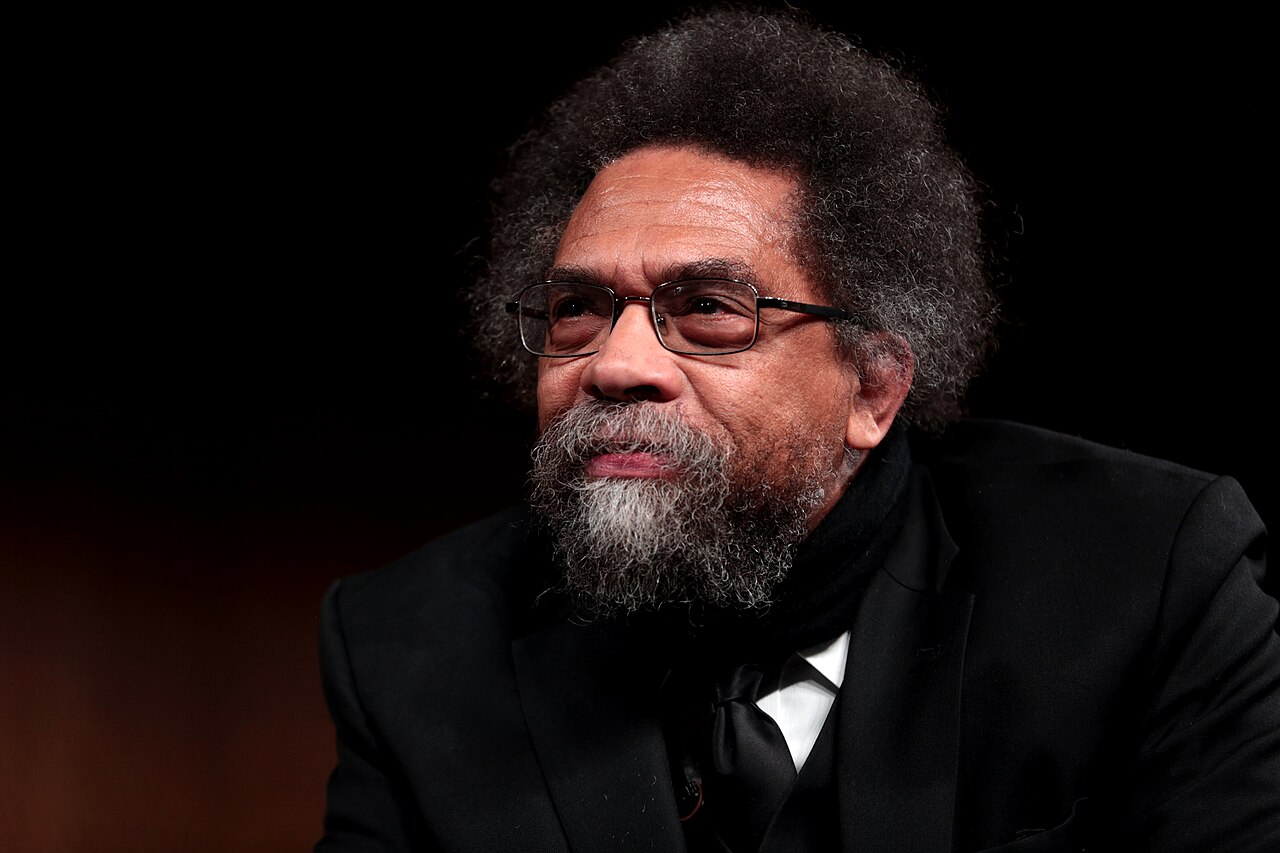
Dr. Cornel West, the scholar, author and public philosopher, will deliver the keynote address, “The State of the Nation.” Organizers say his address will examine DEI, voting power and access to ownership.
West is the Dietrich Bonhoeffer Professor of Philosophy and Christian Practice at Union Theological Seminary and professor emeritus at Princeton University. He earned his doctorate in philosophy from Princeton in 1980 and is the author of numerous books, including Race Matters, Democracy Matters and Black Prophetic Fire.
The program connects family relationships with questions of ownership and long-term community capacity. The Black Fathers and Their Sons topic will focus on strengthening relationships, responsibility, mentorship and what one generation passes to the next.
A youth topic, “Next In Line: Our Turn to Build,” will bring younger participants into conversations about opportunity, leadership, wealth and the futures they want to create.
The Collective Kitchen will explore connection and collaboration and what organizers describe as the potential created when people work together to strengthen families and communities.
Economic questions will receive a dedicated topic, “Thriving Economic Opportunities to Build Legacies.” The announced discussion includes ownership, entrepreneurship, homeownership and other pathways toward long-term wealth building.
The “Health is Wealth” topic broadens that discussion by examining health, wellness and longevity as components of sustaining a legacy. Another topic, “Politics and Legacy,” will focus on civic engagement and policy and on how decisions made today can affect families, communities, ownership and opportunity across generations.
Taken together, the six topics give the summit’s use of the word “legacy” a practical meaning. The agenda moves from relationships inside families to health, economic participation, ownership and civic engagement, treating each as part of what can be built and transferred from one generation to another.
That emphasis on practical outcomes mirrors the mission of Build Wealth MN, the nonprofit that created the 9000 Equities initiative with partners.
Founded in 2004, Build Wealth MN describes its work as helping people develop new approaches to giving, saving, banking, investing, homeownership and the creation of generational wealth. According to the organization, it has served thousands of clients and supported more than 7,000 families in attaining homeownership since its founding.
Its programs include the Family Stabilization Plan, Youth Stabilization Program, Rent Smart-Wise and Ready, PEEP (Pathways to Increase Employment and Earnings Potential), mortgage loans and down payment assistance, and housing development.
Homeownership is also central to the work of 9000 Equities. According to 9000 Equities, the initiative is working with partners toward financing 9,000 new Black homeowners over five to seven years, with a stated objective of reducing Minnesota’s homeownership gap by 15 percent. Those figures are the initiative’s own targets.
The state data behind that target is stark. A March 2025 report from the Minnesota State Demographic Center found that Black homeownership in Minnesota is less than half the statewide rate of 72 percent, while white homeownership is 77 percent. The report, written by demographer Jeff Howison, found that the rate for Black households has fallen by about one-third since 1970 and declined in every decade since the 1960s except the 1990s. Black homeowners grew from 4,338 to 30,544 between 1970 and 2020, while Black renters grew from 6,027 to 94,488. Some newer immigrant communities have made modest gains, the report says, but U.S.-born African Americans have not. One-year Census data for 2023 showed Black homeownership rising to 32 percent, a change the report’s long-term figures do not capture.
The Council for Minnesotans of African Heritage, a state council created by the Legislature to advise the governor and lawmakers, has pointed to the same gap. In a March 2025 factsheet supporting a proposed Black homeownership program, the council said fewer than 30 percent of Black Minnesotans own their homes and that 60 percent of Black Minnesotans pay more than they can afford for housing, compared with 30 percent of all Minnesota households.
At the federal level, the Trump administration’s Department of Housing and Urban Development proposed in January to repeal its Fair Housing Act regulations on disparate impact, the standard for challenging housing practices that disadvantage a protected group even without proof of discriminatory intent. HUD said the change would leave questions about that liability to the courts, and it cited an April 2025 executive order stating that the law guarantees “equality of opportunity, not outcomes.” HUD’s notice acknowledges the Supreme Court’s 2015 ruling that disparate-impact claims are allowed under the Fair Housing Act, and it says the proposal changes no rights or obligations. In August, HUD added a supplemental proposal covering its Title VI rules for recipients of federal housing aid and reopened public comment on the January proposal. The Justice Department finalized a similar change to its own Title VI rules in December 2025, HUD’s August notice says.
HUD has been direct about its aim. Secretary Scott Turner wrote in a Jan. 19 National Review column that HUD is moving to end the agency’s use of disparate-impact theory in fair housing and related civil rights enforcement. HUD’s notice says the change would not alter any rights or obligations and that courts, not a federal agency, should determine how disparate-impact liability is interpreted.
HUD has also turned its attention to Minneapolis. In a Jan. 15 letter to Mayor Jacob Frey, Craig Trainor, HUD’s assistant secretary for fair housing, opened an investigation into whether the city’s housing policies violate the Fair Housing Act and Title VI of the Civil Rights Act. The letter opens with allegations of fraud involving Minnesota’s Somali community and says what it calls racial favoritism “appears to extend to Minneapolis’s housing policy.” It points to the Minneapolis 2040 plan’s priority for cultural districts, the plan’s pledge to focus on people of color and Indigenous people in expanding support for homeowners, and a city department’s plan to prioritize rental housing for communities of color and immigrants. Turner said the agency would not stand for racial and ethnic preferences. A city spokesperson said the investigation appears to be “about politics, not affordable housing.”
The proposal drew organized opposition. The Legal Defense Fund, known as LDF, the civil rights law organization founded in 1940, told HUD in a Feb. 13 comment that the agency was abdicating its duty to fight housing discrimination. Demetria McCain, LDF’s director of policy, said the attacks on disparate impact are “part of the administration’s broader efforts to undermine civil rights law.” She added that HUD itself concedes courts still recognize such claims. The National Fair Housing Alliance led a coalition of 174 civil rights, fair housing and fair lending organizations in urging HUD not to finalize the change. Nikitra Bailey, the alliance’s executive vice president, said the Supreme Court has already made clear that disparate impact is recognized under the Fair Housing Act. The alliance said its campaign helped drive 1,426 comments filed with HUD. The ACLU and the Impact Fund told HUD in a Feb. 12 comment that the proposal conflicts with the Supreme Court’s 2015 ruling, disregards the reliance that people and institutions have placed on the rule for more than a decade, and allowed only 30 days for comment when HUD’s own policy calls for 60. The ACLU cited its analysis finding that landlords filed eviction cases against Black renters at more than twice the rate they did against white renters from 2012 to 2016. LeadingAge, which represents more than 5,400 aging-services providers, also urged HUD to keep the rules, saying their removal would reduce protections for older adults. Comment on HUD’s August proposal closes Oct. 9.
The stakes are concrete for Black homeowners. On Jan. 12, the Supreme Court declined to hear an appeal by Emigrant Bank and Emigrant Mortgage Company, leaving in place a jury verdict that awarded $722,000 in compensatory damages to eight New York homeowners. Their lawyers said the bank marketed high-cost refinance loans, issued between 1999 and 2008, to Black and Latino homeowners with poor credit and significant equity, and that the borrowers lost that equity and, in some cases, their homes. According to the ACLU, the bank had asked the justices to consider whether the 2015 ruling recognizing disparate-impact claims “has proven unworkable.” The Court denied the petition without explanation.
For the summit, the debate lands close to home. Its theme, “Legacy Under Fire—Stand Your Ground,” is about protecting what earlier generations built while creating opportunity for those who follow. The Fair Housing Act of 1968 is one of those inheritances, and disparate impact is one of the tools used to enforce it. Organizers describe the Politics and Legacy topic as exploring how decisions made today affect ownership and opportunity across generations. HUD’s proposal is one such decision. In the summit’s terms, the work has two fronts: building ownership, as 9000 Equities aims to do, and defending the rules that protect that ownership from discrimination.
Organizers say the objective of the summit is not simply to talk about legacy but to help Black men identify practical pathways to build, protect and sustain wealth and opportunity for their families and communities. Participants will be encouraged to connect with resources and consider how ideas discussed during the summit can be turned into action afterward.
The announcement names no speaker other than West.
For organizers, the summit connects the immediate work of strengthening families with the longer work of building ownership and assets that can move from one generation to the next.
Registration for Black Men’s Legacy Summit V is open through Eventbrite. The event is free and open to the public, although space is limited.
Additional information is available through Build Wealth MN at bwealthe.org and through 9000 Equities at 9000equities.com.