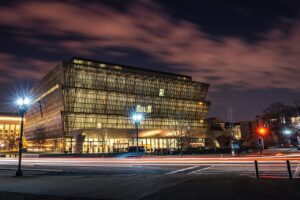

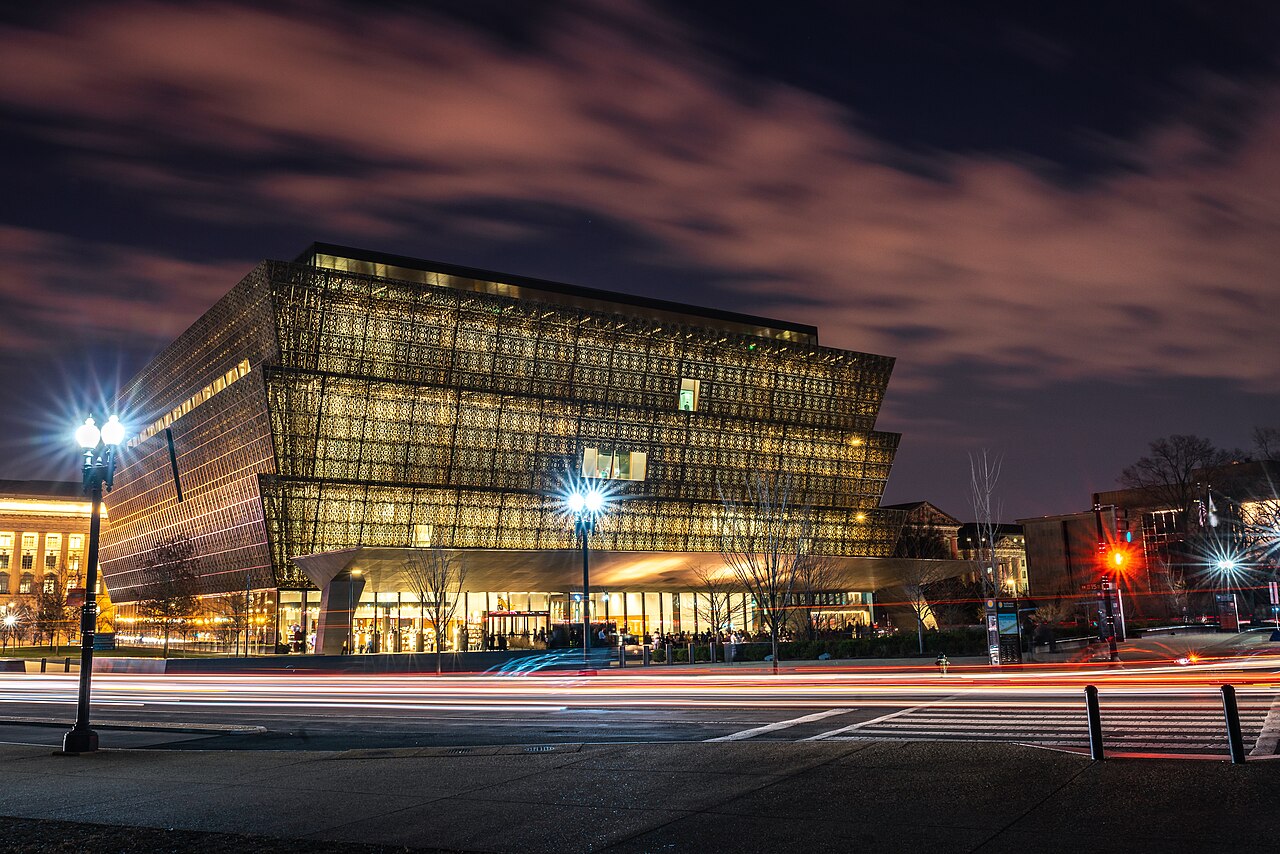
On this day in 2016, the Smithsonian National Museum of African American History and Culture opened its doors to the public in Washington, D.C.
The museum, which opened with a staff of approximately 200 people, was decades in the making.
The push to establish a national museum dedicated to African American history dates back to 1929, when advocates sought to commemorate Black veterans who served in the Civil War. Congress authorized a privately funded memorial, but the onset of the Great Depression left supporters without the resources needed to move the project forward.
Efforts gained renewed momentum during the 1970s and 1980s. By 1987, plans for a national museum dedicated to Black history had begun taking shape in Congress.
One of the effort’s most persistent champions was civil rights leader and U.S. Rep. John Lewis of Georgia, who became known as the “godfather” of the museum. Lewis repeatedly introduced legislation calling for its creation, returning to the proposal for approximately 15 years despite opposition from lawmakers who questioned its necessity and cost.
Lewis worked alongside Smithsonian official Lonnie G. Bunch III, who would later become the museum’s founding director and play a central role in developing the institution.
By 2001, the proposal had gained bipartisan support. Republican Sen. Sam Brownback of Kansas introduced legislation in the Senate, while Lewis pushed companion legislation in the House.
Congress ultimately approved the measure, and President George W. Bush signed the National Museum of African American History and Culture Act into law on Dec. 16, 2003.
“This museum is a testament to the dignity of the dispossessed in every corner of the globe who yearn for freedom,” Lewis said at the museum’s opening in 2016. “It is a song to the scholars and scribes, scientists and teachers, to the revolutionaries and voices of protest, to the ministers and the authors of peace. It is the story of life, the story of our lives, wrapped up in a beautiful golden crown of grace.”
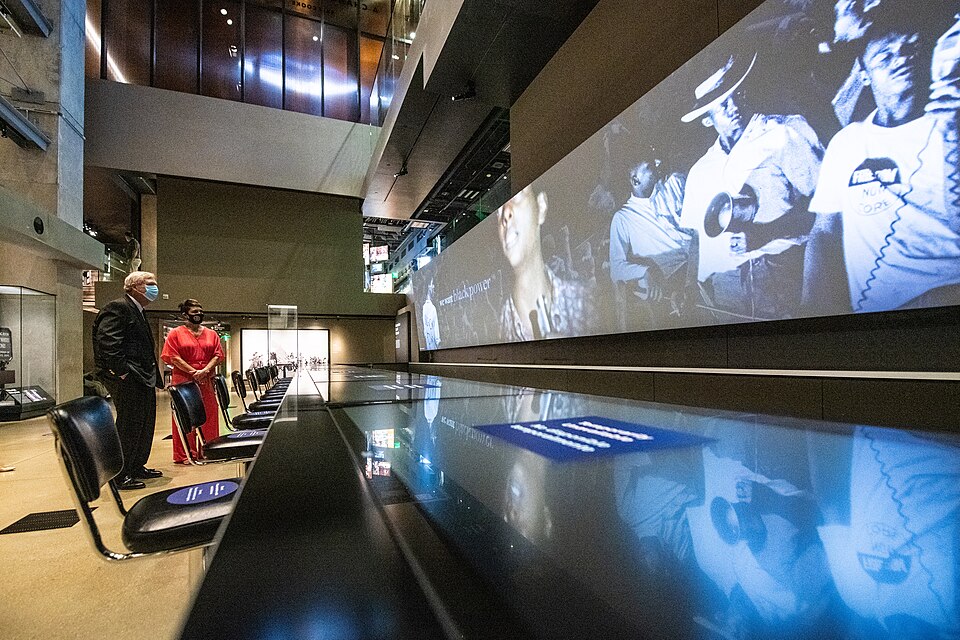
After the legislation became law, Bunch and Deputy Director Kinshasha Holman Conwill helped lead efforts to build the museum. Their work included assembling staff, coordinating with Smithsonian officials, developing collections and finding a permanent site.
They considered several locations, including Banneker Overlook and the Arts and Industries Building. The museum was ultimately built on the National Mall near the Washington Monument.
The growing staff included Esther Washington as director of education and Elaine Nichols as senior curator of culture.
The museum officially opened Sept. 24, 2016, with a three-day celebration featuring speeches and performances. President Barack Obama delivered remarks during the opening ceremony.
A decade later, the museum is marking its 10th anniversary with another series of free public events.
From Sept. 25-27, the museum is scheduled to host activities including a chef’s table with Chef Ramin Coles, a zine project, a line-dancing workshop, a children’s birthday party, a painting activity and a performance by the Proper Utensils Band.
The anniversary celebration continues the mission Lewis and others spent decades pursuing: creating a national institution dedicated to preserving, studying and sharing African American history and culture.