


Article by media partner Cuisine Noir, the country’s first Black culinary lifestyle outlet since 2009 dedicated to connecting the African diaspora through food, drink and travel.
Cuisine Noir often spotlights community gardens and outdoor farming in conversations about climate and food, but not everyone has space or access to a garden outside. Apartment and container gardening offer practical ways for food you can grow in your apartment.
Container gardeners like Timothy Hammond and Quincey Adams have been practicing this approach for years, showing how accessible food you can grow in your apartment can be with the right techniques.
Timothy Hammond: Big City Gardener
Hammond is an urban gardener in Houston, Texas. “I come from a long line of gardeners,” he says. “My mother and father garden, and my grandmother did, too. I’m Jamaican, and my parents often recounted growing up picking mangoes from trees, ginger from the yard, and food from the ground. It was their way of life, and it became mine because I didn’t choose gardening; it chose me.”
He shares early memories of helping his dad with perennial beds, of grandma’s backyard fruit trees in Florida, and of how gardening felt inevitable to him. “Everywhere we lived, there were gardens. I remember my mom’s pots filled with herbs and getting in trouble as a kid for picking her tomatoes and tossing them onto the neighbor’s roof to scare birds,” he reminisces. His family would take vacations to Jamaica, but Hammond says that his gardening memories stem from his grandmother’s house.
“My grandmother’s Florida backyard also had fruit trees, a small garden, and always something growing. I’ve always been around plants. Looking back, I was destined to garden.”
Getting Started: Lights
Hammond has extensive experience in container gardening, demonstrated on his Instagram page, where he grows plants in everything from small pots to red Solo cups. He offers tips on getting started.
“If you don’t have a balcony, you have to be realistic about what you can grow,” he explains. “Start by figuring out how much sunlight your space actually gets. If you have good windows and plenty of natural light, you can grow almost anything. But if your place is dim, you’ll need supplemental lighting. That can get expensive, though people often overspend because they’re chasing what they see on social media; you don’t have to do all that.”
Grow lights will probably cost at least $20, and from there, the price can go as high as you’re willing to spend. “But again, it really comes down to what you want to grow. That’s the first question you need to answer when you’re talking about growing indoors, and you have to be realistic about it,” Hammond reiterates.
He continues, “Plants need a specific light spectrum to grow. Outdoors, the sun provides the full spectrum automatically. Indoors, you have to recreate that, which is why mixed-spectrum lighting matters. You want both warm and cool lights; having one warm and one cool light allows the spectrums to blend and hit the plant evenly.”
With LED grow lights, Hammonds explains the setup varies depending on how much you spend. “Many LED strips use individual diodes in different colors: purple, white, blue, orange, sometimes red. That repeating pattern creates the full spectrum your plants need to grow well indoors.”
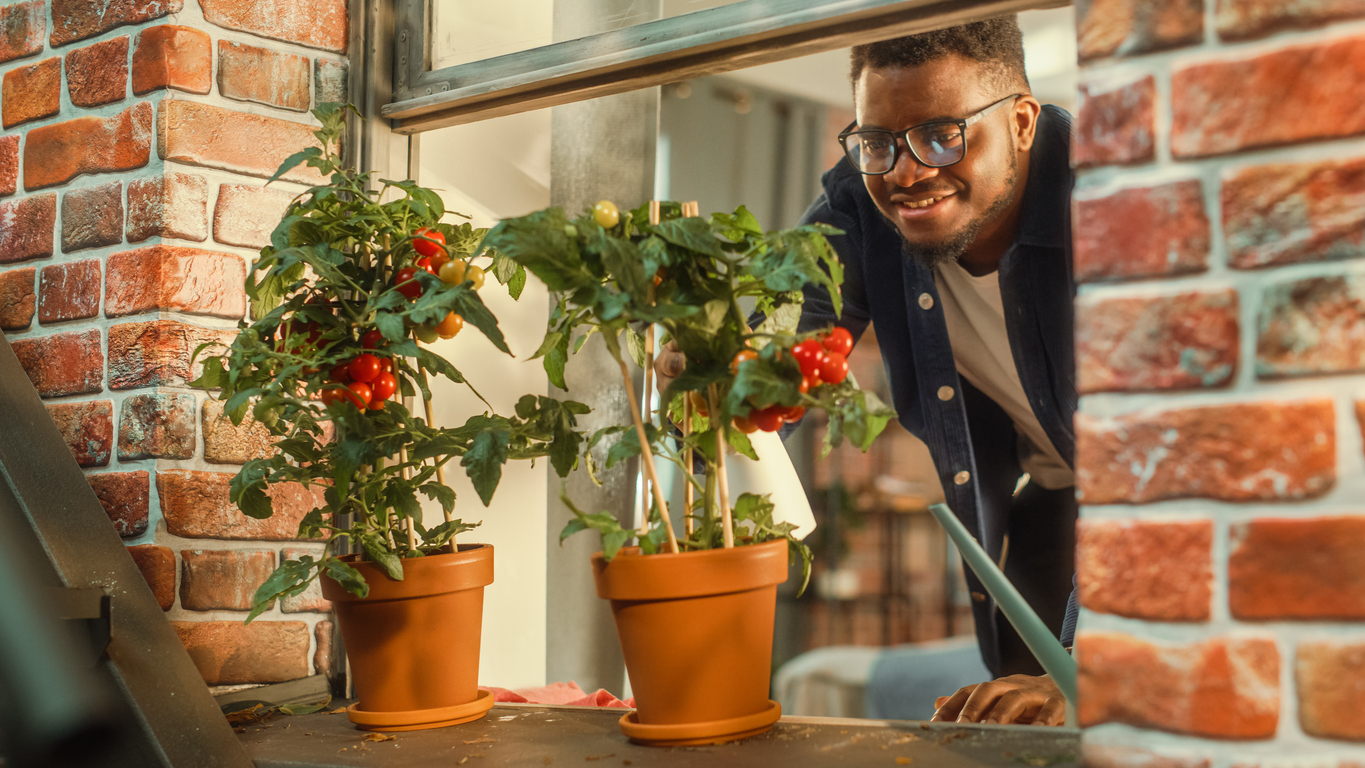
Understanding your available light is just as crucial as understanding equipment. “A window with four to five hours of direct, intense light is suitable for herbs and leafy greens. A window with eight to ten hours allows more experimentation with fruiting plants like tomatoes. If you have a balcony, that opens up even more options,” he shares.
By Stephanie Teasley