

Close Menu
TheHub.news

    Did You Know Activist Fannie Lou Hamer Was Born on This Day?

    By Shayla Farrow

    “We Belong Here” Is a Reminder That Black Women Excel in Volleyball

    By FirstandPen

    Haiti’s 4-1 Win Over the Dominican Republic Ends With a Stadium Ban

    By TheHub.news Staff

    Subscribe to Updates

    Get the latest creative news from FooBar about art, design and business.

    X (Twitter) Instagram YouTube
    X (Twitter) Instagram YouTube
    TheHub.news
    Support Our Work
    • Home
    • Our Story
      • News & Views
        • Politics
        • Injustice
        • HBCUs
        • Watch
      • Food
        • Cuisine Noir
        • soulPhoodie
      • Passport Heavy
      • Travel
      • Diaspora
      • This Day
      • Entertainment
      • History
      • Art
      • Music
    • Health
    • Money

      Cashflow Coach: I Planted a Money Tree!

      August 4, 2026

      Breaking Down the 2 Different Types of Income

      July 7, 2026

      Black Americans Are Already Living Through a Recession

      July 6, 2026

      You Must Be an Owner to Win 

      June 23, 2026

      Economic Empowerment Has Always Been a Part of Black History

      February 12, 2026
    • Books
    • Business
    • Sports
      1. First and Pen
      2. View All

      “We Belong Here” Is a Reminder That Black Women Excel in Volleyball

      October 5, 2026

      DHS Shamelessly Uses Brian Dawkins Footage Without Permission to Tout Fear

      September 30, 2026

      Carlan Gay Traveled the World to Build a Sports Career Very Few Are Built to Forge

      September 25, 2026

      Texans’ Aziz Al-Shaair Shows How Humanity Can Exist in Sports

      September 22, 2026

      “We Belong Here” Is a Reminder That Black Women Excel in Volleyball

      October 5, 2026

      DHS Shamelessly Uses Brian Dawkins Footage Without Permission to Tout Fear

      September 30, 2026

      Carlan Gay Traveled the World to Build a Sports Career Very Few Are Built to Forge

      September 25, 2026

      Texans’ Aziz Al-Shaair Shows How Humanity Can Exist in Sports

      September 22, 2026
    • Tech
    • Podcasts
      1. Karen Hunter is Awesome
      2. Lurie Breaks it Down
      3. Human(ing) Well with Amber Cabral
      4. Financially Speaking
      5. In Class with Carr
      6. View All

      Did You Know Activist Fannie Lou Hamer Was Born on This Day?

      October 6, 2026

      “We Belong Here” Is a Reminder That Black Women Excel in Volleyball

      October 5, 2026

      Haiti’s 4-1 Win Over the Dominican Republic Ends With a Stadium Ban

      October 5, 2026

      Black Workers Are Bearing the Brunt of America’s Weakening Job Market

      October 5, 2026

      Did You Know Activist Fannie Lou Hamer Was Born on This Day?

      October 6, 2026

      “We Belong Here” Is a Reminder That Black Women Excel in Volleyball

      October 5, 2026

      Haiti’s 4-1 Win Over the Dominican Republic Ends With a Stadium Ban

      October 5, 2026

      Black Workers Are Bearing the Brunt of America’s Weakening Job Market

      October 5, 2026

      Did You Know Activist Fannie Lou Hamer Was Born on This Day?

      October 6, 2026

      “We Belong Here” Is a Reminder That Black Women Excel in Volleyball

      October 5, 2026

      Haiti’s 4-1 Win Over the Dominican Republic Ends With a Stadium Ban

      October 5, 2026

      Black Workers Are Bearing the Brunt of America’s Weakening Job Market

      October 5, 2026

      Did You Know Activist Fannie Lou Hamer Was Born on This Day?

      October 6, 2026

      “We Belong Here” Is a Reminder That Black Women Excel in Volleyball

      October 5, 2026

      Haiti’s 4-1 Win Over the Dominican Republic Ends With a Stadium Ban

      October 5, 2026

      Black Workers Are Bearing the Brunt of America’s Weakening Job Market

      October 5, 2026

      Did You Know Activist Fannie Lou Hamer Was Born on This Day?

      October 6, 2026

      “We Belong Here” Is a Reminder That Black Women Excel in Volleyball

      October 5, 2026

      Haiti’s 4-1 Win Over the Dominican Republic Ends With a Stadium Ban

      October 5, 2026

      Black Workers Are Bearing the Brunt of America’s Weakening Job Market

      October 5, 2026

      Black Girl Vitamins’ New Podcast Is Creating Space for the Health Conversations Black Women Deserve

      September 30, 2026

      In Class with Carr: “Cross Colors”

      September 29, 2026

      In Class with Carr: Whose Labor? Which Stories?

      September 7, 2026

      In Class with Carr: King Me: Africana Governance and Purpose in a Changing World

      August 31, 2026
    TheHub.news
    Health

    How a 4,000-Year Tradition Became Today’s Silent Health Crisis

    By Kaba Abdul-FattaahAugust 27, 20256 Mins Read
    Share Email Copy Link
    Image credit: ShutterStock
    Share
    Facebook Twitter LinkedIn Email Copy Link Threads

    An Instagram post made me question my ramen habit—and what I found could change how you see your next meal.

    An Instagram post stopped me in my tracks. It wasn’t entertainment or a lighthearted distraction—it was a quiet warning that made me re-evaluate something I once thought was harmless: instant noodles. The post showed a ramen packet with the label: “Warning: Cancer and Reproductive Harm.” It shocked me into digging deeper, and what I found was even more disturbing.

    The viral reel by @omggotworms left viewers stunned and was picked up by outlets like NDTV and Indian Express. The noodles in question? Buldak—already notorious for being one of the saltiest, spiciest instant noodles on the market. Some food safety experts explained that the label may fall under California’s Proposition 65, a law that forces companies to disclose if any part of the product or packaging contains chemicals linked to cancer or reproductive harm, even in trace amounts. Critics argue it leads to “over-labeling,” with companies using the warning as a legal shield rather than proof of imminent danger.

    But the other side of the argument is harder to dismiss. If the label exists, something in the product or packaging has been flagged as hazardous. Why should food that touches our bodies and our children’s bodies contain any such substances at all? As one commenter put it, “Heat-printed wrappers leach toxins—you’re still eating it.” To be eating anything that has to be put on a label is like eating a pack of cigarettes. The warning may technically be about packaging, but the symbolism is undeniable: known carcinogens are tied to what we casually slurp down as comfort food.

    And Buldak is not just about a label—it is about numbers that reveal an even more troubling picture. A single serving carries between 1,900 and 2,050 milligrams of sodium. That’s 83-137% of the recommended daily limit in one meal. Pair that with incendiary spice levels and heavy processing, and it becomes clear that these aren’t just noodles—they’re a creeping health risk packaged as culture and fun.

    Instant noodles more broadly have been marketed for decades as cheap comfort food, but beneath the surface lies a story of hidden harm. Many are loaded with sodium, preservatives, artificial colors, and flavor enhancers like MSG. Some of the most popular brands, like Maruchan and Nissin, are just as guilty: one pack can hit 1,700 to 1,800 milligrams of sodium—nearly an entire day’s worth of salt.

    The history of noodles themselves is noble, stretching back to China nearly 4,000 years ago. They were once symbols of longevity and nourishment. But what we call ramen today—mass-produced, flash-fried blocks of white flour and chemical packets—has little to do with that tradition. Modern instant noodles are the product of industrialization, designed for shelf life, not human life.

    Scientists and doctors have been sounding the alarm for years. Harvard researchers point out that diets heavy in instant noodles increase the risk of metabolic syndrome, a cluster of conditions including high blood pressure, high blood sugar, belly fat and abnormal cholesterol. Together, these raise the risk of heart disease, stroke, and diabetes. A 2022 study in the Journal of Nutrition found that people who ate instant noodles more than twice a week had significantly higher rates of metabolic syndrome, especially women.

    Dr. Mark Hyman describes food as either information or inflammation—instant noodles, he warns, almost always deliver inflammation. Naturopathic physician Dr. Stephen Tate puts it bluntly: “Your body is intelligent. When it takes in food that’s devoid of nutrition and full of chemicals, it doesn’t just process it—it pays a price.”
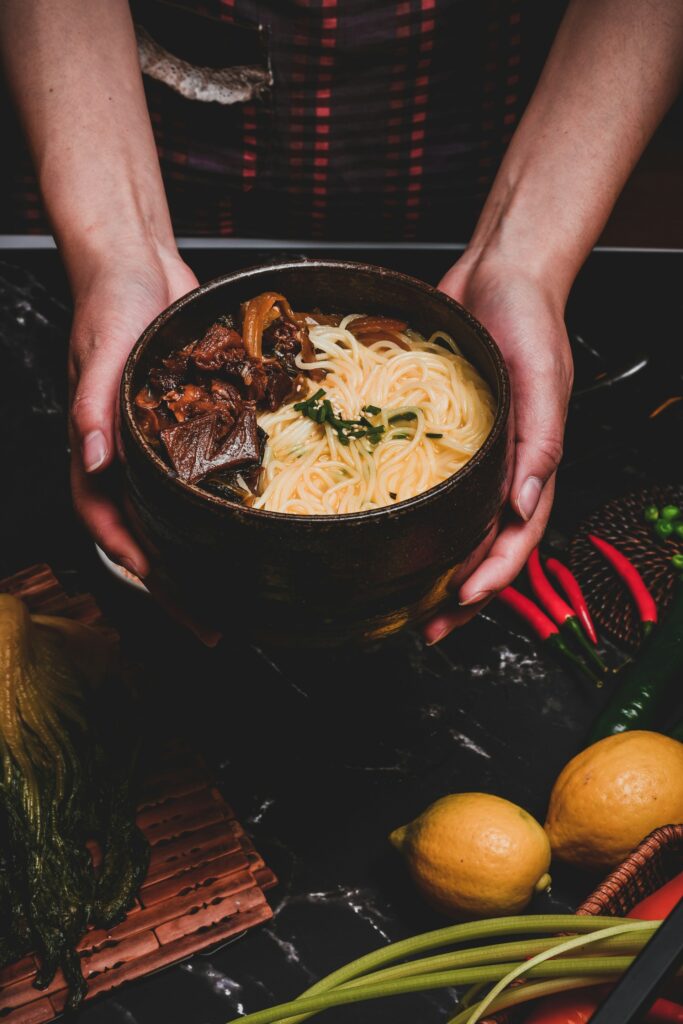
    The American Heart Association recommends no more than 2,300 milligrams of sodium a day, ideally 1,500. Against that backdrop, here’s what some of the most common ramen options actually contain.

    Maruchan Chicken Ramen has about 1,760 milligrams of sodium, or 77 to 117 percent of the daily limit. Nissin Top Ramen Beef runs higher, at around 1,820 milligrams, or 79-121%. Buldak 2x Spicy tops the list with 1,900 to 2,050 milligrams, equal to 83 to 137% of the daily limit. Chef Woo’s vegan line appears better: the Roasted Chicken flavor has about 1,120 milligrams (49-75%), and the Spicy Tequila Lime version has 1,200 milligrams (52-80%). Both pack 20 grams of protein, but still half a day’s worth of salt. Lotus Foods Millet and Brown Rice Ramen, by comparison, is much lighter at about 550 milligrams when prepared without broth—only 24-37% of the daily limit—and uses whole grains, making it one of the few healthier standouts.

    The consequences aren’t abstract. Case reports link heavy noodle consumption to hypertension crises, digestive distress and kidney strain. One young woman in China was hospitalized with a stomach packed with undigested noodles after eating them daily for months. Another man in Korea developed severe high blood pressure traced back to his ramen-heavy diet. These aren’t urban legends—they’re warnings we keep ignoring.
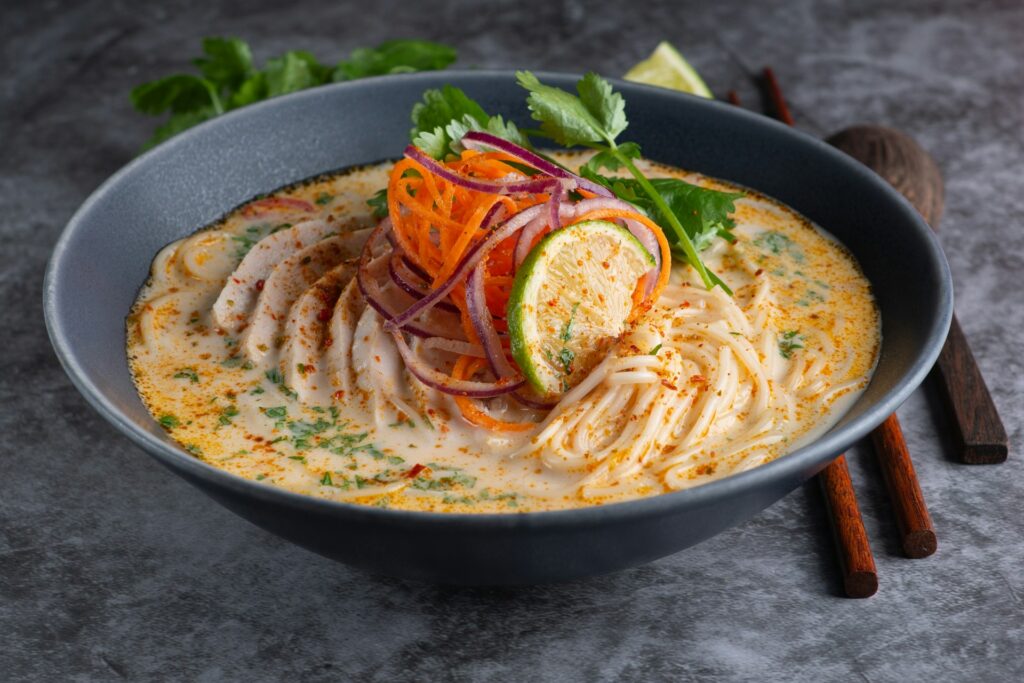
    And it’s not just individuals. In prisons, ramen has become both currency and daily sustenance, with incarcerated humans often eating multiple packs a day—triple the sodium a healthy heart can handle. In schools, where budgets are thin, instant noodles sometimes show up on lunch menus, feeding children foods linked to long-term illness. On the streets of New York and other cities, nearly every corner bodega stocks Maruchan and Nissin—the cheapest, most accessible brands, but also among the least healthy.

    Yet there are healthier ways forward. Lotus Foods makes rice-based ramen with lower sodium and whole-grain options. Some small brands offer kelp or buckwheat noodles that bring minerals and fiber back into the equation. Even with mainstream brands like Chef Woo, small changes can help—skipping or diluting the broth, and adding spinach, carrots, or mushrooms. As one nutritionist put it, “Instant noodles can be a vehicle—but you have to drive them in a better direction.”

    Best to Worst Ramen Choices (My Findings)

    The best choice overall is Lotus Foods Millet and Brown Rice Ramen, lower in sodium, gluten-free and based on whole grains. Runner-up is Chef Woo Ramen, offering high protein but still too much sodium unless the broth is cut down and vegetables are added. The worst offenders remain Maruchan, Nissin and Buldak—extreme sodium, additives, little to no fiber, and in Buldak’s case, cancer warnings tied to its packaging.

    These rankings reflect my findings, but everyone should do their own research. What’s clear is that not all ramen is created equal—and the difference between brands can mean the difference between a quick meal and a long-term health burden.

    What shocked me most after that Instagram post was not just that noodles could harm, but how deeply embedded they are in our systems. Schools feed them to children. Prisons feed them to incarcerated humans. Families rely on them to survive when money is tight. Convenience has become a cover for quiet exploitation.

    Noodles aren’t the enemy—it’s the way we’ve allowed them to be stripped of nutrition and overloaded with salt that’s the problem. The real question is whether we can reclaim them, returning to something closer to their original form: a food that sustains rather than destroys. Until then, every steaming cup deserves more than a casual slurp. It deserves a second thought.

    Ramen sodium Thehub.news Wellness
    Kaba Abdul-Fattaah

    Kaba Abdul-Fattaah is a dynamic independent documentary filmmaker and photographer. A world traveler, he has traversed the globe capturing not only music and film giants, but incredible footage of some of the most incredible humanitarians and freedom fighters of our time. Kaba's work passionately explores and celebrates the richness of the Black community, showcasing its depth and beauty through compelling visual narratives. He is a native of Brooklyn and currently resides in Harlem.

    Related Stories

    Experts Warn Measles Outbreak May Last a Year: Here’s What You Should Know to Protect Your Family

    April 2, 2025

    Coping With Family Trauma During the Holidays

    December 24, 2024

    The Sweet Memories of Incense: Unveiling the Hidden Dangers and Healthy Alternatives

    December 11, 2024

    The Miraculous Benefits of Frankincense: Unveiling Ancient Wisdom

    December 4, 2024

    The Holidays Are Coming: Tips for Staying Healthy During the Festivities

    November 20, 2024

    New Study Finds Increased Mortality Among Black Americans Aged 25 and Under During Pandemic

    October 16, 2024
    Recent Posts
    • Did You Know Activist Fannie Lou Hamer Was Born on This Day?
    • “We Belong Here” Is a Reminder That Black Women Excel in Volleyball
    • Haiti’s 4-1 Win Over the Dominican Republic Ends With a Stadium Ban
    • Black Workers Are Bearing the Brunt of America’s Weakening Job Market
    • 5 Things to Know About the Great Bernie Mac

    Did You Know Activist Fannie Lou Hamer Was Born on This Day?

    By Shayla Farrow

    “We Belong Here” Is a Reminder That Black Women Excel in Volleyball

    By FirstandPen

    Haiti’s 4-1 Win Over the Dominican Republic Ends With a Stadium Ban

    By TheHub.news Staff

    Black Workers Are Bearing the Brunt of America’s Weakening Job Market

    By Veronika Lleshi

    Subscribe to Updates

    A free newsletter delivering stories that matter straight to your inbox.

    About
    About

    TheHub.news is a storytelling and news platform committed to telling our stories through our lens. With facts at the center, we document the lived reality of our experience globally—our progress, our challenges, and our impact—without distortion, dilution, or apology.

    X (Twitter) Instagram YouTube

    Did You Know Activist Fannie Lou Hamer Was Born on This Day?

    By Shayla Farrow

    “We Belong Here” Is a Reminder That Black Women Excel in Volleyball

    By FirstandPen

    Haiti’s 4-1 Win Over the Dominican Republic Ends With a Stadium Ban

    By TheHub.news Staff

    Black Workers Are Bearing the Brunt of America’s Weakening Job Market

    By Veronika Lleshi

    Subscribe to Updates

    A free newsletter delivering stories that matter straight to your inbox.

    © 2026 TheHub.news A 501(c)(3) tax-exempt organization.

    Type above and press Enter to search. Press Esc to cancel.