



Kevin Lindsey steers Minnesota Humanities Center’s Juneteenth series into deeper historical truths
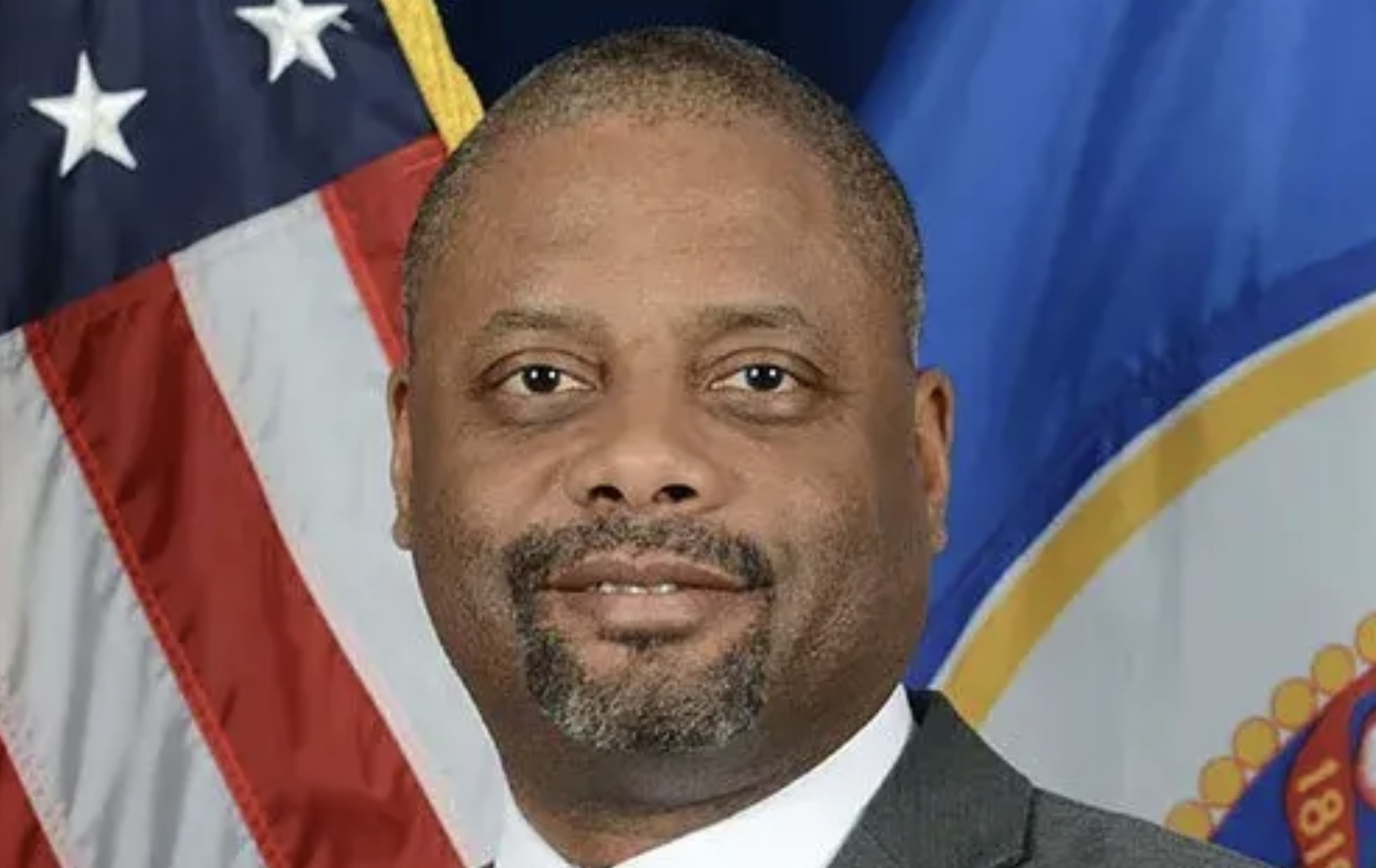
As the Minnesota Humanities Center (MHC) prepares to launch its 2026 Juneteenth event series, the four-program lineup stands as a direct and deliberate reflection of the organization’s evolving mission under CEO Kevin Lindsey. Since joining MHC in June 2019, Lindsey has steadily steered the organization toward a model of public humanities that does not observe history from a safe distance — it walks into it, names it, and demands that its audience account for what it finds.
This year’s series — running June 18 through June 28 and anchored by a brunch featuring National Book Critics Circle Award winner Clint Smith — showcases an intentional effort to examine how freedom has been defined, delayed, and still-unfinished in the United States. With events that range from high-stakes civic dialogue to culinary storytelling, choral performance, theatrical commemoration, and documentary film, Lindsey’s MHC asks a question that has no easy answer: What does the delayed realization of freedom demand of us today?
“To build a more equitable society, we need to establish trust between communities and create space for meaningful conversations and empathy.” — Kevin Lindsey, CEO, Minnesota Humanities Center
A career rooted in equity, law, and public service
Kevin Lindsey, J.D., brings a formidable and precisely relevant background to his role as MHC CEO — one shaped by the law, by civil rights enforcement, and by a conviction that storytelling is, at its core, the engine of justice.
From 2011 to 2019 — nearly eight years — Lindsey served as Commissioner of the Minnesota Department of Human Rights, appointed to the governor’s cabinet to enforce civil rights laws, lead statewide equity initiatives, and confront institutional disparities. The results were measurable. Under his leadership, labor participation by targeted racial and Indigenous communities on state contracts increased from 11 to 27 percent. On Minnesota’s largest construction projects, that figure climbed above 32 percent. These were not symbolic achievements. They were structural ones — the kind that can only be built by someone who understands both the law and the communities the law has historically failed.
Lindsey received his J.D. and B.S. in Political Science from the University of Iowa, where he also served as editor-in-chief of the Iowa Law Review. His alma mater honored him with the 2017 Iowa Law Review Distinguished Alumni Award. He has also been recognized with the University of Minnesota College of Liberal Arts Civitas Award and was named an AARP Minnesota/Pollen 2018 “50 Over 50” honoree. Beyond MHC, he currently serves as a Commissioner of the St. Paul Public Housing Authority and on the board of directors of Growth and Justice, an organization dedicated to inclusive employment and business practices across Minnesota.
When Lindsey transitioned to leading MHC in 2019, he carried that legislative and civil rights framework directly into the cultural sector. Recognizing that stories shape policy — and that the stories communities are allowed to tell about themselves determine whether they thrive or wither — he has transformed MHC into a dynamic platform for civic dialogue. Under his leadership, MHC has hosted its annual Juneteenth commemoration series since 2022, each year deepening the programming’s historical scope and community reach.
“I like to think that judicial decisions are nothing more than stories,” Lindsey told the National Endowment for the Humanities. “You set out a rule and tell a story, laying out facts to help people understand why they should follow the law in a certain way. And due process — that’s really about being able to tell the story of your case and say why you should receive the relief you want.” For Lindsey, the humanities and the law share the same architecture. Both are sustained by whose stories get heard — and whose do not.
Event one: Minneapolis Juneteenth Brunch — June 18
Clint Smith in conversation with Kevin Lindsey
The anchor of this year’s series is the annual Juneteenth Brunch on Thursday, June 18 at Quincy Hall, 1325 Quincy St NE, Minneapolis. The event runs from 8:45 a.m. to 11:00 a.m. CDT and features National Book Critics Circle Award for Nonfiction winner Clint Smith in live conversation with CEO Kevin Lindsey.
Smith is the author of How the Word Is Passed: A Reckoning With the History of Slavery Across America — a #1 New York Times bestseller that won the National Book Critics Circle Award for Nonfiction, the Hillman Prize for Book Journalism, the Stowe Prize, the Dayton Literary Peace Prize, and was named one of the New York Times 10 Best Books of 2021. Smith is a staff writer at The Atlantic and is widely regarded as among the most important voices of his generation on the subject of slavery’s enduring legacy in American life.
The brunch conversation is designed not as a retrospective exercise but as a live accountability session. Rather than treating the Emancipation Proclamation and the Juneteenth moment as settled history, Smith and Lindsey will examine how the legacy of slavery continues to shape American infrastructure — housing policy, wealth accumulation, institutional design, civic access. Each attendee will receive a copy of How the Word Is Passed.
Tickets are $75 during Early Bird pricing (through May 26) and $100 standard (beginning May 27). Tables and half-tables are available for organizations and groups. For registration, contact registrations@mnhum.org.
Event two: Feeding our souls — June 23
The essence of Juneteenth joy
On Tuesday, June 23, from 5:30 to 8:30 p.m. CDT, MHC presents Feeding Our Souls: The Essence of Juneteenth Joy at St. Paul College, 235 Marshall Ave, St. Paul. Tickets are $25.
This evening event commemorates the immediate aftermath of the news of emancipation — the moment when those who had been held in bondage received word that they were free and responded with worship, dance, communal song, and the shared table. The gathering features spirituals performed by VocalEssence, one of the Twin Cities’ preeminent choral ensembles, under the direction of Associate Artistic Director G. Phillip Shoultz III. Interspersed with the music is storytelling that traces the deep historical intersection of food, music, and liberation in the African American experience.
Attendees will also have the opportunity to experience curated dishes from prominent local Black chefs — a recognition of Black culinary arts not as garnish but as a living thread of cultural preservation, community identity, and historical memory.
G. Phillip Shoultz III is one of the Twin Cities’ most versatile and respected arts voices. As VocalEssence Associate Artistic Director and founding conductor of the VocalEssence Singers of This Age — a dynamic choral apprenticeship for Twin Cities teens — Shoultz has built a career around expanding access to the choral arts and using music as a vehicle for community healing. He also serves as the principal host for Young People’s Concerts with the Minnesota Orchestra, as Artistic Director of Sing Democracy 250, and as a faculty member in the Graduate Choral Conducting program at the University of St. Thomas.
Event three: Kumbayah The Juneteenth Story, 30th anniversary — June 26
Written by Rose McGee — The O’Shaughnessy at St. Catherine University
On Friday, June 26, from 2:00 to 4:30 p.m. CDT, MHC presents the milestone 30th anniversary performance of Rose McGee’s Kumbayah The Juneteenth Story at The O’Shaughnessy at St. Catherine University, 2004 Randolph Ave, St. Paul. Admission is free; registration is required through The O’Shaughnessy (oshaughnessy@stkate.edu).
Rose McGee first wrote Kumbayah The Juneteenth Story in 1996 — when Juneteenth was still little-known outside of Texas and the communities that had kept it alive. Published in 1998, the play has since traveled to communities across Minnesota and multiple states, growing in depth and relevance with each production. McGee is the founder and president of Sweet Potato Comfort Pie, MHC’s long-standing production partner on the play.
The 90-minute, two-act production addresses a specific and devastating historical fact: that the news of emancipation — that enslaved Black people were no longer legally held in bondage — was deliberately withheld by those who stood to lose from freedom. The Emancipation Proclamation took effect in January 1863. General Gordon Granger did not arrive in Galveston, Texas to deliver and enforce the order until June 19, 1865 — two and a half years later. That willful delay is the wound at the center of Kumbayah.
Weaving music, storytelling, and theatrical drama, the play spans centuries and continents, moving from early 1800s West Africa to the Turner Plantation in Texas in 1863 to present-day North Minneapolis. Although tragedy is depicted with unflinching honesty, the work is — as MHC has consistently described it — tremendously uplifting. It is a testament to survival, not just sorrow.
The 2026 production marks the play’s full 30th anniversary performance, building on the 2025 Special Edition, which served as a bridge into this milestone year. Past productions have drawn nearly 900 attendees at the University of Minnesota’s Northrop Auditorium, with additional performances for 500 young scholars in the Freedom School program. The 2026 anniversary production at The O’Shaughnessy will include special appearances by past cast members.
Event four: The Making of America film premiere — June 28
Minneapolis Institute of Art — FREE
The 2026 Juneteenth series closes on Sunday, June 28 with a significant cultural and intellectual event: the world premiere of The Making of America, a humanities documentary produced by OMG Studios and the Minnesota Humanities Center, held at the Minneapolis Institute of Art (Mia), 2400 3rd Ave S, Minneapolis. The event runs noon to 4:00 p.m. CDT and is free to attend. Registration opens May 14.
The Making of America examines how Enlightenment-era systems of knowledge — art, science, architecture, and cartography — produced the enduring frameworks for racial slavery, territorial extraction, and Indigenous dispossession that became foundational to the United States. The premiere includes a film screening followed by a post-screening panel discussion, and an art exhibition — Reconstruction 2.0: Allegories of a Better World — juried and curated by artists responding to what kind of nation we choose to build from here.
The exhibition, also at Mia, is a call to artists across disciplines to submit original works reflecting the world they want to see — a direct artistic counterpoint to the documentary’s unflinching historical reckoning.
Why this series matters: freedom as an unfinished obligation
Taken together, the 2026 MHC Juneteenth series is not a celebration of completion. It is a rigorous examination of continuity — the continuous story of freedom declared, freedom delayed, freedom still being negotiated in the streets, courtrooms, school boards, and legislative chambers of America.
MHC has hosted its Juneteenth series annually since 2022 — the year after Juneteenth became a federal holiday (2021) and one year before it was designated a Minnesota state holiday (2023). That timeline is itself instructive. The formal recognition of Juneteenth is recent. The history it commemorates is not.
Lindsey has been clear about what he sees as the humanist’s obligation in this moment. Speaking in the context of federal funding pressures that have forced some humanities councils to furlough staff, he told the Minnesota Spokesman-Recorder: “If you were to travel an hour to the east in Wisconsin, you might have to knock on a door hard, because they had to furlough everybody. They are not alone. Many humanities councils rely heavily on federal funds.” MHC, which receives support from Minnesota’s Legacy Amendment — a voter-approved initiative allocating sales tax revenue to arts, culture, and history — has so far maintained its programming capacity.
“I think what I’d like to see is this balancing of education and the joy of living.” — Kevin Lindsey, on MHC’s Juneteenth mission
Lindsey’s vision for MHC is a dual one: it honors the trauma with unflinching clarity, and it insists equally on the joy. “I think what I’d like to see is this balancing of education and the joy of living,” he has said of the series’ evolving design. It is a framework that runs through every event in the 2026 lineup — from Clint Smith’s reckoning with slavery’s unbroken legacy, to the communal table of Feeding Our Souls, to the survival anthem of Kumbayah, to the artistic vision of a better America at the Institute of Art.
The Minnesota Humanities Center continues to prove that the humanities are not a luxury. They are the infrastructure through which communities understand themselves — and through which they build the capacity to change.