
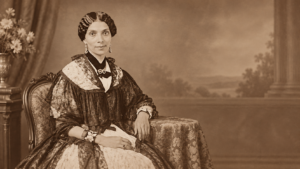




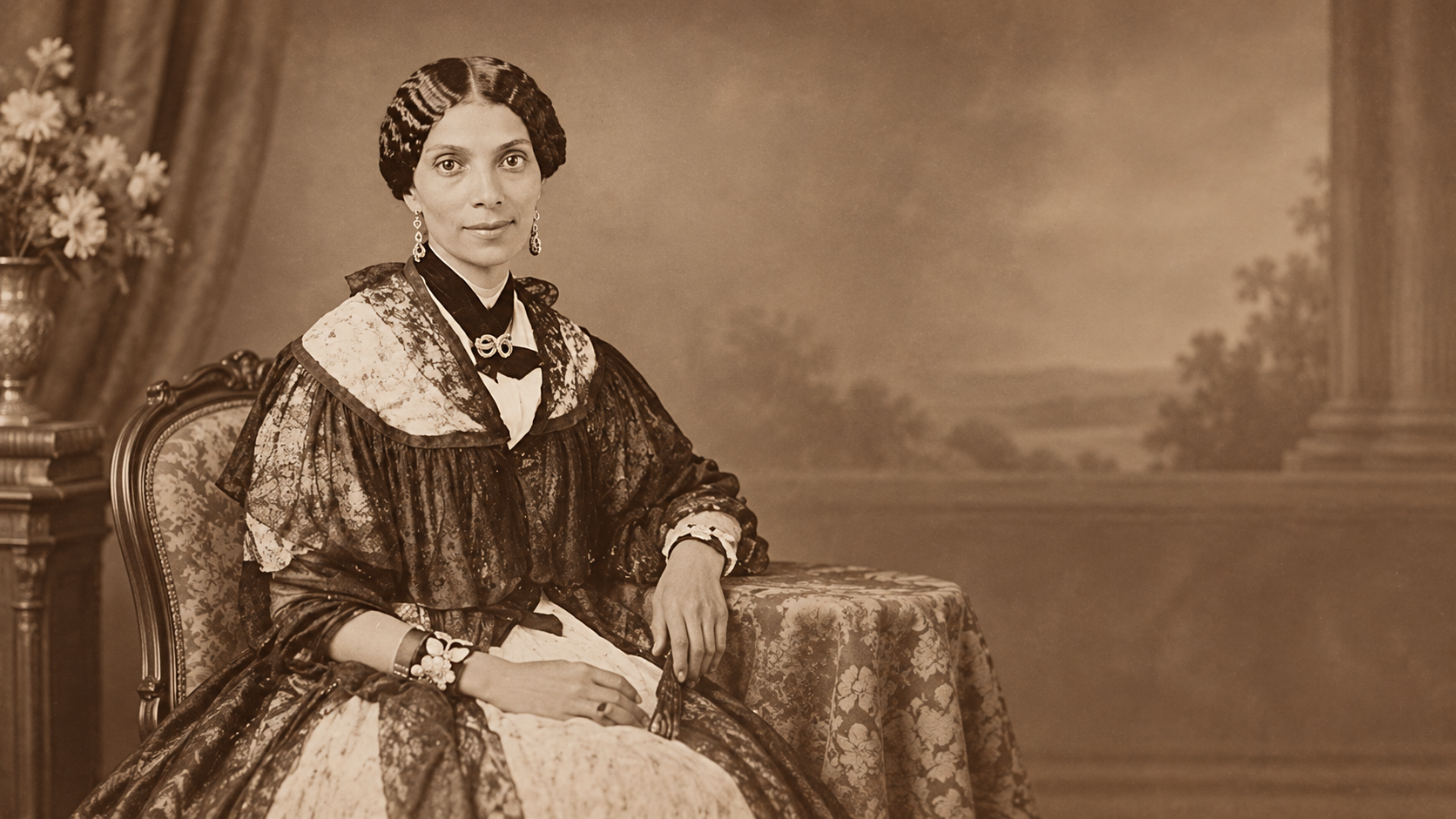
On this day in 1861, educator Mary S. Peake began her teaching career.
When she entered education, Peake became one of the first teachers at one of the earliest schools for formerly enslaved people.
Born in 1823 in Norfolk, Peake was the daughter of Sarah Kelsey and a white Englishman. Her parents could not marry under U.S. law at the time. Peake was eventually sent to live with her aunt and uncle in Alexandria, where she studied at a private school for Black Americans for approximately ten years. She later attended a school at the Alfred Street Baptist Church. Throughout her education, she learned how to read, write, make dresses and do math.
In 1839, at the age of 16, Peake returned to Norfolk, joining the First Baptist Church as a devout Christian. Both mother and daughter relocated to Hampton, where her stepfather helped found the Zion Baptist Church.
In Hampton, Peake began unofficially educating from her family home, providing lessons to Black Americans of all ages, as well as her stepfather. Although state laws prevented her from doing so, she was able to continue teaching while also working as a seamstress.
Throughout the town, Peake and her husband Thomas D. Peake were respected for their community work, from providing education to providing a space for practicing religion.
By April 1861, upon the onset of the Civil War, the Union army announced its control of Fort Monroe. The fort became a sanctuary for people who escaped from enslavement. Over 900 men, women and children took shelter at Fort Monroe, including William Roscoe Davis. Davis, who was Peake’s brother-in-law, was instrumental in helping found schools for formerly enslaved people and eventually helped open the Daughters of Zion, a society that helped provide food, shelter and clothing to formerly enslaved people.
With Confederate soldiers descending upon the town and destroying Peake’s home, the men, women, and children in the fort were deemed contraband of war, with the Union ordering that they would not be returned to a life of enslavement.
Once the Confederates left Hampton, the American Missionary Association began actioning plans to start a Sabbath school in the town. On September 17, 1861, the association opened the doors to their first school, hiring Peake as the first Black teacher.
Located in Phoebus, approximately three miles away from Fort Monroe, she began teaching her classes under the Emancipation Oak. Now recognized as a National Historic Landmark, the tree became known as the site of the first reading of the Emancipation Proclamation in 1863.
Peake’s first class consisted of a total of six students. Word, however, spread of her new position and, within a matter of days, her class grew to over fifty students, moving from the Emancipation Oak tree to a nearby house.
Throughout the day, Peake helped teach reading, writing, math and religion to approximately 50 children. In the evening, she continued to teach, focusing on twenty adults who sought an education.
Within a year, as the American Missionary Association continued to expand access to education for Black Americans, over 500 students attended the schools.
Peake continued to teach until her last breath. At the age of 39, she passed away from tuberculosis. Even after collapsing, Peake continued to teach from within the confines of her bed. Although the American Missionary Association begged her to take a break from teaching, Peake refused, insisting that the people needed her help.
On Feb 22, 1862, Peake passed away.
In recognition of her influence, she is often regarded as a founder of HBCU Hampton University. Peake’s gravestone acknowledges her as the “First Teacher of the Freedmen at Fortress Monroe, VA.”