


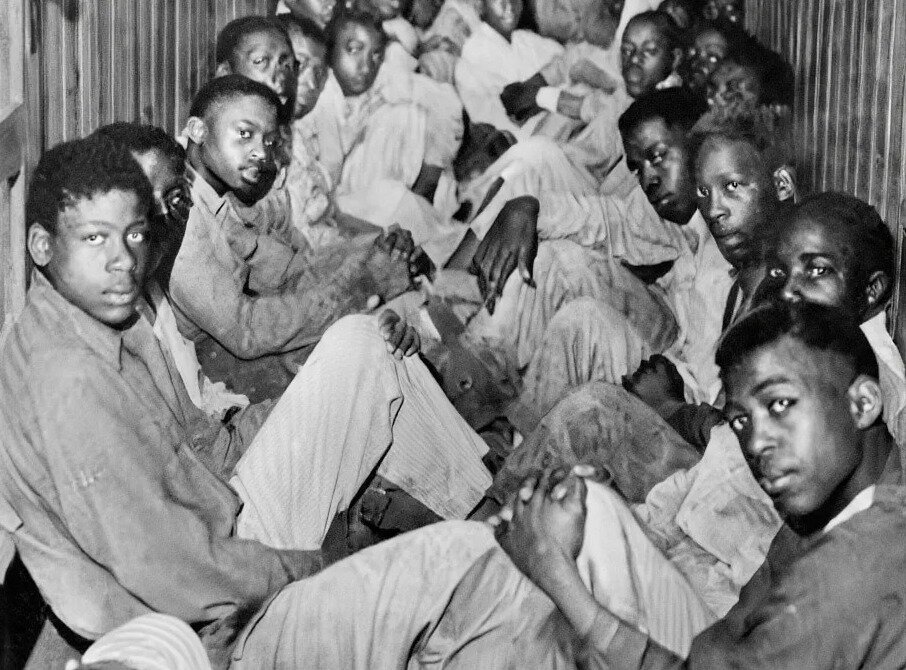
On March 5, 1959, a fire at the Arkansas Negro Boys Industrial School near Wrightsville killed 21 African American boys who were locked inside their dormitory. The fire began around 4 a.m. on a cold, wet morning following thunderstorms in rural Pulaski County.
The institution sat about a mile down a dirt road from the mostly Black community of Wrightsville, about 13 miles south of Little Rock.
Sixty-nine boys ages 13 to 17 were inside the dormitory when the fire started. The doors had been locked from the outside, a nightly practice meant to prevent escapes. As smoke and flames spread through the building, boys struggled to reach the windows, which were covered by heavy screens. Forty-eight boys managed to break open two window screens and escape. Survivors forced themselves through the narrow openings, sometimes four or five at a time, while others behind them tried desperately to reach safety. Twenty-one boys were unable to escape and died in the fire.
The tragedy drew attention to the conditions at the Arkansas Negro Boys Industrial School, a segregated juvenile institution founded in 1923. Originally located near Pine Bluff, the facility moved to Wrightsville in the mid-1930s. Although described as a reform school, it largely functioned as a work farm for Black boys who had been labeled delinquent or had no stable home.
State records and studies during the segregation era documented stark differences between institutions for white and Black youth in Arkansas. White reform schools emphasized education and vocational training, offering instruction in trades such as carpentry, welding and bricklaying. By contrast, the Wrightsville institution focused heavily on agricultural labor. Reports frequently noted the school’s lack of resources and investment.
A 1956 report by sociologist Gordon Morgan described severe neglect. Boys often wore ragged clothing and lacked basic necessities, including socks and underwear, during the winter. Many went weeks without bathing or changing clothes. The school had no laundry equipment, and more than 100 boys sometimes shared a single 30-gallon hot water tank. The water supply was considered unsafe to drink, and employees often brought their own water to work.

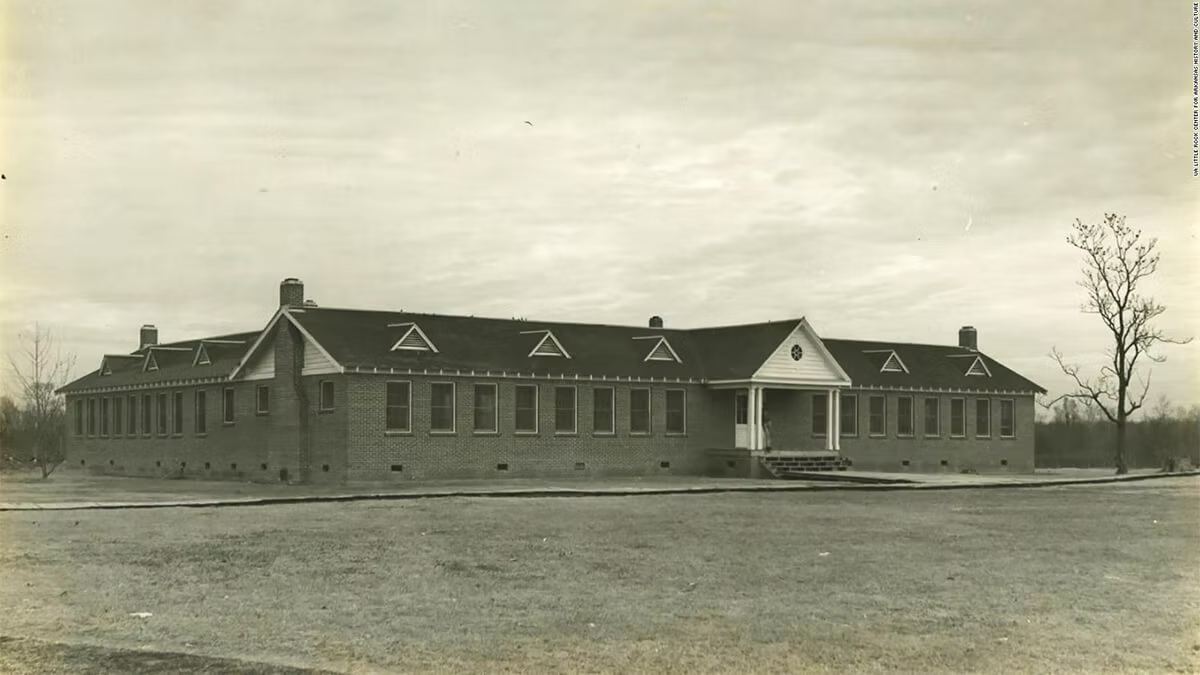
Photo credit: UI
Morgan also noted that the buildings were deteriorating and in need of major repairs, especially the dormitories where the boys lived. Maintenance was minimal because the institution was expected to sustain itself through farm labor. After the fire, Arkansas Gov. Orval Faubus acknowledged that faulty wiring might have contributed to the blaze.
Investigations followed, but no one was criminally charged. A grand jury later concluded that responsibility for the tragedy was shared among state officials, administrators, and lawmakers who had allowed unsafe conditions to continue.
The school eventually closed in 1968. Decades later, the victims were publicly remembered. In 2018, a memorial marker was placed at Haven of Rest Cemetery in Little Rock, where 14 of the boys had been buried in an unmarked mass grave. In 2019, another monument honoring the victims was unveiled at the Wrightsville Unit of the Arkansas Department of Correction, which now stands on the former school grounds.