


There is a particular kind of silence Black Gen Z knows well. It is the silence that settles in after someone says something outrageous, something cruel, something revealing, and the room shifts almost immediately from the harm itself to whether we are being fair in how we respond to it. The original offense barely has time to land before the country is already asking for nuance, patience, context, another chance.
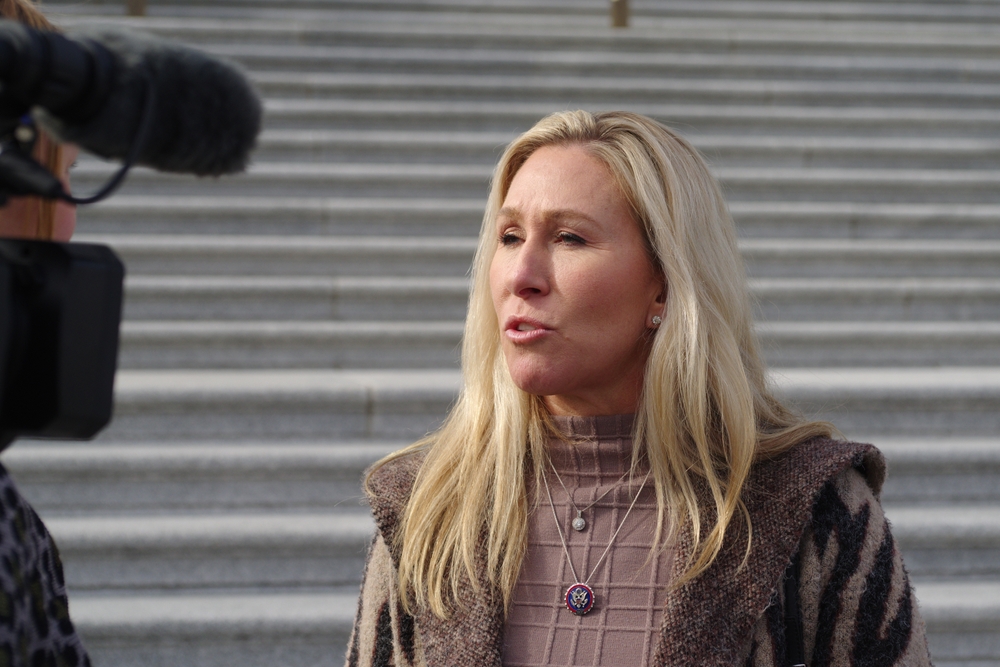
That is what I heard in last night’s CNN exchange about Marjorie Taylor Greene.
David Hogg, recounting the very real harm Greene caused him after Parkland, said he would still be open to giving her a small chance to explain herself if she wanted to have a real conversation. I do not doubt his sincerity. I do not doubt his capacity for grace. But as a Black Gen Z woman, I heard something else inside that moment, something larger than one segment and larger than Greene herself. I heard the familiar sound of America preparing to do what it so often does for white conservatives, especially the ones who become inconvenient to Donald Trump, separate them from their record just enough to imagine them anew.
Black Gen Z does not have that luxury.
We are the generation that inherited a country addicted to selective memory. We have watched people build entire careers on demeaning others, terrorizing others, lying about others, and still be welcomed back into respectable conversation the moment they break ranks in a useful way. We are told this is political maturity. We are told this is coalition-building. We are told this is what pragmatism requires. But for many of us, especially those of us who are Black, what it feels like is something more familiar. It feels like being asked, again, to carry the cost of everyone else’s amnesia.
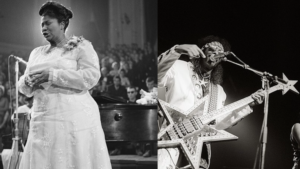
That is why Maya Angelou’s words remain such a clear political ethic for Black Gen Z: when someone shows you who they are, believe them the first time.
Not because we are incapable of grace. Not because we believe people can never change. But because history has taught Black people, and Black women especially, that confusion about character can be dangerous. There are communities in this country that can afford to treat someone like Marjorie Taylor Greene as a puzzle, as a contradiction, as a person who may yet reveal hidden complexity. For Black Americans, Greene has never been a mystery. She has been a record.
A record of anti-Black rhetoric. A record of Islamophobia. A record of antisemitic rhetoric. A record of hostility toward marginalized communities that was not whispered in private and accidentally exposed, but performed in public and converted into power. She did not stumble into her image. She built it. Deliberately. Repeatedly. And now that some are eager to notice moments where she departs from Trump or breaks with a piece of the machinery she helped fortify, Black Gen Z is being asked to watch the same country that dismissed the warning signs suddenly marvel at the possibility of redemption.
We know better.
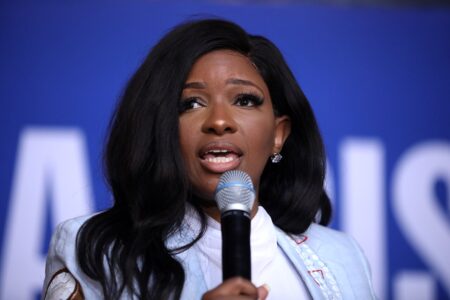
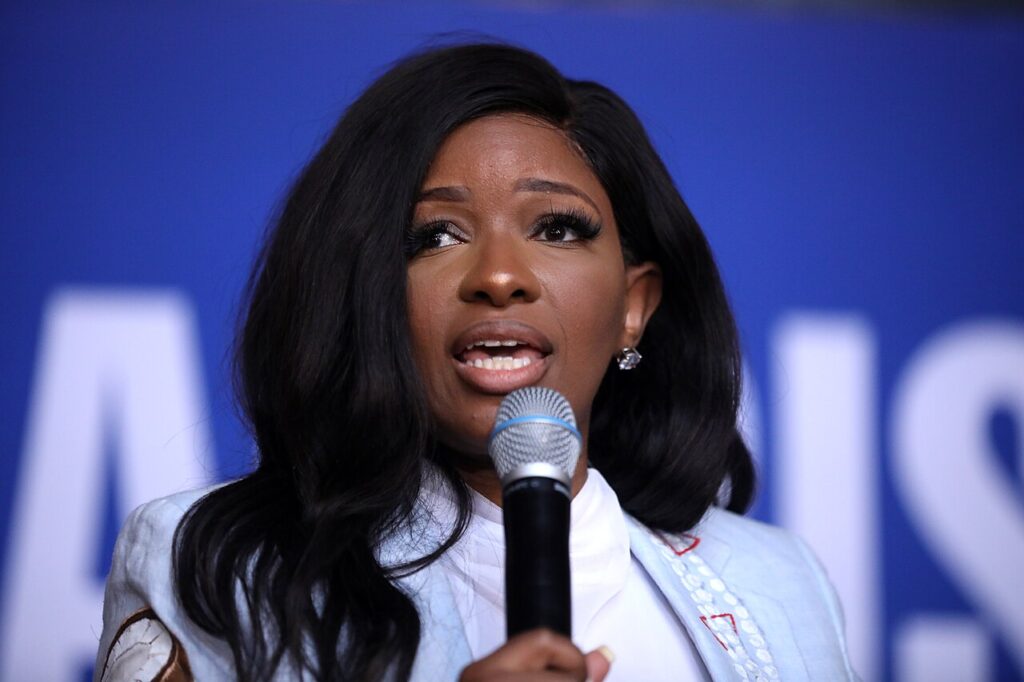
And that is where Jasmine Crockett enters this story.
Because the deeper insult is not just that some Democrats seem eager to soften toward Greene. It is that many of the same political spaces that can imagine redemption for a white MAGA figure still struggle to imagine straightforward electability for a Black woman Democrat. That is the part Black Gen Z notices instantly. We notice who gets described as complicated and who gets described as too much. We notice who gets invited into a new conversation and who gets reduced to an old stereotype. We notice who is granted room to evolve and who is told to shrink in order to be viable.
Jasmine Crockett did not become a national figure because she was vague, cautious, or carefully sanded down for comfort. She became a national figure because she was sharp, clear, and unafraid to meet aggression with truth. Her very public confrontation with Marjorie Taylor Greene was not just a viral moment. It became a cultural Rorschach test. Some saw a Black woman refusing to be demeaned in real time. Others saw someone they immediately wanted to discipline, contain, and warn about tone. That difference matters.
Then came the Texas Senate primary, where the conversation around James Talarico and Jasmine Crockett was supposedly about strategy, about coalition, about what kind of Democrat could win statewide. But Black voters are not naive. We know how “electability” often works in this country. We know how often it is asked in a voice that sounds neutral but carries old assumptions. We know how often it becomes a polite substitute for a cruder question, can America accept a Black woman who does not make herself smaller for white comfort?
That is why the connection between Greene and Crockett is so powerful. One is a white right-wing figure with a long public record of cruelty, and yet people rush to ask whether a break with Trump means she deserves fresh consideration. The other is a Black Democratic woman with a record of intelligence, toughness, and authenticity, and yet people still ask whether she is too loud, too sharp, too risky, too unelectable. That is not just hypocrisy. It is a map of whose humanity this political culture is most eager to recover, and whose legitimacy it is still willing to debate.
Black Gen Z is fluent in these double standards because we have had to be.
We have watched Black women save democracy, organize voters, tell the truth plainly, hold the line in courts, in classrooms, in statehouses, in Congress, and then still be treated as if they are somehow an acquired taste. Meanwhile, white figures who traffic in reaction, resentment, and harm are routinely granted the glamour of reinvention. Even their smallest break from extremism can spark fascination. Even their shallowest gestures can be treated like growth.
That is a profound insult, not only politically but morally.
Because what Black Gen Z is really seeing is not simply a disagreement over messaging. We are seeing the persistence of an old American habit, demanding extraordinary trust from the people most often betrayed by public life, while extending extraordinary patience to the people who helped make public life more dangerous. We are seeing a party and a political class that can be breathtakingly skeptical of Black women’s viability while remaining endlessly curious about white conservatives’ capacity for change.
And that curiosity always seems to come at our expense.
So no, this moment is not really about whether Marjorie Taylor Greene can be praised for disagreeing with Trump on this or that. It is about whether Democrats understand how offensive that conversation sounds to those who have never had the option of treating her politics as theoretical. It is about whether they understand what it means to ask Black Gen Z to stay open-hearted toward a figure like Greene while many in the same ecosystem spent months signaling that Jasmine Crockett, a Black woman who has actually fought for the values Democrats claim to hold, was somehow a riskier bet.

Black Gen Z is not confused about what we are watching. We are watching who gets grace. We are watching who gets doubt. We are watching who is asked to prove themselves and who is invited to reinvent themselves. And we are drawing conclusions.
If Democrats want to understand where Black Gen Z stands, they should begin there. Not with another lecture about pragmatism. Not with another rushed argument for why we should ignore what our eyes and ears have already taught us. But with an honest recognition that political memory is not bitterness, and discernment is not divisiveness. Sometimes it is wisdom. Sometimes it is self-respect. Sometimes it is the only thing standing between a community and one more round of being told to mistake danger for possibility.
Maya Angelou gave us the language long ago. Black Gen Z has simply decided to stop apologizing for using it.
When someone shows you who they are, believe them the first time.