






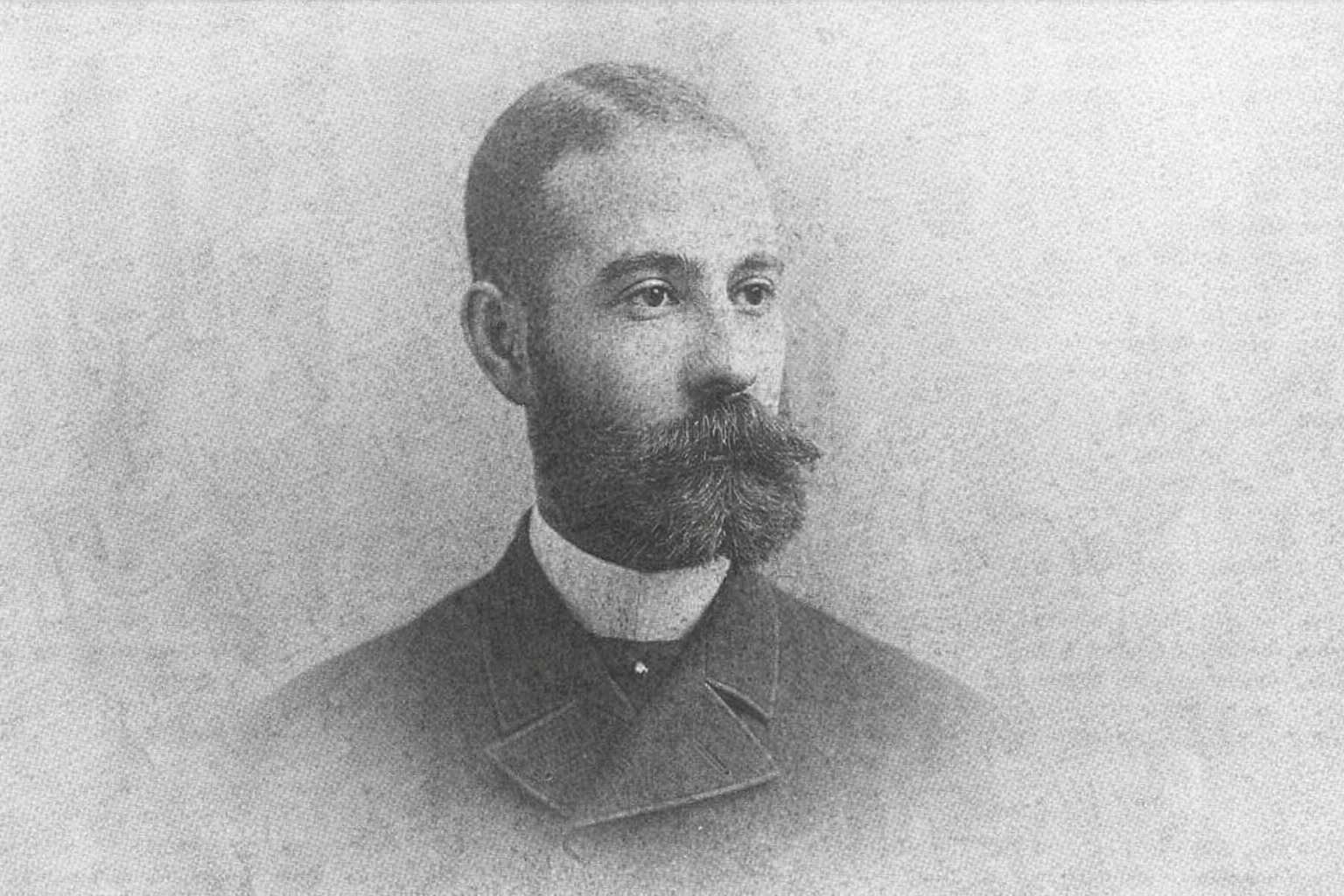
Since the history of “Black” people is not limited to February, let’s dive into matters of the heart and how one courageous doctor became the first to touch the human heart.
Not just the heart as a symbol of courage and resilience, but the literal human heart — the organ surgeons once believed could never be touched.
There is a well-known saying of the Prophet Muhammad ﷺ that speaks to the deeper meaning of the heart. He said, “Indeed in the body there is a piece of flesh. If it is sound, the whole body is sound, and if it is corrupt, the whole body is corrupt. Truly, it is the heart.”
Long before modern medicine could replace a failing heart or surgeons learned how to repair one, that wisdom captured something people across cultures have always understood — that the heart sits at the center of both physical life and human character.
Recently, I was sitting with a good brother of mine, Osman Dimson, reflecting on an experience that years ago changed the trajectory of his life. Osman has been living with his transplanted heart for some years now, long enough that the urgency of those hospital days has softened into memory. Sitting across from him today, listening as he recounts the experience, you would almost forget how serious the situation once was. The conversation moved through an array of emotions. At moments, he spoke with calm reflection, the kind that comes with time and distance from the storm. At other moments, he laughed, remembering small details from those hospital days that only someone who has lived through such a journey could appreciate. At certain points, there was even excitement in his voice as he told parts of the story, the tone of someone who understands deeply that he was given another chance. Reflection, humor, gratitude, relief — all of it seemed to move through the conversation together.
When doctors first told him that, due to congestive heart failure, he would eventually need a heart transplant in order to survive, it was the kind of news that would shake most people to their core. Yet what struck me about Osman was that the diagnosis itself did not send him into panic. He met the moment with a kind of steady calm that I have come to recognize in people whose faith has already prepared them for difficult roads.
But that does not mean the experience was easy.
A heart transplant is not a single moment in time. It is an entire season of life. It is the waiting. Waiting for the call that could come tomorrow, next week, or months from now. Waiting for the match that could save your life, but it depends on circumstances no one would ever wish for. Waiting in that strange emotional space where hope and uncertainty sit side by side.
There is also the physical reality of heart failure itself — fatigue that creeps into the body, shortness of breath, the slow erosion of appetite and energy and the realization that the body you once moved through the world without thinking about has suddenly become fragile. Then there is the deeper emotional dimension of transplantation itself. A heart transplant is one of the few medical miracles where healing often arrives through someone else’s loss. Somewhere, another family is experiencing grief at the very moment another life is being extended.
I remember visiting Osman during that period and feeling something I rarely feel when someone I care about is sick: helplessness. Usually, when someone I love is going through a health challenge, I try to offer something — encouragement, perspective, some understanding of what they might be experiencing. But this time I had none of that. What he was facing was enormous.
Now sitting with Osman Dimson years later, hearing him recount those days with reflection, humor, and gratitude, the conversation naturally drifted into the larger story of heart medicine itself. When you hear someone describe receiving a new heart, it makes you pause and ask a deeper question: how did medicine even reach a place where something like that is possible?
The answer to that question takes us back more than a century, to a physician working in Chicago who refused to accept what the medical world believed was impossible.
His name was Dr. Daniel Hale Williams.
Born in 1856, Williams’ path into medicine was anything but privileged. His father died when he was young and the family struggled financially. Like many young men in post–Civil War America, he worked wherever he could — apprenticing as a shoemaker, working as a barber, even playing bass violin — while pursuing his education. Eventually, he studied medicine under the mentorship of Dr. Henry Palmer and graduated from Chicago Medical College in 1883.

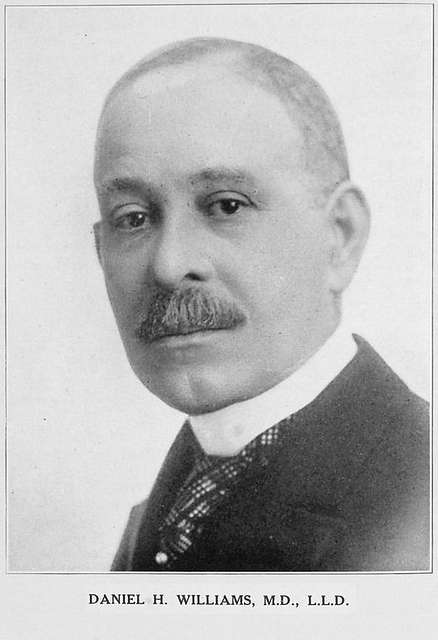
At a time when Black physicians were largely barred from practicing in hospitals, Williams decided to build one.
In 1891, he founded Provident Hospital and Training School for Nurses in Chicago, the first Black-owned and Black-operated hospital in the United States. It opened with only 12 beds, but its impact was enormous. It became a place where Black physicians could practice medicine with dignity, where Black nurses could receive formal training, and where Black patients could receive care that recognized their humanity.
Remarkably, Provident was also among the early hospitals where Black and white physicians trained and practiced together. In an era when segregation shaped nearly every institution in American life, Williams quietly created a medical environment where professional collaboration mattered more than race.
The training school for nurses that Williams established became just as important as the hospital itself. At a time when many nursing schools refused to admit Black students, Provident trained generations of nurses who would go on to serve communities across the country.
In the decades that followed Provident’s founding, hospitals built by Black physicians and Black communities began appearing across the country. By the early 20th century, historians estimate that more than 100 Black hospitals existed in the U.S., many serving communities that had been largely excluded from mainstream medical institutions.
Yet the story of those hospitals would eventually change. As civil rights legislation and desegregation began opening previously segregated hospitals in the 1950s and 1960s, many Black hospitals struggled to survive. Some physicians and patients understandably moved into newly integrated medical systems that had previously excluded them. At the same time, funding challenges, hospital consolidation and the increasing cost of modern medical technology made it difficult for many smaller independent hospitals to remain open.
Still, the legacy of those institutions remains enormous. They trained generations of physicians, nurses and medical professionals who helped reshape American medicine.
Daniel Hale Williams’ most famous moment came in 1893 when a man named James Cornish was rushed into Provident Hospital after being stabbed in the chest. The wound had penetrated the sac surrounding the heart. At the time, most surgeons believed operating near the heart was suicidal.
Williams operated anyway.
Inside that operating room, there were no antibiotics, no heart monitors and none of the technology surgeons rely on today. There were only surgical instruments, antiseptic techniques still new to medicine, and the steady hands of a surgeon attempting something many believed could not be done.
At a time when antiseptic surgical practices were still gaining acceptance, Williams insisted on strict sterilization techniques in the operating room. Carefully opening the chest, he repaired the damaged pericardium and controlled the bleeding. Against the expectations of the era, James Cornish survived the operation and went on to live for many years afterward, later returning to the hospital walking under his own power.
Medical historians later recognized how significant that moment was. As one historical review in the Journal of the American Medical Association later explained, Williams’ operation demonstrated that the heart was not beyond the surgeon’s reach.
Later generations of physicians understood how important those early steps were. Dr. Charles R. Drew, the pioneering surgeon whose work revolutionized blood banking, reflected on figures like Williams and the institutions they built, noting that the achievements of men like Daniel Hale Williams opened doors in medicine that had long been closed to our people.
Listening to Osman Dimson now, years removed from hospital rooms and the long nights of waiting, it becomes clear that the story of the human heart is never only about science. It is about the people who fight to stay alive, the doctors who refuse to accept the limits of their time, and the long thread of courage that connects pioneers like Daniel Hale Williams to the lives still beating today because someone, somewhere, believed the impossible was worth attempting.
And sitting there listening to Osman laugh and reflect years later, it becomes clear that the history of the heart — both the one that beats in the chest and the one that carries human courage — is still being written.