





Let’s be honest: history loves a frontman, but so often, it completely sleeps on the architects – the creative minds who truly shape our culture.
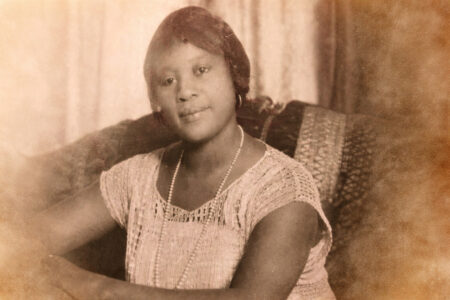
Case in point? Janie Bradford.
You might not know her name off the top of your head, but if you’ve ever tapped your foot to a Motown hit or understood why artists like The Beatles, Phil Collins and The Rolling Stones were drawn to cover those infectious tunes, you and your favorite playlist definitely know her work.
As one of Motown’s first employees and the lyrical genius behind track after track that built its empire, Janie Bradford literally helped to shape pop culture and pave the way for every independent songwriter hustling today.
That’s because she wasn’t just a behind-the-scenes figure.
When we talk about who built the Motown sound, names like Berry Gordy or Smokey Robinson usually hog the spotlight. But Ms. Bradford was the secret weapon behind some of the most infectious beats Detroit ever produced. And she wrote hits that literally defined a generation.
Sadly, she passed away last week on August 21st in Los Angeles at the age of 87, leaving behind a legacy that was often overlooked. In an industry that frequently forgets the contributions of Black women who laid its foundation, acknowledging Janie Bradford isn’t just a history lesson – it’s a necessity.
This is her story.
According to The New York Times, Ms. Bradford joined Berry Gordy’s burgeoning Tamla Records in 1959, which would later evolve into the legendary Motown. Officially, she held the title of front-desk secretary, but she was a pivotal force behind the scenes, managing contracts and engaging with artists, all while nurturing her true passion for songwriting.
One day, not long after her arrival, Gordy walked into the office, pen in hand, scribbling down lyrics. Ms. Bradford, seizing the opportunity to connect, casually asked about the song’s theme, sparking a conversation that would not only deepen her understanding of the creative process but also solidify her place at the company.
“Money,” he replied, and read a few of the lines: “The best things in life are free / But you can give them to the birds and bees / I need money – that’s what I want.”
Feeling enthusiastic about what she had just heard, Ms. Bradford added a few lines of her own.
“Your love gives me such a thrill / But your love don’t pay my bills.”
Pianist and singer Barrett Strong was working in a nearby room and joined in. Over the next few days, they moved into a recording studio, crafted more lyrics, and layered in additional instruments to support Strong’s powerful vocals.

In 1959, Gordy released this emerging masterpiece on Tamla, just a few months before the label evolved into the iconic Motown. The song’s impact was undeniable, leading to its re-release in 1960 through his sister Anna Gordy’s label, Anna Records. The collaboration would mark a major moment in music history that would define an era and set the stage for Motown’s future successes.
The song was Gordy’s first major success, climbing to No. 2 on the Hot R&B Sides chart and No. 23 on the Billboard Hot 100. In 1963, it caught the attention of The Beatles, who covered it for their second album, With the Beatles, adding to its timeless appeal. Over the years, the song has been covered by numerous artists, but one of the most unexpected revivals came in 1979 when the English new wave band the Flying Lizards released their own quirky version. Featuring the distinctive, monotone vocals of Deborah Evans-Stickland, this interpretation diverged from the song’s original vibe, injecting a fresh and avant-garde twist. The Flying Lizards’ rendition surprisingly soared to No. 5 on the U.K. Singles chart, proving that even decades after its initial release, the song could still connect and evolve with new generations.
The quick success of Money opened up new doors for Ms. Bradford and she dove deeper into her passion for songwriting. She collaborated with incredible artists, creating memorable hits that would shape the sound of the era. One standout track was Your Old Standby, which she co-wrote with the legendary Smokey Robinson in 1963 for Mary Wells. She teamed up with Strong and famed producer Norman Whitfield to pen Too Busy Thinking About My Baby, recorded by the Temptations in 1966 and later given a soulful twist that became a hit by Marvin Gaye in 1969. She also wrote songs for Stevie Wonder, The Supremes, Martha & The Vandellas and others.
“Janie was there with me from the very beginning, before there was even a Motown, and she will always hold a very special place in my heart and in the Motown family,” Gordy said in a statement.
Ms. Bradford was born on June 2, 1939, in Charleston, Missouri, nestled near the merging of the Missouri and Mississippi Rivers. Her upbringing was deeply rooted in faith, with her father, Richard, serving as a Baptist minister while her mother, Elizabeth, dedicated herself to nurturing the family at home.
The family’s journey took them from the small-town charm of Charleston to the bustling streets of St. Louis and eventually to Detroit, a city that buzzed with musical potential. It was in Detroit that Ms. Bradford found herself living in close proximity to the rising star Jackie Wilson. Inspired by the spirited music scene, Ms. Bradford, who had a passion for poetry, asked Wilson if he could introduce her to Berry Gordy. At the time, she only had poetry to share, but she confidently told Gordy she had songwriting experience. Months later, she was taken aback when Wilson brought Gordy to her home to hear her work. With a mix of nerves and determination, she recalled, “I knew there was a difference between poetry and songwriting,” as she recounted to journalist Bill Dahl for his book, Motown: The Golden Years (2001), as reported by The Times. In a moment of boldness, she decided to present her poems as if they were lyrics, hoping to bridge the gap between her passion for poetry and the world of songwriting.
Her plan worked: two of her songs were used in Mr. Wilson’s 1959 album Lonely Teardrops. She received credit for writing one of them, The Joke (Is Not on Me), along with Gwen Gordy, another of Berry’s four sisters.
She married Wardene Hobbs in 1972. He survives her, along with their children, Nicole Hobbs and Lance Finney, and two grandchildren.
Bradford Hobbs later became head of Writer Relations for Jobete, Motown’s publishing company. After she left Motown in 1984, she worked in public relations and created Entertainment Connection Magazine, a monthly publication that focused on the music industry. She also founded a nonprofit called the Heroes and Legends Scholarship Foundation to help students who want to pursue careers in entertainment. The event lasted around 30 years, celebrating music legends and giving scholarships to students who want to continue their education, as stated by her family.
In June, she was recognized by being inducted into the Women Songwriters Hall of Fame.
History books often miss the builders in favor of the stars, but Janie Bradford’s blueprint is all over modern music.
As one of Motown’s first and finest secret weapons, she wrote the soundtrack to a cultural revolution while staying firmly behind the scenes. Forgetting her means forgetting how the Motown magic actually happened so let’s keep her legacy loud.

Because every time we groove to that classic Detroit sound, we are walking in Janie’s footsteps.
May she rest in power.