




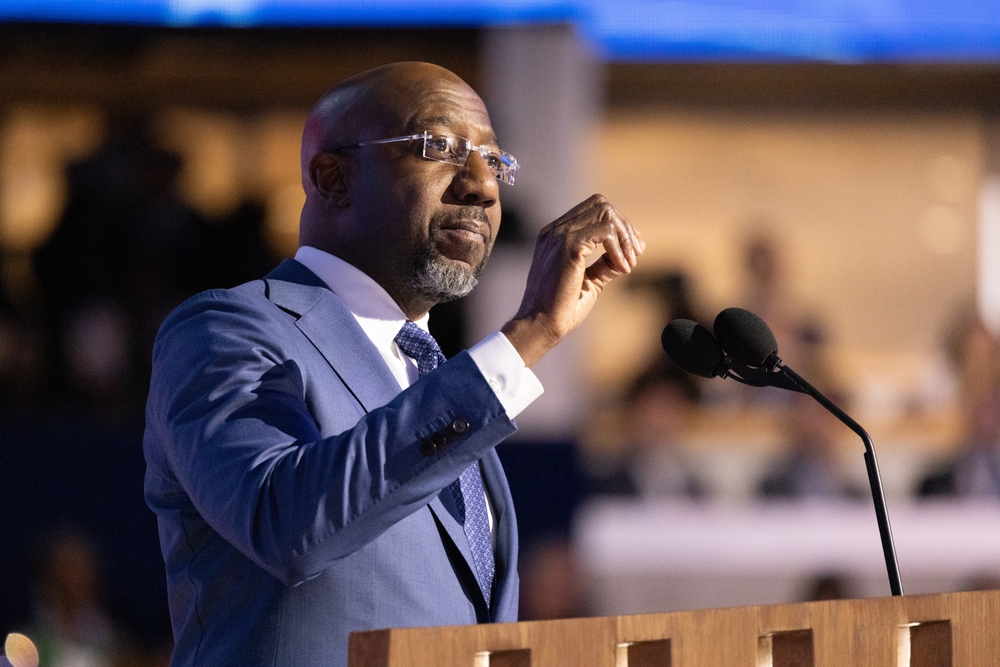
Senator Reverend Warnock introduced a new bipartisan bill dedicated to securing funding for HBCUs late last week.
Presented alongside Senator Katie Britt, the bill was introduced to more than 30 HBCU presidents from across the U.S. Attendees included Fort Valley State President Paul Jones and Albany State University President Rober Scott.
Known as the “HBCU Research Capacity Act,” the bill would potentially create a website, alongside the federal government, that presents HBCUs with all the federal grant opportunities available to them. The website would also provide the universities with the tools needed to build research capacity.
The Secretary of Education would be required to develop a workforce to lead the federal clearinghouse. The act will also require the Secretary of Education to send written notifications and an annual report to both HBCUs and Congress.
“For too long, federal research investments have been disproportionately concentrated in a select few institutions of higher education,” said the president and CEO of Thurgood Marshall College Fund, Dr. Harry L. Williams. “By connecting historically Black colleges and universities with federal research opportunities, the HBCU Research Capacity Act—co-sponsored by Senators Raphael Warnock and Katie Britt—is a major step toward ensuring HBCUs serve as catalysts for expanding America’s portfolio of top-tier research institutions and advancing our nation’s global competitiveness.”
The announcement of the new bill comes alongside a newly released study that found that attending HBCUs is healthier for Black students.
Co-authored by Rutgers University, Columbia University, the University of Alabama, Boston University and Harvard University, the study analyzed the data of 2,000 Black adults.
The group included a mix of adults who attended an HBCU or a predominantly white institution from 1940 to 1980. In their findings, the researchers reported that, of the 35% of participants who attended an HBCU, this group tested better on memory, language and cognitive skills at the age of 62.

Scientists point to a better ecosystem as the reason why HBCUs are healthier for Black students. By cultivating a healthier environment, the learning institutes protect students from “weathering,” the impact of racial discrimination on the aging process. In the past, researchers have linked weathering to the early onset of disorders such as dementia and chronic illnesses.
“These findings highlight the lasting value of a supportive, affirming and culturally enriching educational environment that may help Black students build resilience against the cognitive consequences of both historical and ongoing discrimination,” said assistant professor at Rutgers School of Nursing, Min Hee Kim, per Rutgers.
“Deliberately creating and investing in these environments can build long-term resilience, promote healthier aging and help reduce dementia risk and disparities.”