







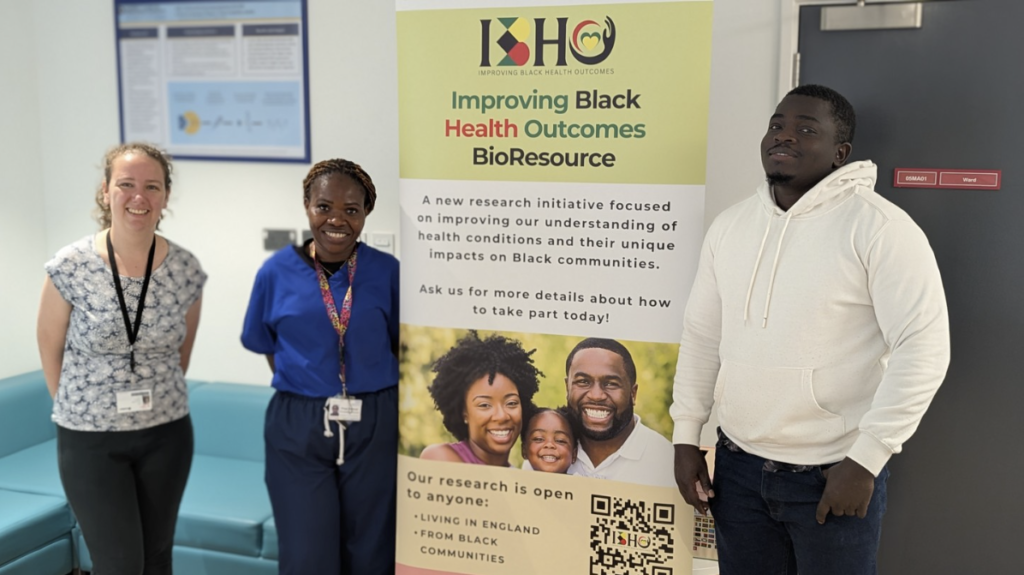
Oxford Health launched a new research program earlier this week dedicated to improving health outcomes for Black U.K. communities.
Known as the “Improving Black Health Outcomes Bioresource,” the program will study health conditions prevalent in Black U.K. communities and assess their overall impact. With its findings, the study will build a research resource for health care professionals to improve research, expand access to health care and create prevention strategies.
To conduct the study, Oxford Health is looking for Black U.K. residents, as well as participants with disorders such as sickle cell disease or thalassemia. More than 6,000 people are reportedly already taking part in the research program.
Hospitals such as Royal Surrey County Hospital have already announced that they will take part in the program, joining Oxford Health in addressing the underrepresentation of Black communities in health research.
“UK health research has historically relied heavily on data from people of European ancestry, limiting the relevance and effectiveness of diagnostics and treatments for Black communities,” said the Royal Surrey County Hospital in a post.
“It is important to me to participate in this study. It will help future management of various illnesses, so that my population can receive care that is developed for them,” added Erika, the first participant in the program.
The U.K. has a documented history of systemic racism within its health care system. The lack of research affecting treatment options, combined with negative experiences within the health care system, has led to a lack of trust between Black adults and the system.
According to Prostate Cancer Research, 82% of 1,000 Black adults who participated in a survey said the country’s history of enslavement, colonialism and the Windrush scandal has undermined their belief that the health care system can properly treat them.

Overall, one in three Black adults tends to avoid receiving health care because of their experiences.
Maternity and mental health tend to be the health care sectors in which Black adults have the most negative experiences. Black women are twice as likely to die during childbirth, while infants are also twice as likely to die.
In mental health care, Black patients are six to nine times more likely to receive a schizophrenia diagnosis. Overall, they are four times more likely to be sectioned under the Mental Health Act.
Despite this, Black adults are more likely to be denied proper assistance.
“Anti-racist medicine is not about lowering standards or favoring one group over another,” said author Dr. Zeshan Qureshi. “It is about removing barriers that worsen outcomes for patients and professionals alike.”