





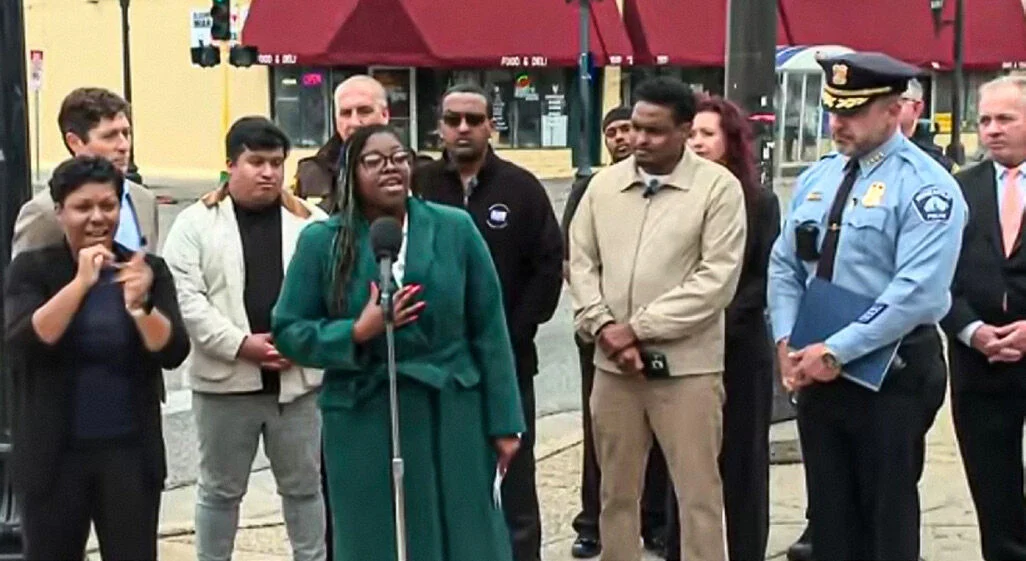
The City of Minneapolis has officially announced the creation of the Firearm Assault Shoot Team (FAST), a new multi-agency investigative unit within the Minneapolis Police Department dedicated exclusively to solving non-fatal shooting cases. Mayor Jacob Frey and Police Chief Brian O’Hara joined City Council members to unveil the unit at a public press conference May 18 — though FAST had already been operational since March 23, 2026.
The move is a direct acknowledgment of a stubborn accountability gap. Minneapolis cleared roughly 80% of homicide cases last year. Non-fatal shootings? Forty-seven percent. A person shot and left alive in this city had less than even odds of seeing their case resolved.
Minneapolis cleared 80% of homicides last year — but only 47% of non-fatal shootings. FAST exists to close that gap.
“In Minneapolis, we’re done treating nonfatal shootings as lesser crimes,” Mayor Frey said. The department’s own March 23 special order is unambiguous: every non-fatal shooting “shall be assigned to a FAST Investigator,” with a response that mirrors a homicide investigation — immediate supervisor notification, scene lockdown, collection of victims’ clothing and phones, hospital response, witness canvassing, and an executive summary within 24 hours.
Built on a proven model
FAST is not an experiment. It is a direct adaptation of a unit that has already worked — in St. Paul. St. Paul’s non-fatal shooting task force increased its clearance rate from 37% in 2024 to 71% in 2025, nearly doubling accountability in a single year. Mayor Frey did not shy away from the borrowing.
“Good mayors copy and great mayors steal. We’re taking this idea and instituting it here in Minneapolis because we recognize this could ultimately save lives.” — Mayor Jacob Frey
Council Member Robin Wonsley of Ward 2 confirmed the Council spent more than a year studying the St. Paul model before committing funds. The City Council approved approximately $1.7 million in ongoing appropriations — less than 1% of MPD’s $220 million annual budget — to staff and sustain the task force.
Who is on the team
FAST is a multi-agency unit. It includes one MPD lieutenant, seven MPD officers, agents from the Minnesota Bureau of Criminal Apprehension (BCA), deputies from both the Hennepin County and Ramsey County Sheriff’s Offices, and a Metro Transit Police officer. Officers from the Bloomington Police Department are expected to join in June. The cross-jurisdictional structure reflects both the regional nature of gun violence and — candidly — the ongoing staffing challenges within MPD itself.
The equity case
Ward 9 Council Member Jason Chavez was direct about who this unit is designed to protect.
“We should have a city where people are free to play outside, where kids don’t have to fear getting shot at, and where residents feel safe going home at night.” — Council Member Jason Chavez
Chavez noted that neighborhoods with high concentrations of Black, Brown, Indigenous, immigrant, and unhoused residents have historically borne the heaviest burden of gun violence in the Twin Cities — and received the least consistent investigative response when someone survived a shooting.
A built-in constraint
Wonsley offered a candid assessment of the unit’s limits. The current MPD police union contract caps the number of investigators the department can employ — a structural barrier that forces FAST to rely heavily on partner agencies rather than in-house MPD staffing.
“Despite having hundreds of vacancies within MPD, the contract blocks the city from hiring the experienced officers needed to successfully execute a non-fatal shooting task force. I look forward to working with our partners and the mayor to really make sure that we’re addressing that barrier in the upcoming police contract.” — Council Member Robin Wonsley
Chief O’Hara described the new approach plainly: “What’s different now is that a dedicated investigator responds immediately. We’re treating these cases with the same intensity we would treat a homicide.”
City officials say FAST will be judged by changes in clearance rates, time to arrest, and how quickly forensic evidence moves through the system. The St. Paul precedent sets a high bar. Minneapolis has set out to match it.