



I have never been an “all men” person.
I don’t do sloppy generalizations and I don’t flatten entire groups into slogans just to make a point land harder. I know exactly how that logic gets weaponized. And I most certainly don’t get down with demonizing Black men because I understand the history of how Black masculinity has been distorted, criminalized, and used as a convenient scapegoat in this country. I know what it means to have an entire group pathologized, feared, and misrepresented in ways that justify harm.
But naming that history does not require silence about harm. It does not require women, especially Black women, to swallow their fear, ignore patterns, or make themselves smaller just to avoid feeding racist narratives. It does not mean we pretend that everything is fine when it isn’t. Nor does it mean that we sacrifice our safety at the altar of respectability politics.
Because the truth is, the women I’m talking to are not speaking from ideology. They are speaking from lived experience. From accumulation. From watching, listening, surviving, and calculating risk and emotional math. And what they are saying deserves to be taken seriously, not dismissed, reframed, or policed into something more comfortable.
Over these past few days, I have been sitting in conversation after conversation with women who are talking about the Justin Fairfax murder-suicide, the recent murders of a dozen more Black women since January, the CNN “rape academy” investigation, and now the horrific murder of eight children in Shreveport. These women are saying something that is deeply unsettling: Men are scary.
These women are not just tired, but scared in a way that sits deep in the body. They are saying, without hesitation, that they don’t want to date or marry. They don’t want to risk building a life with someone who could turn into a threat. They are choosing solitude not because they’ve given up on love, but because they are trying to stay alive inside their own lives because “men are scary.”
Not all men, of course. But enough men to make the difference irrelevant. Enough unpredictability, stories, and headlines that women cannot afford to guess wrong. Enough lived experiences, both personal and secondhand, that the risk feels rational.
Because what women are responding to is not just individual men, but patterns. Patterns of control, entitlement, emotional volatility, and violence that don’t come out of nowhere. Patterns that are minimized, explained away, or reframed until something irreversible happens. And then suddenly everyone is asking, “What went wrong?” as if the signs weren’t there all along.
Media psychology tells us that when people are repeatedly exposed to stories of violence, especially gendered violence, the brain doesn’t just file those stories away as isolated incidents. It starts to map them and look for similarities. It builds mental shortcuts about risk. This is how humans survive. Not by treating every event as random, but by recognizing patterns and adjusting behavior accordingly. Plus, the brain’s job is to keep the body safe. And so when the same kinds of stories keep surfacing about men harming women, men escalating control into violence, men reacting to rejection with rage, those patterns stop feeling like exceptions and start feeling like probabilities.
There’s also the question of how these stories are framed. Media coverage often isolates each case, focuses on the shock, the individual pathology and the “unthinkable” nature of the act. But that framing can obscure the throughline. It encourages people to see each incident as some kind of rupture instead of part of a continuum. Meanwhile, the audience is quietly doing its own synthesis, connecting dots across time, geography, and circumstances.
So when women say they are scared, they are not just reacting emotionally. They are processing data. They are integrating what they have seen, heard, experienced, and witnessed, both in their own lives and through media exposure, and recalibrating their sense of safety. And so in that sense, fear is not irrational but informed.
“Men are scary.”
And right on cue, I know there will be some men who read that sentence and feel personally attacked. There will be men who will rush in with “not all men” as if women don’t already know that. And there will be men who will try to reframe the conversation as misandry, as hysteria, as overreaction. Because that response is about their own identity and protection, not about women’s safety.
When a pattern is named, especially one tied to harm, it threatens how people see themselves and the groups they belong to. Media psychology and social psychology tell us that when folks feel implicated, even indirectly, they don’t always engage with the substance of what’s being said. Instead, they defend, deflect, individualize and reach for exceptions because exceptions feel safer than patterns.
“Not all men” is not new information. It’s a reflex and a way to shrink structural issues back down to the level of individual innocence. It is a way to say, this is not about me, instead of asking, what is this revealing about the world I move through, benefit from, or remain silent in?
There’s also discomfort with losing the benefit of the doubt. Many men are used to being seen as neutral, as individuals first, and not as potential risks. So when women speak in terms of patterns, it disrupts that default and introduces uncertainty into how they are perceived, and that can feel like an accusation, even when it isn’t one.
If you take women’s fear seriously, you have to confront what it’s built on. You have to sit with the reality that harm is not rare, that it often escalates from things that were visible but dismissed, and that it is reinforced in ways that are cultural, not just individual. That’s a heavier lift than correcting somebody’s wording.
So instead, the conversation gets redirected, tone-policed and reframed into a debate about fairness, about feelings, about whether women are being “too general,” rather than staying with the harder question of why so many women have arrived at the same conclusion in the first place. It’s easier to argue with the sentence than to interrogate the pattern that produced it.
Women are taking in all these tragedies. And not just one horrific incident, but the patterns across them. Not just the extremes, but the everyday behaviors that exist on the same spectrum. Aggression. Control. Entitlement. Volatility. And all the subtle ways harm shows up long before it becomes lethal.
And then you log onto social media, in the incel forums, comment sections, and the DMs that drip with resentment and sexualized hostility. The men who don’t even bother to hide the rage. I see it on my own social media feeds. The ones in your mentions calling women “bitches,” “cunts,” or “whores” for having opinions. The ones who stalk, harass, threaten, and degrade with a level of ease that suggests this is not an exception for them, but a habit. Men who feel entitled to women’s attention, bodies, agreement, and silence. And when they don’t get it, the response is fury. It’s all so unfiltered, unapologetic, and public. Freakin’ scary as hell.
That rage doesn’t exist in a vacuum. It is fed, validated, and amplified in a culture that increasingly rewards grievance, especially male grievance, as a form of identity.
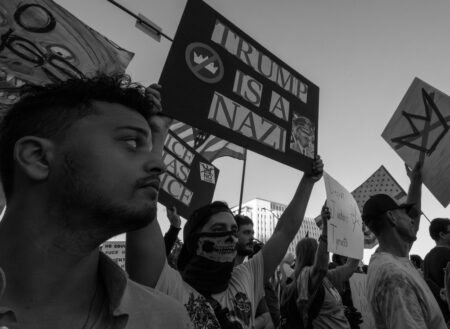
You can’t separate all this from the broader political climate either. This era is being shaped by degenerates like Donald Trump and his MAGA ilk. His movement didn’t create this moment of rampant misogyny, but it poured gasoline on it. It made cruelty louder and disrespect more casual. It normalized a style of engagement where domination, humiliation, and degradation are strategies.
And then there’s the shadow of Jeffrey Epstein, a man whose crimes exposed not just individual depravity, but a network of power, wealth, and male entitlement that operated in plain sight for years. The lesson wasn’t just that one man was dangerous. It was that systems protected and enabled him, then looked the other way.
Women are watching all of this and they are drawing conclusions. Because what makes this frightening is not just that violent men exist. It’s that so many of them look ordinary. Some of them have degrees and careers. They wear suits and ties. They’ve got families and social credibility. They smile in photos and show up in public as respectable. There is no universal marker that says, this one right here is safe and this one ain’t shit and will murder you one day.
So women become analysts of risk. They watch how a man handles rejection. How he speaks about women when he thinks no one is checking him. How quickly frustration turns into anger. How comfortable he is with control. And even then, there are no guarantees.
So when women say men are scary, they are not making a philosophical argument. They are naming a lived reality. They are saying that the line between safety and danger is often invisible until it’s too late. And more and more, they are deciding that the risk is not worth it.
That’s why you’re hearing women say they don’t want to date. Don’t want to marry. Don’t want to gamble their safety on potential. It’s not bitterness, but calculation. So when women say they’d rather be alone, what they’re really saying is that peace feels safer than possibility. Absence of harm is more valuable than the promise of love.
They are no longer willing to gamble their safety on potential. And that should stop us in our tracks. Because when fear becomes a more reliable companion than intimacy, that is not just a dating problem. It is a serious public health issue and a social crisis.
And so instead of responding defensively with “not all men,” men should be asking harder questions. Not “Why are women saying this?” but “What patterns are producing this level of fear?” Not “How do I distance myself from this?” but “What am I tolerating, excusing, or staying silent about?”
Because this ain’t a branding problem. It’s not about optics or making sure women phrase their fear in a way that feels fair. It’s about behavior, accountability, and culture.
It means challenging the man who calls women out of their names. It means refusing to laugh off control, jealousy, and emotional volatility as personality quirks. It means taking early signs seriously instead of waiting for something catastrophic to happen before deciding it matters. It means understanding that safety is not just about what you personally would or wouldn’t do, but about the environment you help create and sustain.
Because until that work happens, women will keep making the same decisions. They’ll keep saying, “men are scary.” And they won’t be wrong for making that calculation.
Thanks for reading. If this piece resonated with you, then please consider becoming a paid subscriber. Paid subscriptions help keep my Substack unfiltered and ad free. They also help me raise money for HBCU journalism students who need laptops, DSLR cameras, tripods, mics, lights, software, travel funds for conferences and reporting trips, and food from our pantry. You can also follow me on Facebook!
We appreciate you!