




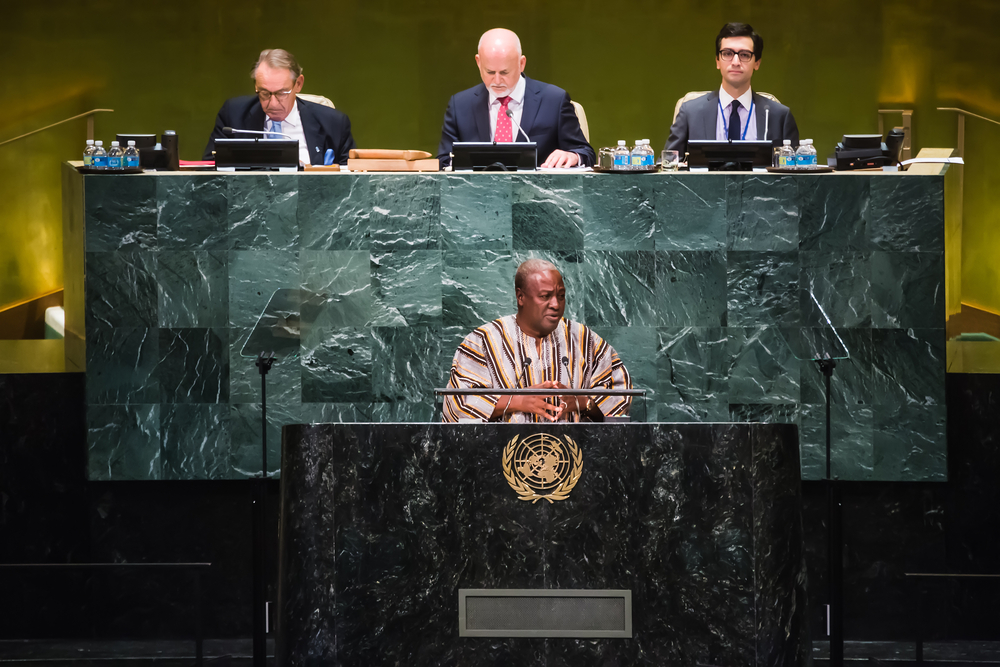
On March 25, 2026, the United Nations General Assembly voted 123 to 3 to adopt a resolution declaring the Transatlantic slave trade “the gravest crime against humanity.” The resolution, spearheaded by Ghana and championed by President John Dramani Mahama on behalf of the African Union’s 54 member states, calls on nations to pursue reparatory justice, including formal apologies, restitution and compensation. Diplomats applauded. In a recent X/Twitter post, Dr. Bernice King called it “long overdue,” writing that the impact of slavery “is still with us” and that “acknowledgment is a step. Transformation must follow.”
The United States, Israel and Argentina were the only nations to vote against it.
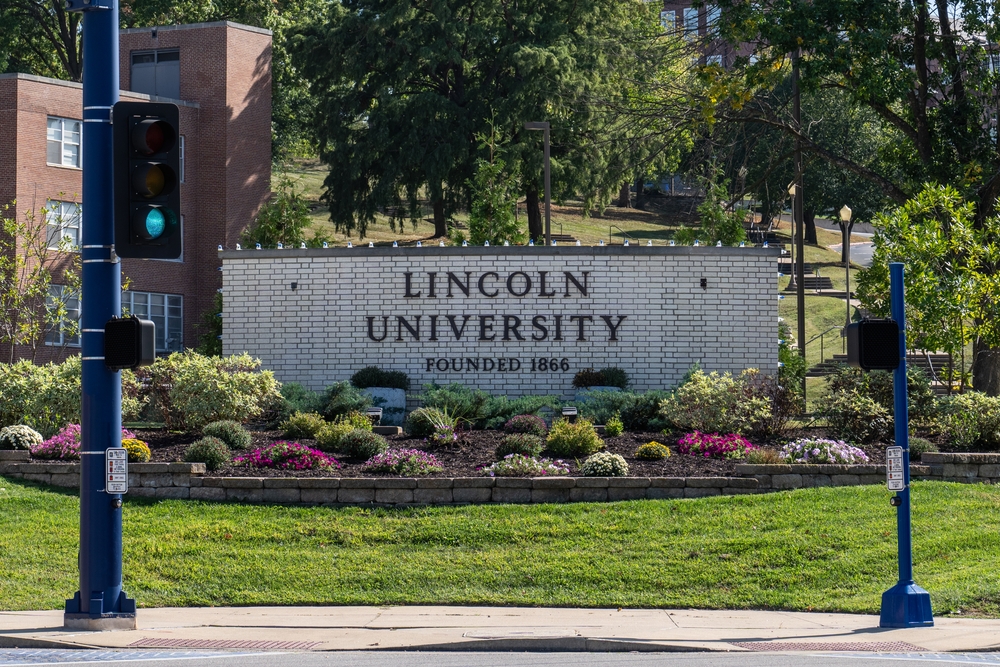
Two days before that vote, Lincoln University (the nation’s first degree-granting HBCU and the alma mater of Ghana’s founding president, Kwame Nkrumah) cancelled plans to award Mahama an honorary doctorate. The timing was both untimely and consequential.
Lincoln’s president, Dr. Brenda A. Allen, had personally endorsed the conferral, calling it “especially meaningful” and tying it to Nkrumah’s legacy. On March 19, the university issued a press release announcing the honor. On March 23, it withdrew the invitation— citing “unforeseen circumstances,” although Mahama was already in the United States preparing to address the General Assembly.
Clarity emerged through Ghana’s Embassy in Washington. According to The Herald Ghana, Lincoln cited concerns raised by an external advocacy group about Mahama’s position on Ghana’s Human Sexual Rights and Family Values Bill, a proposed law that would criminalize LGBTQ identity and advocacy with prison sentences of up to three years. Mahama has publicly pledged to sign the bill if Parliament passes it. He said so in November 2025. He said so on the campaign trail in early 2024.
None of this was new information.
As reported by the Philadelphia Inquirer, Lincoln’s own administration acknowledged that the concerns did not surface during its vetting process. That admission raises a question the institution has not yet answered: Was Mahama’s anti-LGBTQ stance missed, or was it weighed and deemed acceptable — until it wasn’t?
The pressure campaign was swift and specific.JustRight Ghana, a human rights advocacy group, publicly called on Lincoln to withdraw the honor on March 20, just one day after the announcement. Their argument was sharp: the moral logic of the Transatlantic slave trade, which classified people as less than human based on what they were born as, is the same moral logic that runs through every clause of the anti-LGBTQ bill. You cannot champion reparations for one form of dehumanization while legislating another.
A coalition of Philadelphia-based LGBTQ organizations and elected officials followed with a joint letter. ACT UP Philadelphia, the Mazzoni Center, the AIDS Law Project, State Rep. Malcolm Kenyatta and others weighed in, not just against the Lincoln conferral but against Mahama’s separate appearance at Temple University. Temple, which was hosting a community dialogue rather than conferring an honor, chose to proceed. Lincoln did not.
The distinction matters. An honorary degree is an institutional endorsement while providing a venue for dialogue is not. But recognizing the difference after the announcement, after the logistical walkthrough, after the embassy engagement, after the press release, that suggests institutional reaction under pressure rather than principled decision-making.
Interestingly, the university’s Black Freedom Conference had scheduled a screening of The Eyes of Ghana, a documentary executive-produced by Barack and Michelle Obama that follows the personal cinematographer of Kwame Nkrumah during Ghana’s independence movement. The screening was meant to complement the Mahama conferral and serve as a symbolic through line from Nkrumah’s liberation to Mahama’s reparations advocacy. A powerful diasporic connection.
But President Obama’s own history on LGBTQ rights complicates any clean moral line Lincoln might try to draw.
Obama ran for president in 2008 on an explicitly anti-same-sex-marriage platform. At Rick Warren’s Saddleback Church, he told a national audience that marriage was between a man and a woman and invoked his Christian faith to justify the position. His own strategist, David Axelrod, later acknowledged that Obama privately supported same-sex marriage the entire time but modified his stance because opposition was particularly strong in the Black church. Obama did not publicly reverse course until May 2012, and notably, only after Vice President Biden forced his hand on Meet the Press.
The views of both presidents are not, of course, equivalent. Obama opposed marriage equality while supporting civil unions and broader civil rights protections. On the contrary, Mahama is backing legislation that would imprison people for their identity. The severity is different. The underlying dynamic, however, is familiar: a political leader whose publicly stated position on LGBTQ rights was shaped by the religious and cultural politics of his constituency—and who, in Obama’s case, was given the space to evolve.
Lincoln University screened a film bearing Obama’s name the same week it withdrew an honor from a Ghanaian president whose anti-LGBTQ position, while more extreme, operates within a recognizable political logic. The question is not whether Mahama’s stance is defensible. It is whether institutions apply their values consistently or selectively, based on who is watching and weighing in.

Ghana’s proposed legislation does not exist in isolation.
Across the African continent, 32 of 54 nations criminalize same-sex conduct. In Uganda, northern Nigeria, Somalia, and Mauritania, it can carry the death penalty. The trend line is moving in both directions simultaneously. Mali criminalized homosexuality in 2024. Burkina Faso followed in 2025. Senegal doubled its penalties just this month. Meanwhile, Botswana decriminalized same-sex relations in 2019, Angola in 2021, and Namibia in 2024. South Africa legalized same-sex marriage nearly two decades ago, as the first nation in the world to enshrine LGBTQ protections in its constitution. The continent is not monolithic, and many of the laws now being tightened trace directly to colonial-era statutes imposed by European powers. That history does not excuse criminalization, but it does complicate any framing that positions Africa as uniquely hostile and the West as a neutral arbiter of human rights.
The deeper tension here is one that HBCUs in particular cannot avoid. Lincoln’s global identity is built on its relationship with Africa. Nkrumah and Nnamdi Azikiwe, Nigeria’s first president, both graduated from Lincoln. In fact, the oldest building on campus—Azikiwe-Nkrumah Hall—bears their names. The Pan-Africana Studies department framed the Mahama conferral as a continuation of Nkrumah’s mandate.
Nkrumah’s own record, of course, included declaring himself president for life, jailing political opponents, and dismantling press freedom. Lincoln has never revisited that honor nor has anyone asked it to. The institution has historically understood that honoring African leaders means engaging with the full complexity of their records, not just the parts that translate cleanly to an American institutional values statement.
What changed this time is not the complexity. What changed is who objected, how fast they organized, and how visible the pressure became.
To be clear, that does not make the objections wrong. The Human Sexual Rights and Family Values Bill is not an abstraction. It proposes criminal penalties for identity. It would jail allies, disband advocacy organizations, and outlaw adoption by LGBTQ individuals. JustRight Ghana’s framing deserves to be taken seriously: justice is not selective. If reparatory justice rests on the principle that no human being should be criminalized for what they were born as, then that principle cannot have geographic or cultural exceptions.
But the Ghana Embassy’s response also deserves engagement. The bill is before Parliament. It reflects a democratic legislative process within a sovereign nation. Mahama is not the bill’s author. And the timing to withdraw the honor from the man who, one day later, would stand before the General Assembly and deliver a 123-nation mandate for reparatory justice, while the United States voted no, created a deep diplomatic wound that will outlast a short news cycle.
The real failure here is not that Lincoln ultimately declined to honor Mahama. Institutions have the right, and at times the obligation, to reconsider decisions that conflict with their stated values. The failure is that the institution did not do the work before the announcement. Mahama’s position was publicly documented for more than two years. A competent vetting process would have surfaced the tension and forced the institution to make a deliberate choice—honor him with full knowledge of the conflict, or decline quietly and preserve the diplomatic relationship. He explained further, giving additional context and color, at a public forum on Friday, March 27, 2026.
Instead, Lincoln managed to damage both.
Ghana’s diplomatic community is offended. LGBTQ advocates are left wondering whether Lincoln’s inclusivity commitments are principled or performative. And the broader question is how institutions rooted in Black liberation navigate a world where some of the leaders they’ve historically championed hold positions that conflict with other dimensions of human rights remain unresolved.
HBCUs cannot build their global brand on Pan-African solidarity and then act surprised when that solidarity comes with complications. The work is not in choosing a side. The work is doing the vetting, engaging the tension honestly, and making the hard call before the press release, not after.