


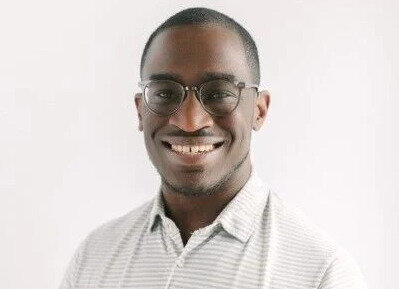
In West Palm Beach, Florida, last week, at the 39th PGA WORKS Collegiate Championship — a tournament designed to open the historically white world of professional golf to students from Historically Black Colleges and Universities, Hispanic-Serving Institutions, and other minority-serving schools — a young Black PGA professional stepped into a role that would have been unimaginable to his predecessors.
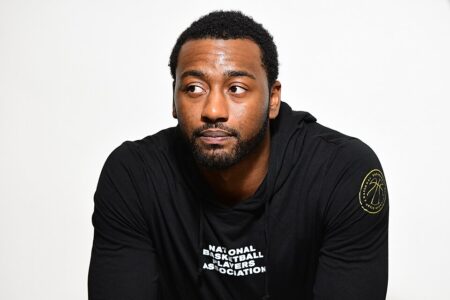
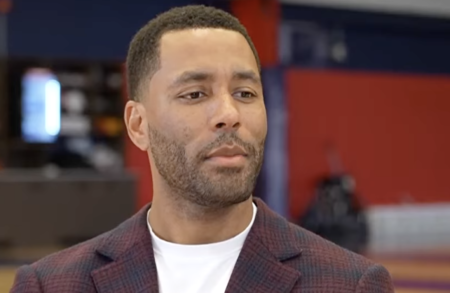
His name is Langston Frazier. He is a native of Bowie, Maryland, born hearing impaired in both ears. He found the game through First Tee — the same national youth development organization active today at Hiawatha, Columbia, Gross National, and Theodore Wirth golf courses right here in Minneapolis. He earned his bachelor’s degree at the University of Maryland Eastern Shore, a Historically Black College and University, graduating from their PGA Golf Management program. He is now a certified PGA of America Golf Professional and producer at SiriusXM PGA TOUR Radio.
At this year’s PWCC, Frazier stood not as a competitor, but as an ambassador — a two-time championship participant, returned to show the next generation what is possible.
“It’s impactful, getting to see the kids, the next generation of golfers. There are so many sports these kids can play, but golf is something they can play for a lifetime. It’s a great opportunity to expose them to the game. They can learn so many positive character traits from golf.” — Langston Frazier, PGA
The path Frazier traveled — from a First Tee clinic to PGA membership — is precisely the pipeline that Minnesota’s Black golf community has spent nearly a century fighting to create and protect. Because Minnesota has its own story to tell. And it goes back to 1931.
In 1931 — when the Professional Golf Association still had a “Caucasian only” clause written directly into its bylaws, a clause it would not remove until 1961 — a Minneapolis man named Jimmie Slemmons decided that if Black golfers were not welcome in white golf clubs and tournaments, he would build his own. He founded the Twin City Golf Club, an association of Black golfers, because as Slemmons told interviewers, Black players were not explicitly told they couldn’t join clubs — they were simply given excuses, told membership was full, turned away in a hundred polite and dishonest ways.
Eight years later, in 1939, Slemmons created the Minnesota Negro Open. The tournament grew. It attracted competitors from across the country. In 1954, at the request of the NAACP and other organizations who objected to the word “negro,” it was renamed the Upper Midwest Bronze Amateur Open. In 1957, former heavyweight champion Joe Louis came to Minneapolis and won it. The Bronze, as it is known today, is still running — still anchored at Hiawatha Golf Course, still alive after 87 years.
“At one point, we had 5,000 people attending the tournament. It was an entire weekend of events that brought people together.” — Charles Rodgers, Twin City Golf Club member since 1980

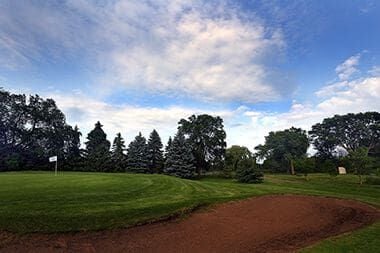
Hiawatha Golf Course on Minneapolis’s south side was at the center of that world. While other courses turned Black golfers away, relegated them to late evening tee times, or refused to acknowledge their presence, Hiawatha was welcoming. Solomon Hughes Sr. — a Minneapolis golf professional and top player on the United Golfers Association circuit, the parallel professional tour that existed because the PGA barred Black players — had moved his family north from Alabama to Minneapolis in 1943 hoping to build a career. He found de facto segregation waiting. No public course, no private club in Minneapolis would hire him as a golf pro. In 1952, Hughes led the campaign that succeeded in fully integrating Hiawatha’s clubhouse. He became the soul of that course, playing countless rounds there, twice acing the eighth hole. As he lay dying of multiple myeloma in 1987, his one request was to be driven to Hiawatha one final time. His daughter honored it.

Minnesota was not immune to the forces of exclusion. The PGA’s “whites only” clause prevented Black professionals like Hughes from full membership and tournament participation. But the Black golfers of the Twin Cities did not wait for an invitation. They built parallel institutions — the Twin City Golf Club, the Bronze tournament, the Old Negro Golf League (ONGL), still meeting at Hiawatha in 2026. They built community. They built legacy.
That legacy is why, when the Minneapolis Park Board moved toward closing Hiawatha Golf Course in 2017 due to groundwater permit issues, Black golfers organized the Save Hiawatha 18 campaign, appearing before the Park Board, testifying to the course’s historical significance. The Park Board voted to delay the closure by five years. The course stands today.
Charles Rodgers, who joined the Twin City Golf Club in 1980 after spotting a group of Black golfers at Hiawatha, and who has served as a golf coach at South High School in Minneapolis and as an instructor at Hiawatha, has put it plainly: “Golf allows you to make connections that you normally may not. It can open doors and opportunities.” He has also acknowledged the obstacle facing the next generation — that some young people see golf as “chasing a white ball around the course” — and worked to change that perception, encouraging youth participation in First Tee Twin Cities programs at Hiawatha, Columbia, and Gross National.
The Sanneh Foundation and the University of Minnesota have since partnered to create the Scholarship and High School Golf Academy (SHSGA), serving Twin Cities youth ages 10 to 18, with a specific focus on Black, Indigenous, and communities of color. First Tee Minnesota operates programs across more than 20 sites statewide. The work is active. The pipeline is real.
Langston Frazier understands, in his bones, what that pipeline is for. “When people come into the pro shop, they probably don’t expect to see me,” he has written publicly. “They ask if I’m a student, and I say, ‘No. I’m actually a golf pro.’ Then they see the PGA behind my name, and they know I’m the real deal — especially for young people. And that’s something people like me couldn’t do before. So, this is one of the greatest honors I’ve ever had.”
He is correct that people who looked like him could not hold PGA credentials before 1961. The percentage of Black PGA of America professionals today, while growing, remains a fraction of total membership. In 2026, for the second straight year, there was not a single Black golfer in the Players Championship field. The distance between Jimmie Slemmons founding a club in 1931 because no other door was open, and Langston Frazier standing at a national championship in 2026 wearing a PGA credential, is both enormous and not nearly enough.
Every young person who picks up a club at Hiawatha or Theodore Wirth, who attends a First Tee clinic at Columbia Golf Course, who sees a Langston Frazier standing at a championship as an ambassador rather than a bystander — every one of them is inheriting a century of work. A century of Black Minnesotans who played anyway, competed anyway, built anyway.
The fairways were never just about golf.
“Golf allows you to make connections that you normally may not. It can open doors and opportunities.” — Charles Rodgers (same source)