





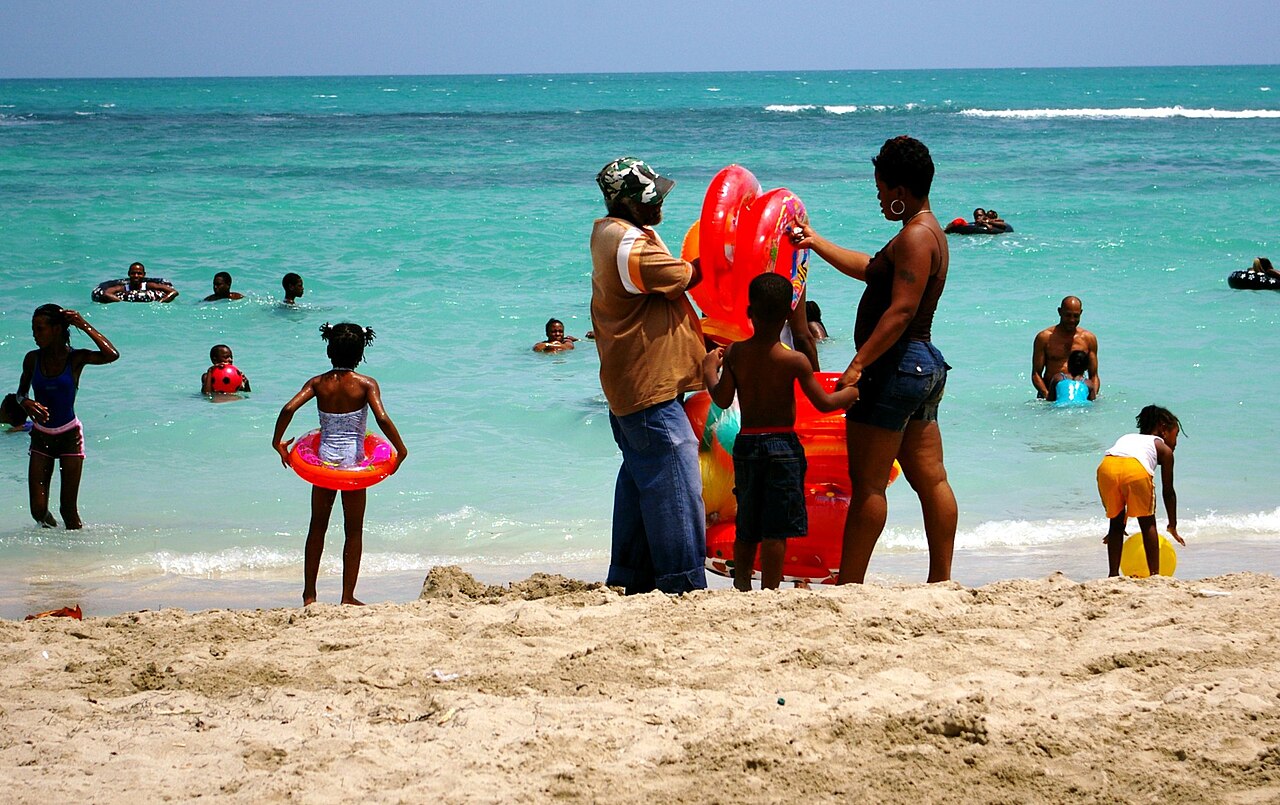
Jamaica’s government has released a list of 60 beaches it says Jamaicans can use free of charge, an effort to answer an infuriating longstanding dispute over access to the island’s coastline.
“Jamaica’s public bathing beaches provide free access to our sandy coastline for Jamaicans to enjoy, with recognized locations across the island,” the Ministry of Tourism said on Wednesday (Aug. 19).
“From swimming and sunbathing to fishing, water sports or simply enjoying the coastline, these public bathing beaches are open to everyone with no entry fee required,” the ministry added.
More than half of the locations are along the northern coast. St. Elizabeth, my birthplace, has the most in a single parish, with nine. Kingston and St. Andrew have one listed free public beach, Copacabana.
Jamaica’s public bathing beaches provide free access to our sandy coastline for Jamaicans to enjoy, with recognised locations across the island.
— Ministry Of Tourism Jamaica (@tourismja) August 19, 2026
From swimming and sunbathing to fishing, water sports or simply enjoying the coastline, these public bathing beaches are open to pic.twitter.com/J8BGUacdD0
The release follows objections from locals that many Jamaicans are being shut out of stretches of coastline as hotel and private development expands, prioritizing big money and foreign interests over local livelihood.
Tourism Minister Edmund Bartlett has rejected claims that Jamaicans cannot access their beaches, and earlier this month he stated Jamaica has 70 public bathing beaches, with 10 requiring payment.
“And yet, some of us, when you hear what we say to the international media … you would believe that every beach in Jamaica is just locked off, and that’s not fair to Jamaica. That’s not fair to us,” said Bartlett, before acknowledging disputes may exist at individual beaches. “If you have an issue with one, or two, all right, let’s talk about that. Let’s deal with it,” he added.
The disagreement has deep roots. Jamaica’s modern beach rules were shaped while the country was still under British colonial rule. The Beach Control Act of 1956 placed the foreshore and seabed under state control and became the main law governing beaches. Jamaican common law does not give the public a general right to walk or bathe along the foreshore except where rights have been established through custom, prescription or other legal provisions.
The people of Jamaica, the native people is not allow access to many beaches. Because of her 1956 colonial law. Come on Jamaican government this is wrong. You have been independent over 60 years. Foreigners are buying a properties building resorts and denying access to beach to… pic.twitter.com/s3S0uJIhI7
— Don Salmon (@dijoni) May 27, 2026
That system remained in place even after the country’s independence in 1962. The 1882 Prescription Act remains important because it can protect claims involving routes or land continuously used by the public over time.
The Jamaica Beach Birthright Environmental Movement, known as Jabbem, is involved in court cases concerning Mammee Bay, Little Dunn’s River, Blue Lagoon, Bob Marley Beach and Flankers/Providence Beach.
For campaigners, access is about more than recreation and tourism. Fishers, vendors and families say the coastline supports food, work and community life.
“When you cut us off from the sea … you are actually setting us up to starve,” Jabbem founder Devon Taylor declared.
Professor emerita Carolyn Cooper, a volunteer adviser to Jabbem, has also criticized restrictions. “It’s as though this government, and successive governments of Jamaica, don’t seem to realize that Black Jamaicans are entitled to leisure,” she said.
Welcome to Jamaica and colonization. The native people cannot enjoy the beach in the Caribbean.. because we corporation from US Canada and England are buying properties and beaches and denying local. access. https://t.co/3GnBjLoIzo
— Don Salmon (@dijoni) August 17, 2026
The government appears unwilling to back down. Their argument is that tourism remains a primary source of jobs and income and that recent developments on public land are mandated to include corridors to the sea, but campaigners say that does not settle whether access should depend on licenses or private landowners.