





Guests on The Conversation with Al McFarlane linked the fight over democracy in Minnesota to political movements abroad and to the work of building community institutions.
Black leaders in Minnesota and Brazil said on The Conversation with Al McFarlane that the political fights in their communities are connected, and that meeting them will take organization, money and a clear shared vision.
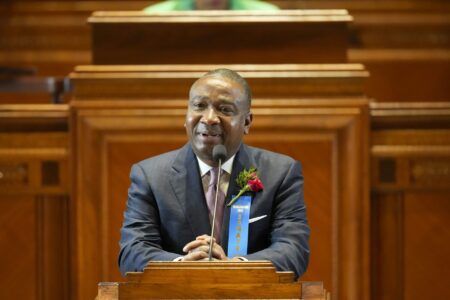
The Oct. 20 broadcast brought together organizer Anika Robbins, community elder Bill English, Justin Terrell of the Minnesota Justice Research Center, and Yoji Senna, who joined from Bahia, Brazil. Host Al McFarlane asked them to talk about the connections between the concerns of Minnesota voters, and Black Minnesotans in particular, and the same issues around the world.
Senna said Brazilians are apprehensive about the Oct. 25 runoff election, in which he said the son of Jair Bolsonaro is a candidate. He said the Bolsonaro movement plays the role in Brazil that MAGA plays in the United States, and that the two are closely allied.
Senna said the movement he opposes aims to cut social benefits that Brazilians have won. He listed free public transportation for people over 60, a 13th-month salary for workers and monthly stipends for children who stay in school. “We have a public health system that is the example in the world,” he said of the system known as SUS.
Terrell said he sees the same pattern abroad. During a 2014 fellowship in the former Soviet bloc, he said, he arrived in Sofia, Bulgaria, on the day of a march he described as neo-Nazi. He came home telling his wife and colleagues that he believed the United States was in trouble because of a worldwide resurgence of extremism and nationalism.
Terrell also expressed hope. He said Black Americans’ ancestors had already weakened the echoes of white supremacy that communities face today, and that his generation has work left to do: “I believe it’s probably our generation’s job to actually put an end to that conversation and start reimagining what this country’s greatness could actually be.” He pointed to violence-intervention work and to aunties and uncles working with young people, and he argued that the character of young people today is higher than when he was growing up in the 1990s. “We have a lot to be optimistic about,” he said.
Robbins said organizing is essential but not enough. “Organizing is fundamental, is essential, but I think also what’s paramount is helping communities, especially grassroots community members, create or even see a vision for what is possible, right?” Asked by McFarlane to what end the organizing is directed, she described leaders she is cultivating in Duluth, St. Cloud and on the North Side, and she asked: “What does freedom, true freedom, self-actualization, what does that look like?”
She said Black communities must organize even when they disagree: “We do have to move in an organized way, even if we don’t all see eye to eye, which is common.” She said turf can get in the way: “Here on the north side, it’s always conversation about whose lane is which.” The answer, she said, is to draw on the skills of the creative and visionary people in each community.
“We have to be able to support and fund our own movements.” — Anika Robbins
Robbins said people sometimes talk about leaving the Democratic Party or forming other organizations, but that any such effort needs a long-term plan and money: “We have to have the long-term strategic vision and we have to be able to fundraise. We have to be able to support and fund our own movements.” She said organizers also have families to support. On politics ahead, she said: “We’re seeing the rise of democratic socialism. That’s gonna be a thing.” She added that McFarlane might want to take up the subject in a future conversation.
“We need money to support us, and charity starts at home.” — Bill English
English, speaking about the relationship between Black voters and the Democratic Party, said Black Americans have gained little: “We allow them to take us for granted. We don’t challenge them with the hard questions.” He said right-wing movements are rising worldwide: “Across this world, right-wing people are trying to take over their country.” He tied the push against immigrants to the history of colonialism and said, “This country is built on immigration.”
English said getting Black voters to the polls matters more than anything this year, and he praised Robbins: “This woman has done more to get the vote out than any organization I know, and I’ve been around for fifty years.” He said she has a team of young people in St. Cloud, Duluth and Rochester. He said he and others tried to raise money to support that work: “We wrote to the fraternities, the sororities, the churches.” He said the community must fund its own efforts: “We need money to support us, and charity starts at home.” He asked what the community could do if every Black person in the Twin Cities gave two dollars.
Speaking to Senna, English described solidarity between Africans wherever they live in the world as unfinished work: “It’s a goal we have yet to achieve, but we will keep working on it.”
Terrell described the Minnesota Justice Research Center’s election-season plans. The center has paused its annual Re-imagining Justice conference and is hosting a nonpartisan democracy fair at Sabathani Community Center on Saturday, Oct. 24, at 11 a.m., where residents can find out who is on their ballot and get a ride to the polls. An election debrief with food, music and art is planned for the Thursday after the election. In the meantime, canvassers are going door to door in Heritage Park and Rondo to talk about public safety and the criminal legal system, and to remind residents that judges, prosecutors and sheriffs are elected positions.
McFarlane closed the program by calling for continued dialogue across borders: “I think we have to be in community on a global level. Issues are the same.”