





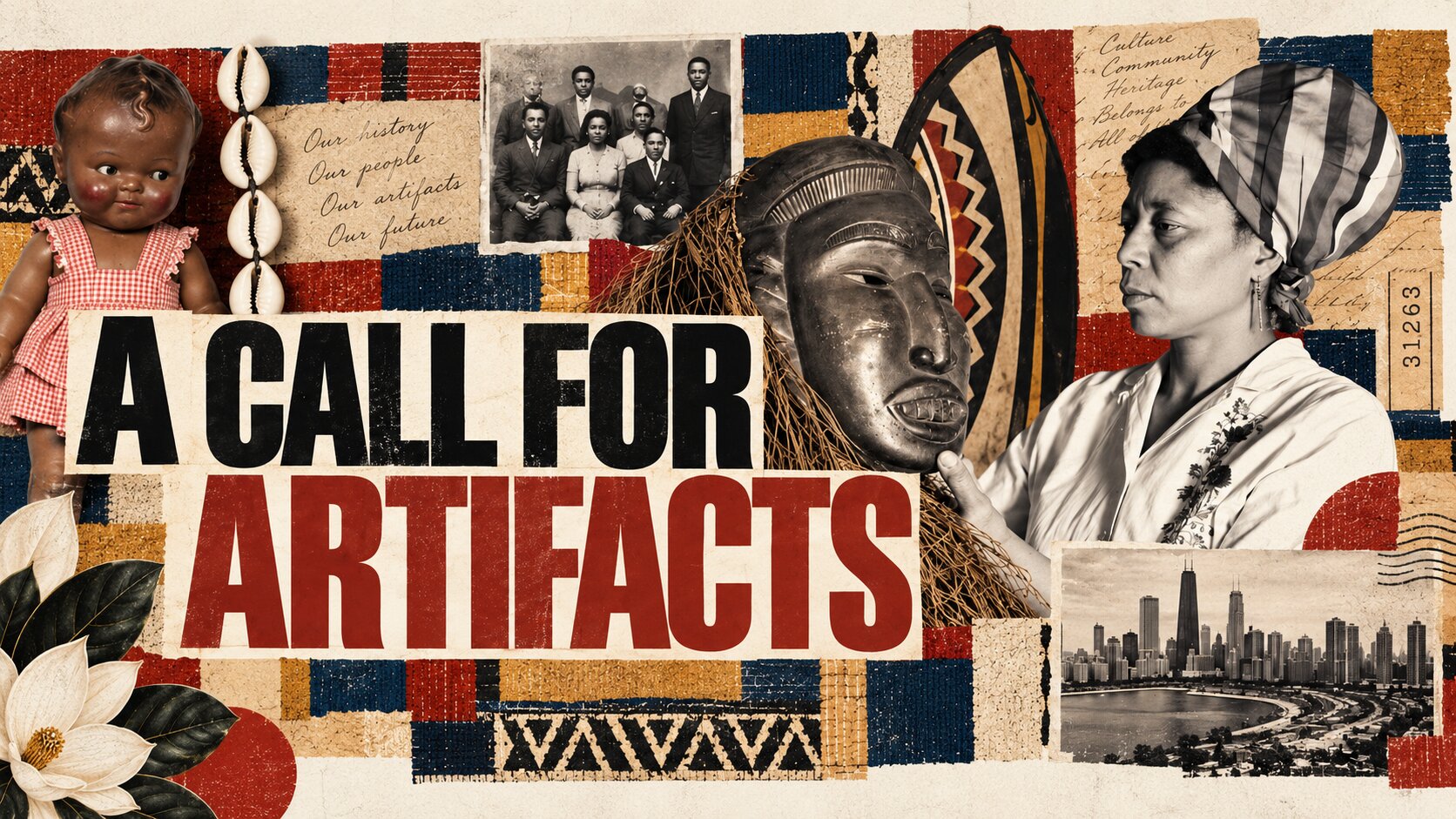
The DuSable Black History Museum and Education announced a new exhibit dedicated to preserving family history within Black communities.
The interactive exhibit will archive the personal belongings of Black families who choose to participate. Known as “A Call for Artifacts,” the community-centered project has community members share objects, including clothing, pictures, household objects, jewelry, books, music and awards. The DuSable Museum staff will then professionally document the objects. Professional documentation includes scanning anything that may be scanned, providing records as well as conducting historical research.
They will also supplement the objects with words from the participant, including an oral and on-camera testimony. Participants will retain ownership of their property.
By including them as part of the exhibit, the DuSable Museum will feature the families as part of the broader historical record.
Selected artifacts will be part of The Black Community Archive and will be shared on the DuSable website.
“A Call for Artifacts expands our understanding of where an archive begins and who participates in creating it. The initiative recognizes community members as knowledge holders and custodians of history,” said the museum in its announcement. “An object does not need to be expensive or rare to contain important history. An ordinary possession accompanied by an extraordinary story may tell us something meaningful about a family, neighborhood, institution, profession, migration, cultural movement, or historical moment.”
Over the years, more initiatives have emerged to preserve the history of Black communities.
Last year, the Institute for Research in African American Studies at Columbia University and the Nomadic Archivists Project announced a three-year project to support local communities in developing their archival preservation sites. The project also focuses on preserving endangered collections among Black history museums.
Black Bottom Archives is another media-driven platform that centers Black Detroiters. The project uses storytelling, journalism, art and community efforts to archive local Black history. The platform is made up of five sectors, including Black Arts, Black Bottom Radio, the Black-owned Business Directory, the Black Bottom Book Club and the Black Paper.
By 2020, the project launched interactive digital archives and oral histories, including written stories, records and photographs from local citizens who were victims of displacement in the Black Bottom neighborhood.
“Our community has told us that they are interested in an accessible repository of this history and its implications, and we have the community connections, resources and infrastructure to move it forward,” said the project leaders upon its announcement. “We’re excited about this collection being curated in partnership with elders and their family members who lived in Black Bottom, community organizations like Black Bottom Street View, Detroit Public Library, and Detroit Historical Society.”