





“Independence rearranges the hierarchy, and hierarchies rarely surrender themselves without resistance.”
The fastest way to misunderstand a moment is to listen to how politely it’s being discussed. Whenever the media starts asking the smallest possible questions, it’s usually standing too close to power to ask the dangerous ones. So this is why you gotta pay attention to where the conversation is being steered because that’s almost always where the real story is being avoided.
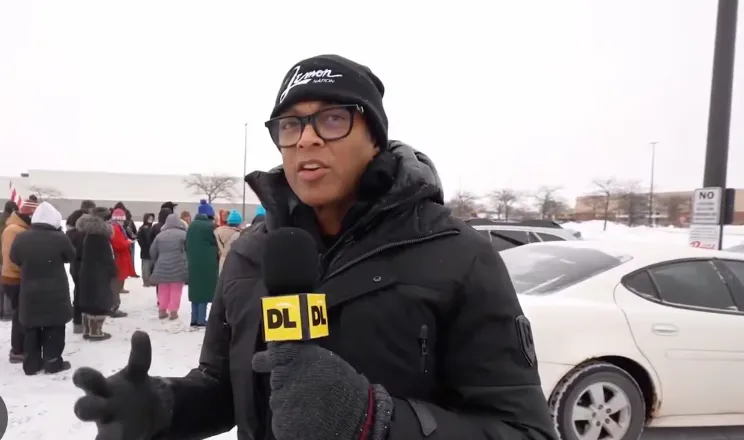
Which brings us to the arrest of Don Lemon, and why it deserves a more suspicious reading.
The rest of the media wants this to be a press-freedom story, or a constitutional debate, or a tidy argument about whether journalism becomes activism the moment a reporter’s shoes touch the ground. They want to argue about credentials, boundaries, and professionalism. They want to talk about whether Lemon was “too close,” whether he blurred lines, or whether this is a chilling precedent for journalists. All of this is unfolding at a moment when American power is growing more comfortable with authoritarian posture and where the language of law and order is increasingly masks the performance of dominance.
That framing is too convenient and it’s also boolshit.
This isn’t really a press-freedom story. It’s a containment story. And Don Lemon’s arrest only makes sense once you understand what he represents now, and what he no longer is.
This veteran Black male journalist does not work for CNN anymore. He is not buffered by a corporate brand, a legal department, a crisis-communications team, or a standards editor smoothing out his edges before airtime. He made a pivot. The same pivot Joy Reid made. The same pivot a growing number of Black journalists and pundits have made. He went independent. He took his reporting, voice, and brand to platforms like Substack.
And that is the real crime.
These platforms didn’t just give Don Lemon new distribution channels. They gave him freedom without supervision. No advertisers to placate. No network executives deciding which truths were “too hot” for the brand. No code-switching for white comfort. No ritual softening of language so that violence can be discussed without anybody feeling indicted. Just reader-supported speech, on his own terms, with his own people.
And let’s be honest about something the corporate media industry won’t admit out loud. I know many journalists working at major outlets who are explicitly forbidden from building independent platforms like Substack while they’re employed. Not discouraged, Y’all. Forbidden.
Their contracts bar them from monetizing their own voices, cultivating independent audiences, or publishing unsupervised analysis outside the corporate umbrella. They try to say it’s about ethics but it’s really about control. A journalist with a direct relationship to readers doesn’t need the institution as much, or at all. A journalist who earns money outside the newsroom is harder to discipline. A journalist whose voice resonates without filters exposes how artificial those filters always were. Corporate media doesn’t just manage journalism, it contains it. It owns your byline, your tone, your audience, and often your future. Independent platforms shatter that ownership model, and institutions know that once journalists become proprietors of their own work, the walls stop working.
And that right there is the threat, Y’all.
Corporate media didn’t just lose Don Lemon’s labor, it lost control over his voice. It lost the ability to sand down his language, redirect his curiosity, or decide which truths were “too much for daytime.” And worse for them, audiences followed. People want journalism that sounds like a human being again. They want reporters who are present, embedded, opinionated, and unafraid to say what power doesn’t want said.
So when Don Lemon is arrested after he leaves CNN, after he builds an independent platform, after he starts showing up on the ground without corporate insulation, that timing matters. It says: you are no longer protected because you are no longer useful to us.
Look at how the coverage is breaking right now. Most outlets are stuck in the same small loop: Was he acting as a journalist or an activist? Did he cross a line? Is journalism a shield? That language tells you everything. They’re trying to drag him back into a framework that still assumes journalism is something bestowed by institutions, not owned by journalists themselves.
Corporate media is near ‘bout dead. It’s losing its monopoly on legitimacy and trust is gone. Audiences know when they’re being managed. They know when language has been laundered. They know when “balance” is being used to obscure harm. People don’t want distant anchors debating from climate-controlled studios anymore. They want journalists on the ground. In the street. At the scene. Watching power up close.
And the state understands this shift better than most journalists want to admit. Because independent journalism doesn’t just disrupt media institutions, it disrupts the state’s ability to manage narrative. A journalist who answers directly to readers is harder to pressure, harder to isolate, and far harder to discipline.
What makes this moment especially revealing is the contrast it exposed. While much of corporate media continues to report from a careful distance, parsing official statements, quoting authorities, moderating tones, Don Lemon was physically present in a space where power was being contested. Immersive independent journalism collapses the buffer institutions have long relied on. It reduces their role as interpreter and shows audiences what reporting looks like without mediation, choreography, or permission. And once the public sees that, the old model begins to look less like professionalism and more like caution or complicity. Nothing unsettles an institution faster than being revealed as risk-averse while someone else is willing to witness events up close.
That proximity doesn’t just disrupt media hierarchies, it complicates the state’s ability to manage narrative. Governments depend as much on controlling perception as they do on enforcing law, and journalists who document events in real time narrow the distance between power and the public. Independent reporters answer directly to readers, not corporate supervisors, which makes them harder to pressure, harder to steer, and far less predictable.
This is where the interests of legacy media and state power begin to quietly converge because neither benefits from journalists who cannot be filtered or contained. And in moments of democratic strain, when governments grow more comfortable with authoritarian posture, journalists who cannot be contained start to look less like professionals and more like problems.
Independence rearranges the hierarchy, and hierarchies rarely surrender themselves without resistance. So when a journalist like Don Lemon steps outside the corporate perimeter and begins reporting with that kind of autonomy, he doesn’t just leave a network. He alters the balance of power.
Historically, journalism has only been protected when it was legible to power, when it was predictable, negotiable, and contained. Independent journalism, especially Black independent journalism, blows that up. Because now you’ve got reporters with cameras and audiences and money who don’t need institutional permission to show up. That kind of journalism isn’t just inconvenient. It’s destabilizing.
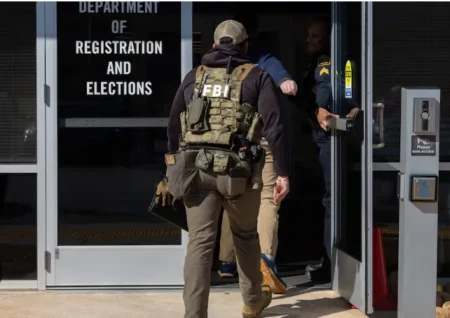
So when Don Lemon is arrested weeks after a protest, far from the scene, long after any immediate “law enforcement” rationale has expired, it reads like state choreography. It’s a reach and a reminder that says: We can still touch you.
That message isn’t aimed only at Lemon. It’s aimed at every journalist building a reader-supported audience, every reporter realizing they no longer need to contort themselves for access. The arrest says leaving the walls doesn’t just remove protection, it invites scrutiny.
Whether the government ultimately has a case is almost beside the point. It doesn’t matter. The goal isn’t to win in court. The goal is to make journalists hesitate before they show up. To make livestreams feel risky. To make proximity feel punishable. To turn independence into something that feels legally radioactive. (Y’all who are listening to the voiceover, please excuse the sound of my dog grumbling here. LOL.)
This is why the “press freedom” frame is too small. Press freedom assumes the press is still a coherent institution but it isn’t. Journalism has fractured, and that fracture is where the truth is pouring out. Don Lemon wasn’t arrested because he doesn’t understand the rules. He was arrested because he no longer plays by them. Because he exited a system that demanded obedience in exchange for safety and because he chose freedom over insulation.
The rest of the media can keep arguing about lines and labels. We gotta be looking at the power shift. Because once you see it, you can’t unsee it. Don Lemon didn’t lose protection because he failed journalism. He lost protection because he escaped it. And systems built on containment rarely ignore those who walk free.
Thanks for reading. If this piece resonated with you, then please consider becoming a paid subscriber. Paid subscriptions help keep my Substack unfiltered and ad free. They also help me raise money for HBCU journalism students who need laptops, DSLR cameras, tripods, mics, lights, software, travel funds for conferences and reporting trips, and food from our pantry. You can also follow me on Facebook!
We appreciate you!