





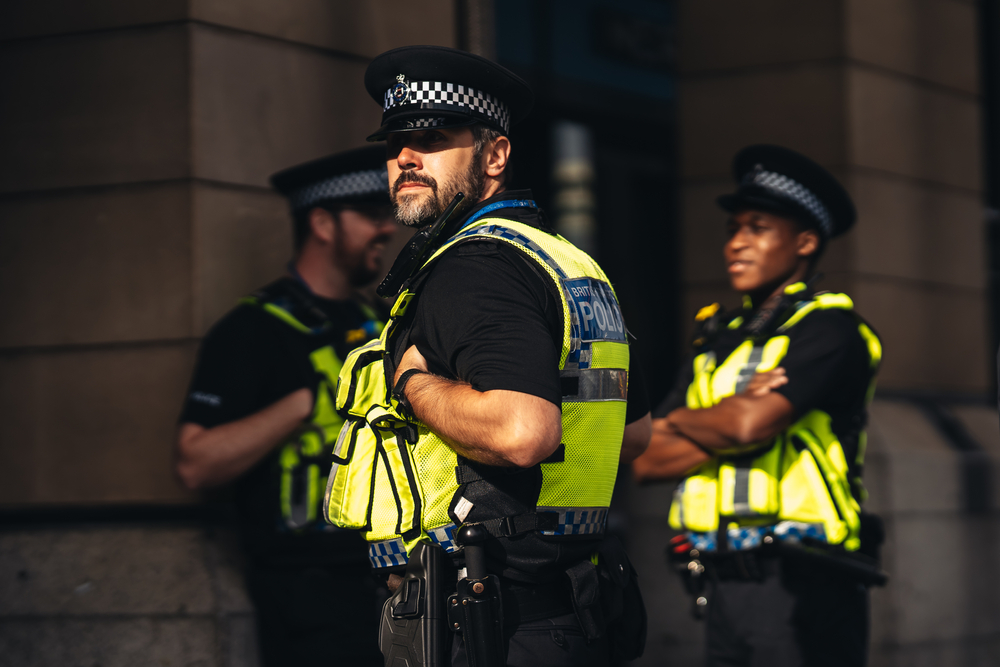
Black Londoners are nearly four times more likely to be stopped and searched, according to a new report.
Released by the Mayor’s Office for Policing and Crime in collaboration with King’s College London, the report is considered to be the largest-ever study conducted to obtain data on stop and searches in the city. Over 150,000 interactions were reportedly studied using new technology and data science techniques.
In their findings, the Mayor’s Office reported that there were 24 wards in London where Black Londoners were up to 48 times more likely to be stopped and searched when compared to a white Londoner.
According to King’s College London, the disproportionality between the number of stops and searches between Black and white Londoners is approximately nine percent. This value is equivalent to an additional 4,300 annual stop-and-searches. On a daily basis, this equates to an additional one stop and search every two hours.
According to the report, the grounds for the stops and searches were also unclear and potentially fabricated. Of the 149,299 searches conducted last year, approximately 19,054 were conducted due to suspicions that the subjects were in possession of a weapon. Of these, however, only 3,748 weapons were found.
With the research, an annual assessment will now be proposed to hold the Met accountable. If the grounds for Stop and Searches are reviewed and improved, the rate of disproportionate stops can potentially be reduced by 11% to 19%.
“This major new research shows significant and unacceptable levels of disproportionality that we must act on. The use of Stop and Search must be more transparent and accountable to deliver a safer and fairer London for all,” said London Mayor Sadiq Khan in a statement. “We have to get the use of this power right in London, as lives and community confidence depend on it.”
The latest report comes months after a review into the Met’s system revealed racism is embedded within the force.
Conducted by HR Rewired, the review found that the Met tended to label Black officers with darker skin color as “confrontational.” Black community members were also more likely to be approached with aggression and baseless suspicion. More force was also used.
Overall, the Met police are 3.7 times more likely to use force, such as handcuffing, body restraints and ground restraints, amongst Black people.
“Anti-Blackness is the clearest indicator of organisational dysfunction. The same systems that sustain racial harm against Black people also enable other forms of harm,” said Dr. Shereen Daniels, the researcher of the review, per Reuters. “Confronting this is not an act of exclusion but a necessary foundation for safety, fairness and justice for everyone.”