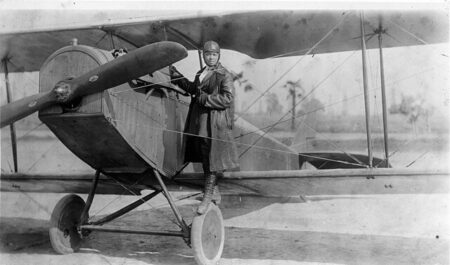



On this day, in 1926, pioneer aviator Bessie Coleman took her last flight.
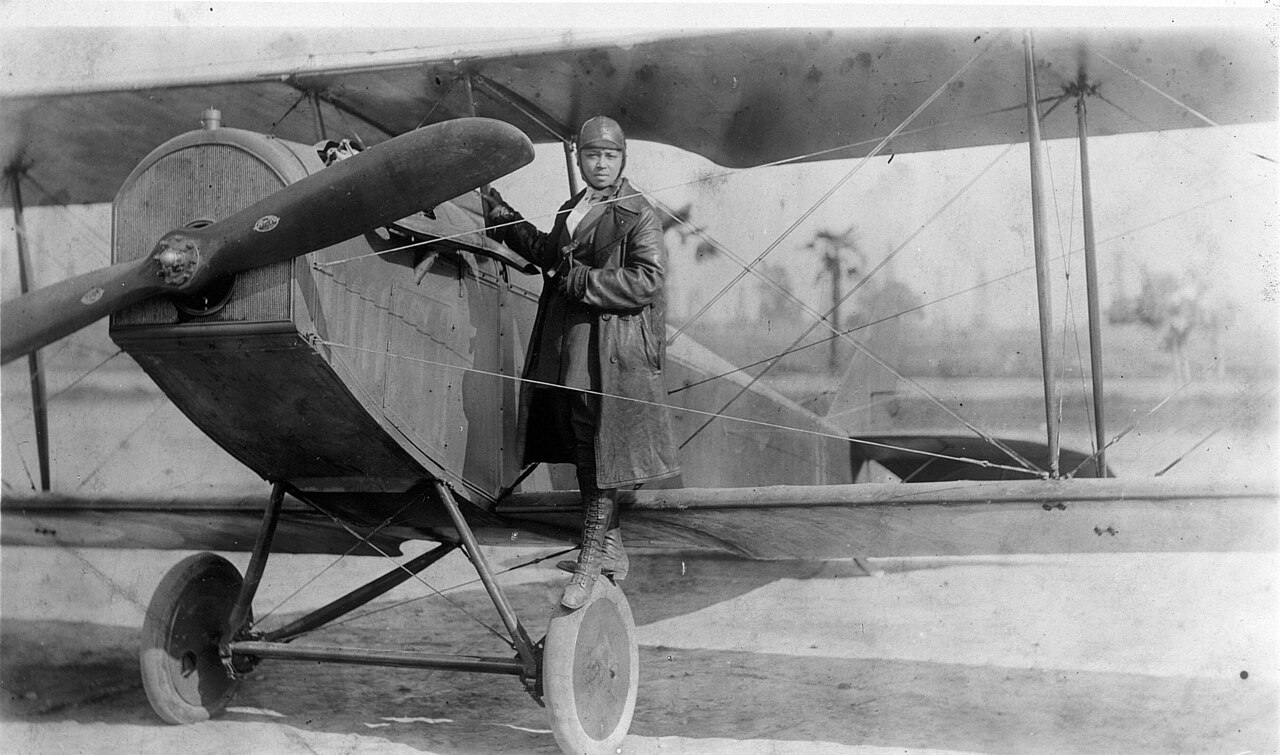
Aged 34, Coleman died the morning of April 30 in a test flight at the Paxon Field in Jacksonville. After raising enough funds to fully purchase a Curtiss JN-4, also known as the “Jenny,” the aviator began preparing for a show in the city. Fellow pilot William Wills flew in the plane from its base in Texas, but arrived late due to numerous unscheduled stops as a result of mechanical issues.
When other pilots checked the plane, they found that the engine had been very “poorly maintained.” Eager to prepare for her show, however, Coleman opted to continue with the test flight. While Wills controlled the plane from the front cockpit, Coleman sat farther back in the plane, unbuckled and looked across the land for a good place to land when jumping as part of her stunt act.
According to those who witnessed the test flight, the plane unexpectedly accelerated before nose-diving to the ground. Coleman was killed on impact after being thrown from the airplane at 2,000 feet in the air while Wills was killed after the plane flipped upside-down. An investigation found that a loose wrench was responsible for the crash, jamming the controls of “Jenny.”
Thousands attended Coleman’s funeral in Chicago as people across the country mourned her death. Amongst those who attended her funeral were Congressman Oscar DePriest, attorney Earl B. Dickerson, activist Ida B. Wells and activist Viola Hill.

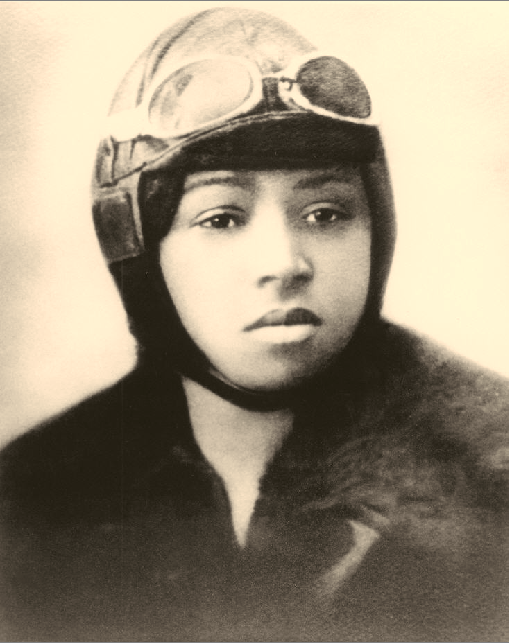
Despite her early death, Coleman’s impact has been everlasting.
Born in 1892 in Waxahachie, Texas, she made history as the first Black American woman and the first Native American woman to hold a pilot license after attending aviation school in France. Due to racial discrimination in the U.S., Coleman traveled to Europe to receive her license, making her the first American woman to also hold an international pilot license.
Intelligent and eager to learn since childhood, her interest in aviation began at the age of 27 when her brother John told her about the women flying airplanes in France throughout the war. Although she was rejected from every single American aviation school on account of her race and gender, Coleman was accepted to the Ecole d’Aviation des Frères Caudron at Le Crotoy after following the advice of Robert S. Abbott, the editor and publisher at the Chicago Weekly Defender. To prepare for her trip, she learned French at a Berlitz school and saved up funds from her work as a manicurist and chili parlor manager.
In just seven months, Coleman was able to earn her pilot’s license, training arduously with a 27-foot biplane.
Upon her return to the U.S. in September 1921, she was greeted by hordes of reporters as her success made national news. At a performance of the musical “Shuffle Along,” the entire audience gave a standing ovation to Coleman for becoming the first Black woman to train as a pilot.
Approximately a year later, she began performing stunts at air shows. Described as “heart thrilling,” Coleman would travel the country and perform aerial stunts such as “tail spins, banking and looping the loop.” The shows were a national success, with as many as 3,000 people attending each night.
Through her platform, she encouraged other Black Americans to take part in aviation and drew attention to the country’s racial discrimination by refusing to perform at any location that refused entrance to Black Americans.
On June 19, 1925, Coleman took part in the first-ever all-Black air show in Texas, returning to her hometown as the declared “Queen of the Air.”
For her achievements, she has posthumously been awarded an induction to the National Women’s Hall of Fame, the National Aviation Hall of Fame and the International Air & Space Hall of Fame. Coleman has also been commemorated multiple times, including on a 32-cent stamp.
In 1934, Lieutenant William J. Powell helped actualize her dreams of operating her own aviation school by establishing the “Bessie Coleman Aero Club.” Graduates of the flying school included the Tuskegee Airmen.
Other pilots inspired by Coleman are Janet Bragg, Willa Brown and the Women Airforce Service Pilots.