


Close Menu
TheHub.news

    A New Film Reveals the Human Cost of Medical Bias Against Black Women

    By Veronika Lleshi

    This Day in History: July 29th

    By TheHub.news Staff

    Betye Saar, Creator of ‘The Liberation of Aunt Jemima,’ Has Died

    By TheHub.news Staff

    Subscribe to Updates

    Get the latest creative news from FooBar about art, design and business.

    X (Twitter) Instagram YouTube
    X (Twitter) Instagram YouTube
    TheHub.news
    Support Our Work
    • Home
    • Our Story
      • News & Views
        • Politics
        • Injustice
        • HBCUs
        • Watch
      • Food
        • Cuisine Noir
        • soulPhoodie
      • Passport Heavy
      • Travel
      • Diaspora
      • This Day
      • Entertainment
      • History
      • Art
      • Music
    • Health
    • Money

      Breaking Down the 2 Different Types of Income

      July 7, 2026

      Black Americans Are Already Living Through a Recession

      July 6, 2026

      You Must Be an Owner to Win 

      June 23, 2026

      Economic Empowerment Has Always Been a Part of Black History

      February 12, 2026

      More Blacks Needed On Corporate Boards

      December 9, 2025
    • Books
    • Business
    • Sports
      1. First and Pen
      2. View All

      Diverse Representation to Host Art Exhibit Honoring Black Women in Sports

      July 27, 2026

      Ryan Clark’s Firing Exposes the Slow Erasure of Black Sports Media Voices

      July 24, 2026

      The WNBA Is Feeling the Pain Inflicted by Racism and Gambling

      July 20, 2026

      Fiesta Bowl CEO Erik Moses Named to USA Fencing Board of Directors

      July 17, 2026

      Diverse Representation to Host Art Exhibit Honoring Black Women in Sports

      July 27, 2026

      What’s the Real Reason Ryan Clark Was Fired by ESPN While on Air?

      July 24, 2026

      Ryan Clark’s Firing Exposes the Slow Erasure of Black Sports Media Voices

      July 24, 2026

      Students Who Struggle in Traditional Classrooms Could Soon Learn Through Gaming

      July 21, 2026
    • Tech
    • Podcasts
      1. Karen Hunter is Awesome
      2. Lurie Breaks it Down
      3. Human(ing) Well with Amber Cabral
      4. Financially Speaking
      5. In Class with Carr
      6. View All

      A New Film Reveals the Human Cost of Medical Bias Against Black Women

      July 29, 2026

      This Day in History: July 29th

      July 29, 2026

      Betye Saar, Creator of ‘The Liberation of Aunt Jemima,’ Has Died

      July 28, 2026

      Jamaica’s Government Is Defending a Controversial US Migrant Deal

      July 28, 2026

      A New Film Reveals the Human Cost of Medical Bias Against Black Women

      July 29, 2026

      This Day in History: July 29th

      July 29, 2026

      Betye Saar, Creator of ‘The Liberation of Aunt Jemima,’ Has Died

      July 28, 2026

      Jamaica’s Government Is Defending a Controversial US Migrant Deal

      July 28, 2026

      A New Film Reveals the Human Cost of Medical Bias Against Black Women

      July 29, 2026

      This Day in History: July 29th

      July 29, 2026

      Betye Saar, Creator of ‘The Liberation of Aunt Jemima,’ Has Died

      July 28, 2026

      Jamaica’s Government Is Defending a Controversial US Migrant Deal

      July 28, 2026

      A New Film Reveals the Human Cost of Medical Bias Against Black Women

      July 29, 2026

      This Day in History: July 29th

      July 29, 2026

      Betye Saar, Creator of ‘The Liberation of Aunt Jemima,’ Has Died

      July 28, 2026

      Jamaica’s Government Is Defending a Controversial US Migrant Deal

      July 28, 2026

      A New Film Reveals the Human Cost of Medical Bias Against Black Women

      July 29, 2026

      This Day in History: July 29th

      July 29, 2026

      Betye Saar, Creator of ‘The Liberation of Aunt Jemima,’ Has Died

      July 28, 2026

      Jamaica’s Government Is Defending a Controversial US Migrant Deal

      July 28, 2026

      In Class with Carr: “Rock the Vote!”

      July 21, 2026

      In Class with Carr: “Odds and Ends”

      July 13, 2026

      In Class with Carr: “Belonging Beyond 1776: The Semiquincentennial Blues”

      July 6, 2026

      In Class with Carr: Belonging in the Liberation Corridor

      June 29, 2026
    TheHub.news
    Entertainment

    Before Barack, There was Jesse: How Reverend Jackson Became The Architect for Modern Black Political Power

    By Danielle BennettFebruary 19, 20267 Mins Read
    Share Email Copy Link
    Image credit: ShutterStock
    Share
    Facebook Twitter LinkedIn Email Copy Link Threads

    In 1984, when Reverend Jesse Jackson launched his presidential campaign, many viewed him primarily as a protest candidate who lacked the requisite political support for a serious bid for the Democratic nomination. 

    However, by the time of his 1988 run, he had transformed his campaign strategy from a “symbolic gesture” into a well-organized operation aimed at winning delegates. 

    Jackson transitioned from an “insurgent” to a “competitor” by building a National Rainbow Coalition that expanded his appeal beyond the Black community to include labor unions, farmers, Latinos, Arab Americans and progressive whites, a strategic pivot accompanied by the establishment of a robust political infrastructure. He hired experienced staff and included a mix of operatives from diverse backgrounds, enhancing his image as a mainstream candidate. He also focused on economic populism, addressing the concerns of working-class voters and advocating for policies on income inequality and union support, which resonated particularly in key states like Michigan. 

    His years of grassroots voter registration efforts resulted in millions of new, often marginalized, voters, creating a solid base of support that bolstered his candidacy. By shifting from a purely protest-oriented message to one grounded in policy discussions, covering issues like universal healthcare and poverty reduction, Jackson positioned himself as a vital player in Democratic Party politics. Internal changes to party rules, particularly the move from a “winner-take-all” delegate system to a proportional one, allowed him to translate his popular support into a more significant delegate count. Ultimately, these strategic adjustments led to a remarkable doubling of his vote total from 1984, with him winning 13 contests and securing about 7 million votes in 1988, solidifying his status as a key power broker within the Democratic Party.

    Although Jackson didn’t win, coming in second in the 1988 primary, his campaign opened the door for many Black Democrats to run for office. It also showed that white voters, too, were willing to support a Black presidential candidate for the first time.

    During an interview with The New York Times, Carol Moseley Braun reflected on the impact Jackson had on her own political journey, noting that his campaign also laid the groundwork for future candidates like her. Back in ‘88, as an Illinois state representative and a supporter of Jackson’s presidential bid, she witnessed firsthand how a Black candidate could break through barriers that previously confined Black politicians to predominantly Black districts.

    View this post on Instagram

    A post shared by Loki Mulholland (@lokimulholland)

    The move not only changed the perception of electability for Black individuals but also paved the way for Braun herself, who, with Jackson’s backing, made history as the first Black woman elected to the U.S. Senate just four years later.

    “Jesse Jackson provided a building block for campaigns and efforts like mine to be successful,” she said. “Nobody thought a Black person could get elected to anything but a Black district. Before Jesse, that was true. What he showed is that Black candidates with the right campaign can reach across racial boundaries.”

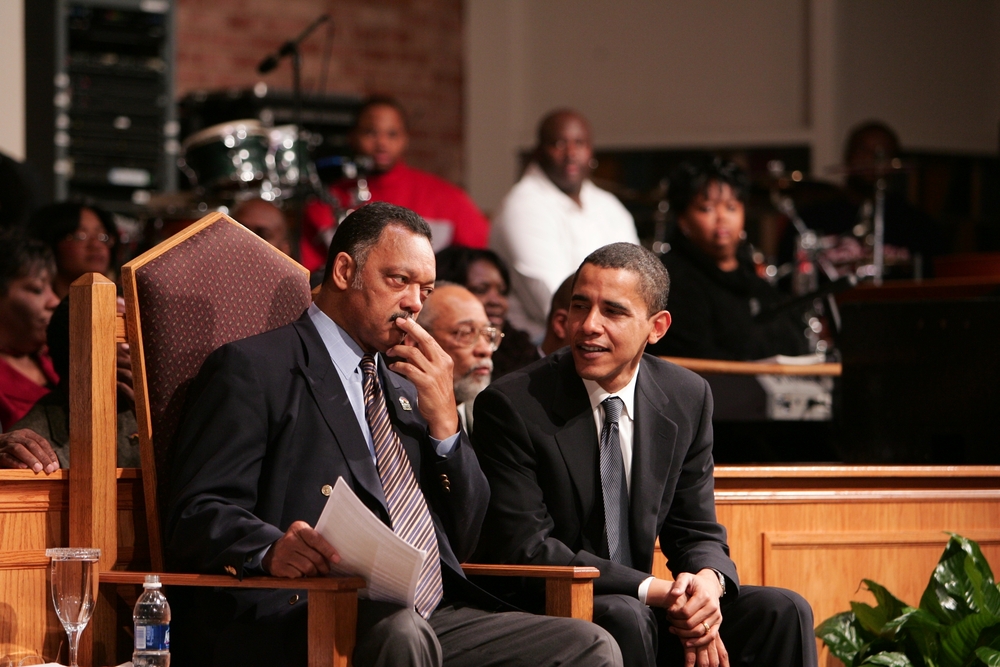
    As many of us are aware, in 1972, Shirley Chisholm made history as the first Black candidate for president from a major political party, paving the way for future political aspirants. Rev. Al Sharpton’s campaign in 2004 marked another milestone. But it was not until Barack Obama clinched the presidency in 2008 that Jackson’s 1988 campaign was truly acknowledged for its impact because it was the only one to gather enough delegates to be considered a serious contender at the time. 

    Following his efforts, a wave of progress emerged for Black politicians in the U.S. In 1989, L. Douglas Wilder became the first Black governor of Virginia, while David Dinkins and Norman Rice were elected as the first Black mayors of New York and Seattle, respectively. That same year, Ron Brown made history by becoming the first Black individual to chair a major national party, leading the Democratic National Committee. The early ’90s saw further advancements, including Carol Moseley Braun’s election to the Senate and a notable increase in the representation of people of color in the House between 1990 and 1992. 

    View this post on Instagram

    A post shared by Mike Johnson (@djmikeatl)

    Plus, President Obama’s path to clinching the 2008 Democratic primary could have been even more of an uphill battle if not for some crucial shifts in delegate assignment rules that were put in place by the Democratic National Committee, thanks to the advocacy of Jackson’s supporters back in the 1988 convention in Atlanta.

    “Without Reverend Jackson, there never would have been Barack Obama,” Donna Brazile, who was a key organizer for the Southern states during Jackson’s 1984 campaign and later became the acting chairwoman of the D.N.C., told The Times. 

    During Obama’s 2008 presidential campaign, a bit of drama unfolded when Jackson was caught on a “hot mic” making some pretty harsh remarks about him. Jackson accused Obama of “talking down to black people,” which stirred up quite the controversy and put a spotlight on the complexities within the African American community regarding support for the candidate. The fallout was immediate; Jackson issued a quick apology, but not before his own son publicly condemned his father’s comments. The Obama campaign, while clearly taken aback, accepted Jackson’s apology; and swiftly moved past the incident to refocus on the campaign. 

    Still, Jackson’s influence extended far beyond inspiring Black candidates to enter the political arena. As noted by The Times, his 1988 campaign also played a pivotal role in shaping the careers of several prominent white figures. For instance, Paul Wellstone, a liberal college professor and the Minnesota state director during Jackson’s campaign, went on to make waves in 1990 by defeating an incumbent Republican senator. That same year, Bernie Sanders, then the mayor of Burlington, Vermont, was elected to the House, marking him as the only democratic socialist in Congress at the time. 

    Jackson’s legacy continued to pulse in subsequent elections, notably in 1992 when Bill Clinton ascended to the presidency with vital backing from a coalition of Black and Latino voters, many of whom were inspired by Jackson’s groundbreaking campaigns. Figures like President Obama and Bernie Sanders, who followed in Jackson’s footsteps, sought to expand their reach to a broader electorate, echoing Jackson’s belief in the power of grassroots engagement. 

    Gerald Austin, who managed Jackson’s 1988 campaign, aptly pointed out that, “Jackson showed that if you wanted to win, you should not just depend on statistics from previous elections that show who votes — you go out and find new supporters and get them to vote.”

    This approach has seen a revival in recent campaigns, such as Zohran Mamdani’s successful bid for New York City mayor last year, which Austin described as a continuation of Jackson’s legacy. 

    Mamdani truly took a page out of Jackson’s playbook, showing that winning isn’t just about having the flashiest campaign; it’s all about inclusivity and reaching out to everyone. By connecting with diverse communities and actively listening to their needs, Mamdani created a genuine sense of belonging that connected deeply with voters. 

    He also modernized Jackson’s approach by combining it with, as The Guardian noted, a “hybrid” strategy of using TikTok and Instagram for rapid, humorous and viral content that mirrored the way the Rainbow Coalition used the media in the 1980s to shift the political conversation.

    The approach not only broadened Mamdani’s support base but also fostered a collaborative spirit that made people feel like they were part of something bigger.

    • Super Tuesday Kicks Off: Get Out and Vote
    • PepsiCo to Meet with Rev. Al Sharpton Following Boycott Calls
    • Mamdani’s Bold Vision for NYC Resonates as New Poll Shows Majority Support
    • This Day in History: September 12th
    • Remembering That Time Rev. Jesse Jackson Smacked Me on My Forehead
    Barack Obama Jesse Jackson Thehub.news
    Danielle Bennett
    • Instagram

    Danielle Bennett, a hairstylist of 20 years, is the owner of The Executive Lounge, a hair salon that caters to businesswomen, located in the Chelsea neighborhood of New York City. She specializes in natural hair care, haircuts, color, hair weaving and is certified in non-surgical hair replacement. Danielle partners with her clients to provide customized services, while she pampers them with luxury products and professional, private accommodations. “The Executive Lounge is your home away from home; it is a tranquil, modern sanctuary where you matter. Your time is valued and your opinion counts. Why? Because you deserve it.” - Danielle Bennett

    Related Stories

    The Real Conversation After the Benediction: Why Black Folks Are Talking About Barack Obama and Rev. Jeremiah Wright Again

    March 9, 2026

    Mother’s Day 2025 Edition: Best No-fail Gifts from Black-owned Businesses 

    May 1, 2025

    Black Churches Rally Behind African American History Museum As Culture War Attacks Mount

    April 25, 2025

    Joy Reid Breaks Silence After Shock MSNBC Firing: “I Am Not Sorry I Stood Up for What’s Right”

    February 25, 2025

    5 Must-attend Kwanzaa Celebrations to Light Up Your Holiday Season

    December 26, 2024

    How an Alvin Ailey Superstar Danced and Loved Like Nobody’s Business

    November 21, 2024
    Recent Posts
    • A New Film Reveals the Human Cost of Medical Bias Against Black Women
    • This Day in History: July 29th
    • Betye Saar, Creator of ‘The Liberation of Aunt Jemima,’ Has Died
    • Jamaica’s Government Is Defending a Controversial US Migrant Deal
    • ‘South of Midnight’ Wins Big for Its Haunting Vision of the Deep South

    A New Film Reveals the Human Cost of Medical Bias Against Black Women

    By Veronika Lleshi

    This Day in History: July 29th

    By TheHub.news Staff

    Betye Saar, Creator of ‘The Liberation of Aunt Jemima,’ Has Died

    By TheHub.news Staff

    Jamaica’s Government Is Defending a Controversial US Migrant Deal

    By TheHub.news Staff

    Subscribe to Updates

    A free newsletter delivering stories that matter straight to your inbox.

    About
    About

    TheHub.news is a storytelling and news platform committed to telling our stories through our lens. With facts at the center, we document the lived reality of our experience globally—our progress, our challenges, and our impact—without distortion, dilution, or apology.

    X (Twitter) Instagram YouTube

    A New Film Reveals the Human Cost of Medical Bias Against Black Women

    By Veronika Lleshi

    This Day in History: July 29th

    By TheHub.news Staff

    Betye Saar, Creator of ‘The Liberation of Aunt Jemima,’ Has Died

    By TheHub.news Staff

    Jamaica’s Government Is Defending a Controversial US Migrant Deal

    By TheHub.news Staff

    Subscribe to Updates

    A free newsletter delivering stories that matter straight to your inbox.

    © 2026 TheHub.news A 501(c)(3) tax-exempt organization.

    Type above and press Enter to search. Press Esc to cancel.