


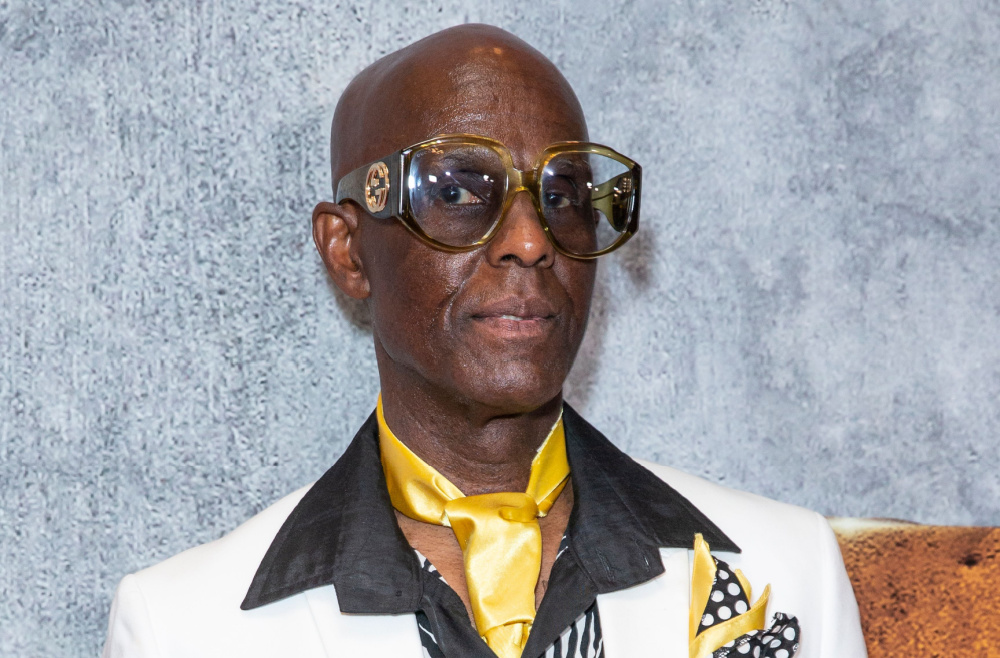
On Dapper Dan’s birthday, TheHub.news explores how the iconic designer’s story is an intimate version of The American Dream.
From his meteoric rise to fame in 1980’s Hip Hop culture to the forced closing of his renowned clothing boutique in 1992 and his return to prominence in 2018 after a cultural appropriation scandal caused one of the largest fashion houses in the world to finance a rebirth of his business, things have certainly come full circle for the designer, journalist and businessman.
Whether he’s dressing today’s hottest celebrities or showcasing his iconic aesthetic at some of the fashion world’s most prestigious events, these accomplishments hardly make up the culmination of Dapper Dan’s incredible journey. In his memoir, Dapper Dan: Made in Harlem: A Memoir (2019), he candidly describes his background as a hustler and a criminal, but his account indirectly chronicles a deep and prolific history, one that’s rooted in raw talent, self-determination and survival, and proves why the tastemaker, creative (and fashion god!) not only deserved his long-overdue flowers but explains why he is now a firmly cemented institution in the fashion world.
A ‘Rich’ Introduction
Day was born into poverty in East Harlem in 1944, just after the peak of the Harlem Renaissance. His parents arrived there during the Great Migration, where approximately six million Blacks escaped the racial violence and oppression from Jim Crow in the American South.
Also known as the “New Negro Movement,” named after the 1925 anthology by Alain Locke, Day was deeply familiar with the rich history of the Harlem Renaissance. It was considered a golden age in African American culture; a mecca of literature, music, art and fashion in the early 20th Century.
The era encompasses the trailblazing work of poets such as Claude McKay and Langston Hughes, some of the most celebrated names in American music like Adelaide Hall and Duke Ellington, and noted photographer James Van Der Zee, a leading figure in the Harlem Renaissance, who, aside from the artistic merits of his work, produced the most documentation of the period.
Van Der Zee shot and rendered stunning wedding and society portraits of impeccably self-styled celebrities and of the Black bourgeoisie of Harlem. His subjects donned bespoke tuxedos and tea gowns before a backdrop of lavishly appointed surroundings he designed in his studio. In those days, Black dignitaries did not shop for clothes outside of their community. Skilled Black seamstresses and tailors were common, so clothes were custom-made at home.
Doing so enabled the neighborhood to design and evolve its own style and group identity through fashion; and gain command over the representation and evolution of its culture. Dapper Dan’s innate sense of style was cultivated by this legacy. In his memoir, he writes about how his mother – an artist who drew fashion illustrations—was also a major influence, responsible for exposing him to fashion through a prism of Black self-expression.
The ‘Christening’
Daniel Day was only thirteen years old when he would receive the name that would make him famous. It was given to him by his mentor (who originally carried the moniker) as recognition for Day’s uncanny talent for fashion and gambling.
In the Day household, money was scarce. Daniel was one of seven children and his father, a civil servant, held down three jobs to make ends meet. He recounts times when he and his siblings would build and sculpt with mud along the Harlem River because his parents couldn’t afford toys, so when he was barely a teen, he sought out opportunities to earn a little cash.
His first job was shining shoes, but gambling quickly followed. An outstanding craps player, he picked up the basics of gambling from his uncle, “Fishman Eddie” (a professional in the games) and took them further. Day was a voracious reader; and soon immersed himself in the business, devouring books on percentages, the law of total probability, “manipulation and sleight of hand,” as he describes. As a result, he earned thousands of dollars a day.
‘Africanization’
Before dropping out of high school, Dan and one of his brothers took to heroin and were linked to shoplifting and drug activity. During his 20’s, he was arrested for dealing illegal narcotics.
Upon his release from prison, he pledged a better life for himself after listening to a Malcolm X speech. Malcolm X said, “If you want to understand the flower, study the seed.” This compelled Dan to go through a lifestyle change, become a vegetarian and study at the Countee Cullen Library in Harlem. He soon returned to school and enrolled in an academic program sponsored by the Urban League and Columbia University with ambitions to become a writer. In the 1960s, he took a job writing for a Harlem-based newspaper Forty Acres and a Mule where he commentated on topics ranging from gentrification to pop culture.
In 1968-74, his writing led him on trips to Africa, where he visited several countries including Ethiopia, Uganda and Tanzania, as part of the Columbia University and Urban League’s academic program. However, it was during his travels in Lagos, Nigeria and Monrovia in Liberia that he conceived his trademark idea, the “Africanization of the European brand,” inspired by sleek, Euro-style designed suits made in regional fabrics by a local tailor.
After returning to New York in 1974, Dan sold stolen designer goods out of his car, which lasted for a few years. He needed the money to finance the opening of his first boutique on Harlem’s infamous 125th Street in 1982.
Originally, Dan didn’t consider owning his own clothing store. He planned for a business in wholesale but soon faced racism and prejudice in his pursuits. He struggled to purchase clothing for resale, as most companies refused to do business with him because of his race and location. He then began to educate himself about the industry so that he could create his own designs from scratch. He’d studied all areas of fashion, specifically insignias, and discovered the power of a classic logo.
The Rise of an Underground Couturier
Dan’s boutique was based on a made-to-order business model. Initially, he sold an assortment of custom-made furs, specifically because they were a Harlem fashion staple, but he would then move into making clothing made from monogrammed items he’d buy at department stores. He’d then customize the pieces into his signature ready-to-wear clothing and accessories without the permission of the brands he favored, like Gucci, Fendi, Louis Vuitton and MCM. Entirely self-taught, he experimented with various textiles and design techniques, becoming one of the first to master screen printing on leather. He would also later design jewelry and outfit the interiors of luxury cars.
The opening of Dan’s store coincided with the rise of Hip Hop culture and the crack cocaine epidemic in the early 1980s. Standout items included fur-lined jackets and pragmatic features such as resistant textiles, bullet-proof parkas and uniquely deep, double-pockets to conceal weapons, often with an oversized fit and buzzy logo prints. He catered to a niche clientele of physically larger-built gangsters, drug lords (including drug kingpin Alpo Martinez), emerging rappers (such as Big Daddy Kane, Eric B. & Rakim and LL Cool J) and professional athletes like Mike Tyson, all with an appreciation for luxury wear. Like Dan, they were also underserved and ignored at the designer level.
A shrewd businessman who embraced his roots, Dan approached his designs and the needs of his customers from a psychological point of view. He channeled Harlem’s rich history and culture, previous jobs and gambling, while understanding that what you wear influences how others interact with you. He also honored what wearing a designer logo meant to his customers and those alike (it validated their feelings, identity and how they wanted to present themselves) and often ran his business 24/7 to accommodate their schedules and requests for quick turnaround times on their garments.
Dan wasn’t simply repurposing existing styles, he propelled the culture. He elevated high fashion in ways never before seen (he referred to his designs as “knock-ups,” as he felt they were too lavish to be called knock-offs), and his keen fashion sense, eye for silhouette and uncanny ability to anticipate his client’s needs were only some of the qualities that made him and his brand special.
This saw the designer gain an increasingly growing client base that firmly established his label as a burgeoning high-fashion brand.
Along with the rise of Hip Hop in the 1980s, Dan became one of the genre’s most favored and patronized designers. Despite the designer’s high-profile clientele, his illegal use of logos and monograms placed him at the center of government counterfeiting raids and mounting litigation that claimed he violated the brands’ copyrights. And by 1992, after another raid on his boutique led by Fendi, he shut down the store. Not only did the authorities seize Dan’s equipment, but they confiscated photographs and fabrics, which served as the only existing documentation of his designs.
Dan went back to underground styling and sales for private customers, a much smaller operation he ran out of the home he shared with his wife and two children. His legacy was often cited in rap songs and in 1999, he designed for and styled undefeated Welterweight professional boxer Floyd Mayweather Jr. Although he was outlawed by mainstream fashion, he still positioned himself to thrive along the industry’s periphery, his signature style maintaining a high standard nonetheless.
A Rebirth
The early 2010s saw Dan reemerge into the world of luxury fashion with high-profile collaborations and memorable celebrity stylings, but in 2017 came a total reversal in his destiny.
Gucci’s Creative Director Alessandro Michele sent a puff-sleeved mink bomber jacket with an allover embellishment of the double G logo down the runway, bearing a striking resemblance to one Dan originally designed for Olympic Track and Field star, Diane Dixon in 1989. Michele did not credit Dan and it sparked an onslaught of outrage online.
As the social media firestorm escalated, Gucci said the jacket was a “homage” to Dan’s work, but the Black and Hip Hop blogger=spheres weren’t buying it: Dan’s business was ruined after European design houses pursued legal action over appropriation and copyright infringement (the mainstream fashion world shunned him for decades!), only for one of those same luxury brands to now replicate his work – unnoted – it rightfully justified the fury.
Gucci’s public relations nightmare forced them to make good on their offenses, igniting an unprecedented series of collaborations between the two fashion powerhouses. Going into 2017, they hired Dan to co-design a line of menswear that highlighted the distinct codes of the classic Dapper Dan aesthetic. In 2018, the company sponsored a new appointment-only atelier in Harlem, a tribute to Dan’s original boutique. And the 2019 Met Gala (the fashion world’s equivalent of the Oscars) saw Dan deck out actress Regina Hall and high-profile fashion models Karlie Kloss and Ashley Graham in noted custom Gucci x Dapper Dan looks.
Future of The Phoenix
Today, Dapper Dan remains a resident of Harlem, unbothered by change and reinvention. And with a track record of acclaimed partnerships with companies like Puma, Gap and Gucci, the award-winning legend continues to evolve and learn about present-day enterprise and the needs of his customer base (many of his new clients are second and third-generation patrons). He isn’t afraid to embrace new ventures because he remains true to who he is and what he loves.
In an interview, Dan once said, “I don’t give a damn about failure. I was born part of failure. We are the phoenix – all of us here in America, every black man, woman and child are part of the phoenix, still rising from those ashes. All my life is about getting knocked down and getting back up. I don’t care; it’s fun!”
Words of a true pioneer. Happy birthday, Dapper Dan.