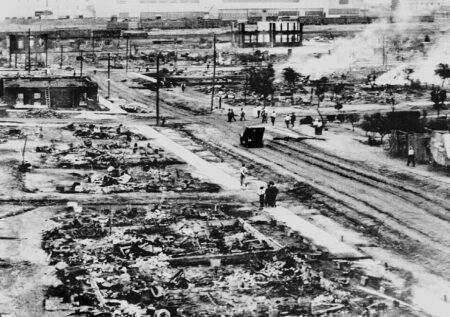






Karen Hunter returned from Tulsa, Okla., with a deeper understanding of Greenwood, Black Wall Street and the struggle over who gets to tell Black history.
“I’m going to be sitting in what I experienced over the last several days for a minute,” Hunter said, adding that the trip gave her “clarity” about “why narratives are so important and why we must control them.”
Tulsa, she said, did not greet her with the same feeling she had in Chicago, where Black culture felt “palpable.” Instead, Hunter said the city felt “soulless,” not because of its people, but because of what had been built over Greenwood without Black leadership.
“You can’t rebuild Tulsa without not just inviting us to the table, but having us direct the rebuild,” she said. “And you could feel that.”
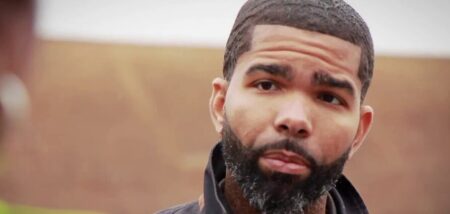
Hunter traveled to Tulsa for the Justice for Greenwood Gala, where she co-hosted with Charles Coleman and met Mother Randall, a 111-year-old survivor of the Tulsa Race Massacre. She said she agreed to take part because the work was tied to a larger mission: “to reclaim our time, reclaim our memory, reclaim our history.” But it was a tour led by Chief Amusan that Hunter said changed her understanding most.
“What this man and his book and all of the things that he laid at our feet changed my entire perspective,” she shared. Hunter said she learned that Greenwood was one of many thriving Black towns and communities.
“There were 50-plus Black communities in Oklahoma,” she explained. “Greenwood wasn’t the only one,” going on to challenge one of the most repeated accounts of the massacre.
“It wasn’t about Dick Rowland in that elevator,” Hunter declared. “This was a yearlong campaign to demonize people.”
Greenwood residents, she said, were not defenseless. “They had self-defense,” Hunter said. “They had strategy,” she went on, adding “what they didn’t plan for was the air attack.”
“They dropped a bomb on them, baby,” she said. “From the sky.”
Listen to Karen Hunter detail her life-changing trip to Tulsa in the clip below.