



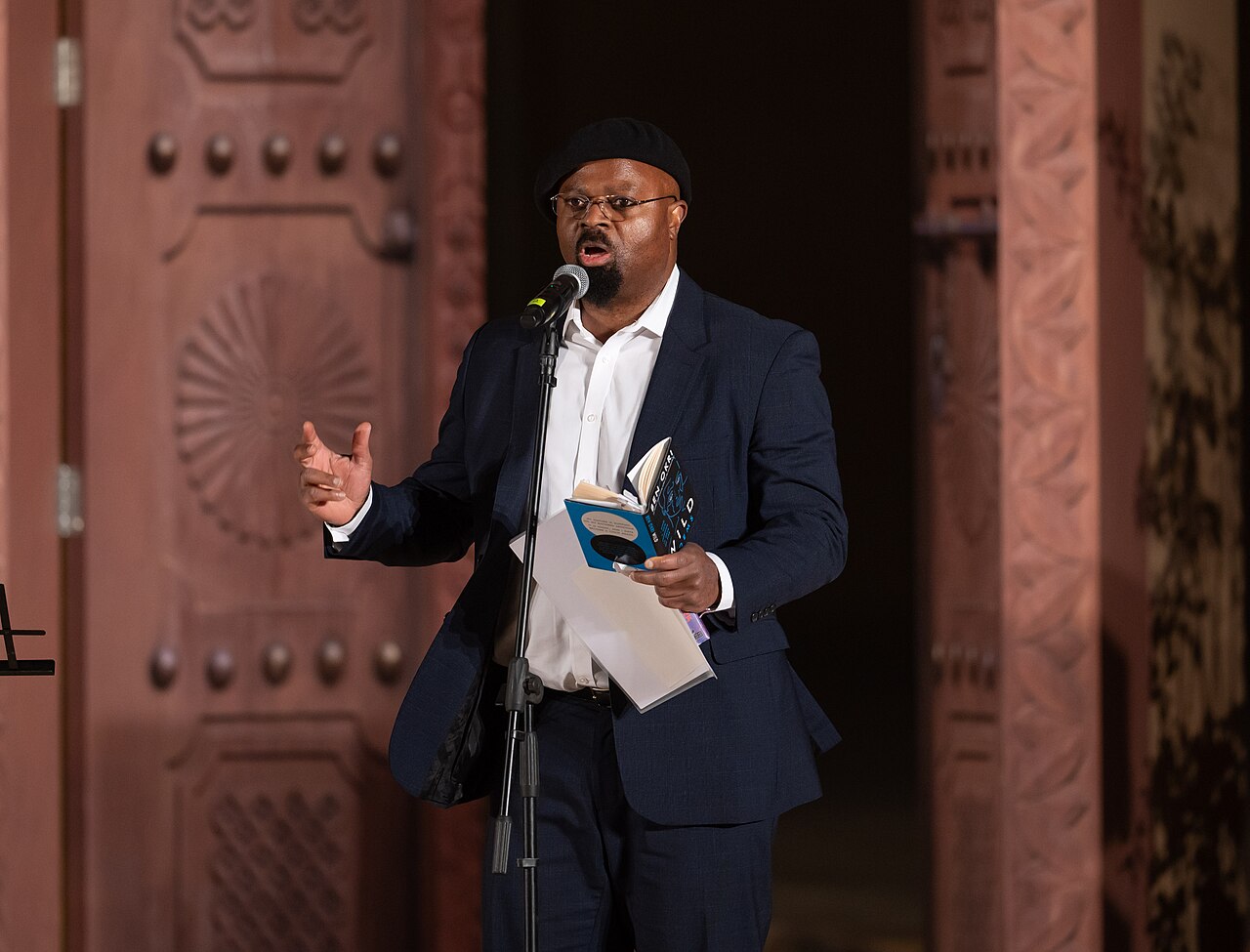
On March 15, 1959, Ben Okri was born in Minna, Nigeria, beginning the life of a writer who would become one of the most widely read and honored voices in contemporary African literature. A Nigerian-born British poet and novelist, Okri is best known for fiction that draws on history, politics, memory and the unseen worlds embedded in everyday life.
His 1991 novel “The Famished Road” won the Booker Prize, and in 2023, he was knighted for services to literature.
Okri was born to Grace and Silver Okri and has Urhobo heritage through his father and Igbo ancestry through his mother. His family moved to London when he was very young while his father studied law, and Okri spent part of his childhood in the South London borough of Peckham before the family returned to Nigeria in 1966. That move proved formative. He later attended schools in Ibadan, Ikenne and Warri, and his experience of Nigeria during and after the civil war became a lasting source of material for his fiction.

As a teenager, Okri first tried to write directly about social and political issues. Some early short fiction found its way into journals and newspapers, but his career took shape after he moved back to England in 1978 to study comparative literature at the University of Essex. When his scholarship funding collapsed, he endured periods of homelessness, sometimes sleeping in parks or relying on friends. Rather than ending his ambitions, that stretch sharpened them. At 21, he published his debut novel, “Flowers and Shadows,” in 1980, followed by “The Landscapes Within” in 1981.
His breakthrough came with “The Famished Road,” a novel centered on Azaro, a spirit-child narrator moving through an African landscape shaped by violence, instability and resilience. The book made Okri the youngest Booker Prize winner at the time, at age 32, and helped establish him internationally. He later expanded the story into a trilogy with “Songs of Enchantment” and “Infinite Riches.” Across novels, essays, poetry and short stories, Okri has resisted easy labels, often pushing back on the habit of reducing his work to “magical realism.”
Okri’s career has continued well beyond that early breakthrough. He has served in literary and cultural roles, including with English PEN and the Royal National Theatre, and has published across genres for decades. His honors include an OBE in 2001 and a knighthood in the King’s 2023 Birthday Honours. More than three decades after his Booker win, his body of work continues to shape conversations about Africa through vivid storytelling.