





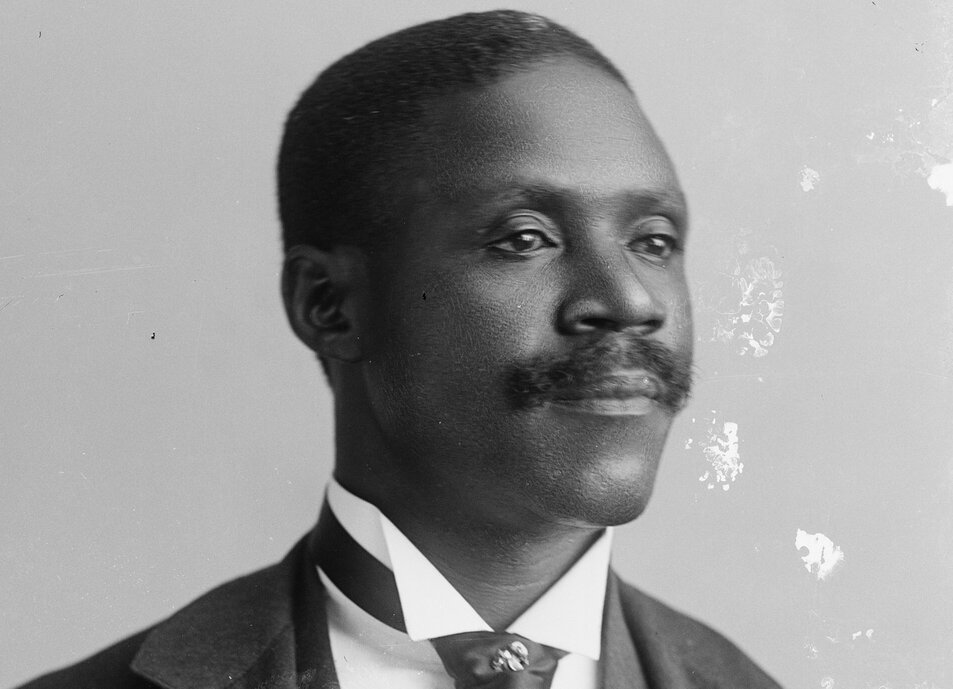
On April 21, 1926, George Washington Murray, a former congressman from South Carolina and one of the last Black political leaders to hold national office after Reconstruction, died in Chicago at 72.
For much of his life, Murray fought a losing battle against the systematic dismantling of Black political power in the South.
Born in 1853 on a plantation near Rembert, S.C., Murray came of age during the Civil War and Reconstruction. He was educated at a time when South Carolina briefly opened its public institutions to Black students. Murray taught school, farmed and gradually emerged as an organizer among Black farmers in the state. By the late 1880s, Murray had become a prominent figure in the Colored Farmers Alliance, which sought to unite Black farmers politically and economically. He was an eloquent speaker with a gift for organization, and he rose quickly in the Republican Party.
In 1892, Murray won election to Congress from South Carolina’s sprawling 7th District. He became the only Black member of the 53rd Congress and one of the last African Americans to serve in Congress from the South for decades.
In Washington, Murray spoke forcefully against efforts to weaken federal protections at the polls. He described how Black voters in South Carolina were harassed, misled and excluded. When South Carolina adopted a new constitution in 1895 that imposed literacy tests, poll taxes and property requirements, Murray warned that it would effectively strip Black citizens of the right to vote and he was right.
The new constitution destroyed Black political participation in the state and ended the coalition that had made his own career possible. Murray left Congress in 1897, and South Carolina would not send another Republican to the House for nearly 100 years.
Afterward, Murray returned to farming but was convicted in 1905 on forgery charges that he said were politically motivated. Rather than serve a prison sentence, he moved to Chicago, where he worked in real estate, remained active in Republican politics and published books of his speeches.
He died there on April 21, 1926.